Vili Lähteenmäki - Böcker
Visar alla böcker från författaren Vili Lähteenmäki. Handla med fri frakt och snabb leverans.
3 produkter
3 produkter
2 113 kr
Skickas inom 10-15 vardagar
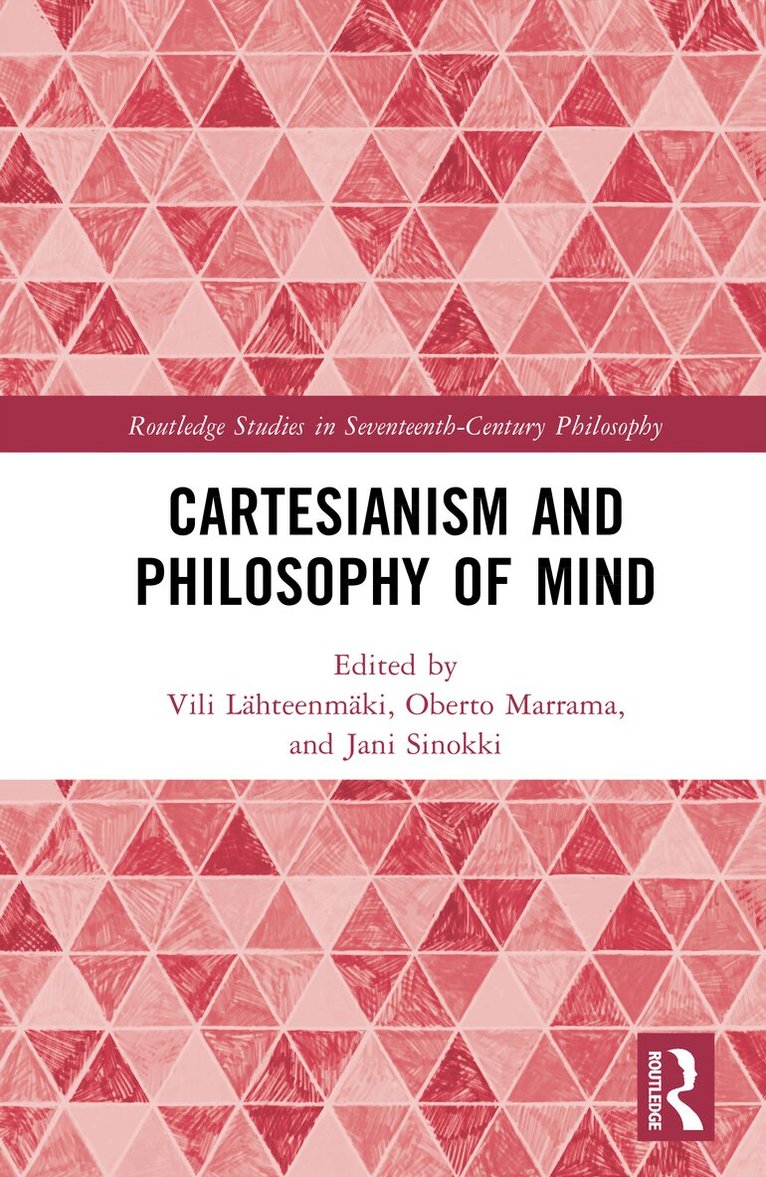
This book explores themes in the philosophy of mind as they emerge within the early modern Cartesian tradition. It brings together 13 contributions from international scholars to provide a fine‑grained account of how 17th‑century thinkers scrutinized and re‑interpreted Descartes’ doctrines about the nature and functions of the mind.Although it is well known that many of the challenges that philosophers confront today were already discussed by the Cartesians, historical Cartesianism remains underexplored and warrants deeper, careful study. There is much to be learned about how the Cartesian tradition understood phenomena such as consciousness, intentionality, embodiment, and moral agency—and the puzzles they raise. The chapters are divided into three thematic sections. Part 1 focuses on fundamental features of cognition, such as the nature of ideas and intentionality, as they were debated by early interlocutors of Descartes. Part 2 analyzes how Cartesian philosophers conceived of the relation between sensation and material objects, including the human body. Part 3 investigates the moral and social dimensions of the Cartesian mind, such as love and virtue.Cartesianism and Philosophy of Mind will be of interest to scholars and advanced students working on early modern philosophy and philosophy of mind.
2 433 kr
Skickas inom 10-15 vardagar
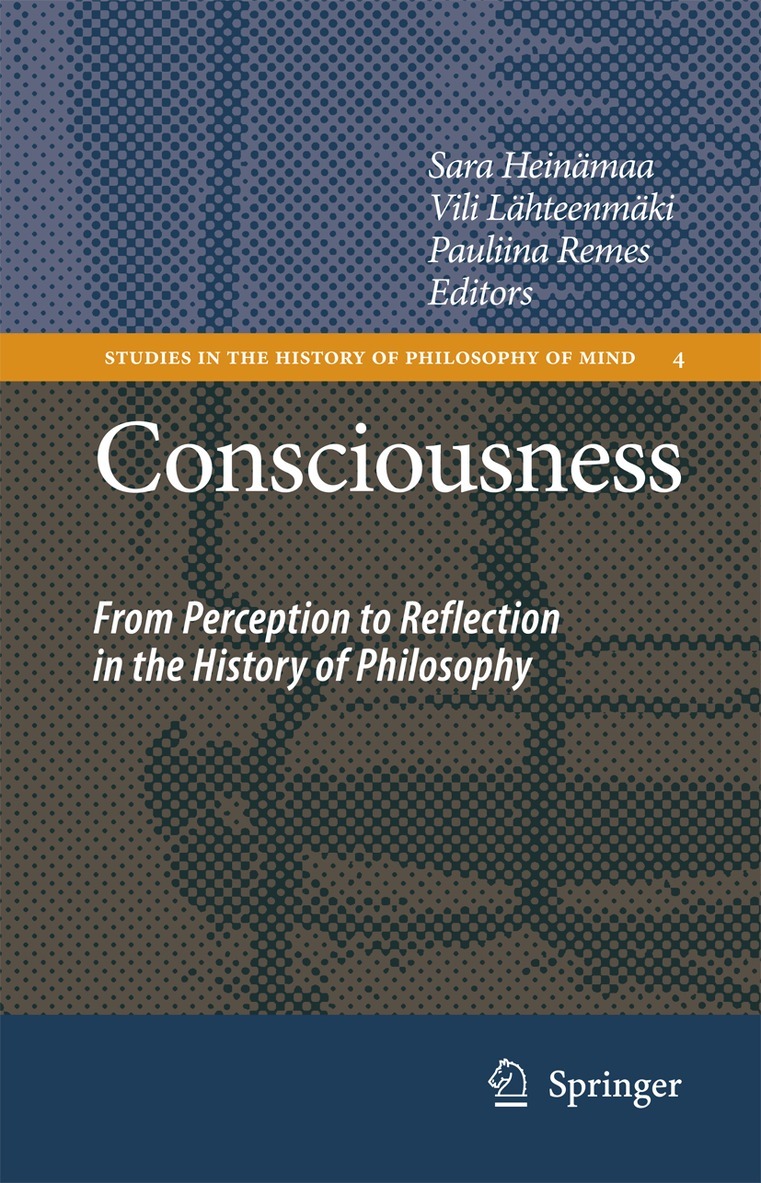
SARA HEINÄMAA,VILI LÄHTEENMÄKI AND PAULIINA REMES This book is about consciousness. It illuminates the concept in its complexity and richness, capturing its theoretical and philosophical significance as well as its problematic aspects. By taking a new look into the history of concepts, the collection questions several deep-seated assumptions about consciousness – assumptions both thematic and methodological. It argues that, even though our predecessors did not formulate their philosophical queries in terms of consciousness, they have much to offer to our current disputes concerning its central features, such as reflexivity, subjectivity and aboutness, as well as related themes, from selfhood to attention and embodiment. At the same time, the collection demonstrates that consciousness is not just an issue in the p- losophy of mind, but is bound to ontology, epistemology and moral theory. We can find premodern and early modern concepts and arguments that are interesting and even crucialto our own philosophical concerns, but we should not assume that these belong or contribute to any theory of mind isolated from metaphysical and ethical discussions: an argument that for us provides insightful descriptions of perception or self-awareness might to its writer have meant not just a theoretization of the soul or the mind, but also, and perhaps more importantly, a contribution to ethics or ontology.
2 433 kr
Skickas inom 10-15 vardagar
SARA HEINÄMAA,VILI LÄHTEENMÄKI AND PAULIINA REMES This book is about consciousness. It illuminates the concept in its complexity and richness, capturing its theoretical and philosophical significance as well as its problematic aspects. By taking a new look into the history of concepts, the collection questions several deep-seated assumptions about consciousness – assumptions both thematic and methodological. It argues that, even though our predecessors did not formulate their philosophical queries in terms of consciousness, they have much to offer to our current disputes concerning its central features, such as reflexivity, subjectivity and aboutness, as well as related themes, from selfhood to attention and embodiment. At the same time, the collection demonstrates that consciousness is not just an issue in the p- losophy of mind, but is bound to ontology, epistemology and moral theory. We can find premodern and early modern concepts and arguments that are interesting and even crucialto our own philosophical concerns, but we should not assume that these belong or contribute to any theory of mind isolated from metaphysical and ethical discussions: an argument that for us provides insightful descriptions of perception or self-awareness might to its writer have meant not just a theoretization of the soul or the mind, but also, and perhaps more importantly, a contribution to ethics or ontology.