• Fri frakt över 249 kr
  • •
  • Snabba leveranser
  • •
  • Billiga böcker
Kundservice

Du är på sajten för privatpersoner.

Företag, bibliotek eller offentlig verksamhet?

Du handlar på classic.bokus.com, där alla dina funktioner finns intakta.
Till classic.bokus.com
Bokus logotyp. Gå till startsidan.
  • Erbjudanden
  • Nyheter
  • Student
  • Topplistor
  • Barn & ungdom
  • Bokus Play
  • E-böcker
  • Pocketböcker
  • Spel & pussel

10% rabatt på allt med kod NYSTART10 →

Sidfot

Mina sidor

    Hjälp

    • Kundservice
    • Vanliga frågor och svar
    • Frakt och leverans
    • Retur vid ångerrätt
    • Reklamera vara
    • Betalning
    • Köpvillkor
    • Allmänna villkor
    • Information om webbplatsens tillgänglighet

    Om Bokus

    • Om oss
    • Pressrum
    • För studenter
    • För företag
    • För bibliotek och offentlig verksamhet
    • För leverantörer
    • Hållbarhet

    Populärt

    • Aktuella erbjudanden
    • Presentkort
    • Studentlitteratur
    • Nya böcker
    • Topplistor
    • Signerade böcker
    • Engelska böcker

    Inspiration

    • Boktips
    • BookTok
    • Populära bokserier
    • Barnbokskaraktärer
    • Populära författare
    Logotyp för Bokus
    Följ oss på Facebook (extern länk)Följ oss på Instagram (extern länk)Följ oss på YouTube (extern länk)Följ oss på TikTok (extern länk)
    bokus @ CookiesAnpassa cookiesIntegritetspolicyKöpvillkor
    Till Citymail hemsida (extern länk)Till Budbee hemsida (extern länk)Till Postnord hemsida (extern länk)Till Schenker hemsida (extern länk)Till Early Bird hemsida (extern länk)Till Walleys hemsida (extern länk)
    1. Samhälle och politik
    2. Samhälle och kultur
    3. Kultur och medier
    4. Referensverk och tvärvetenskap

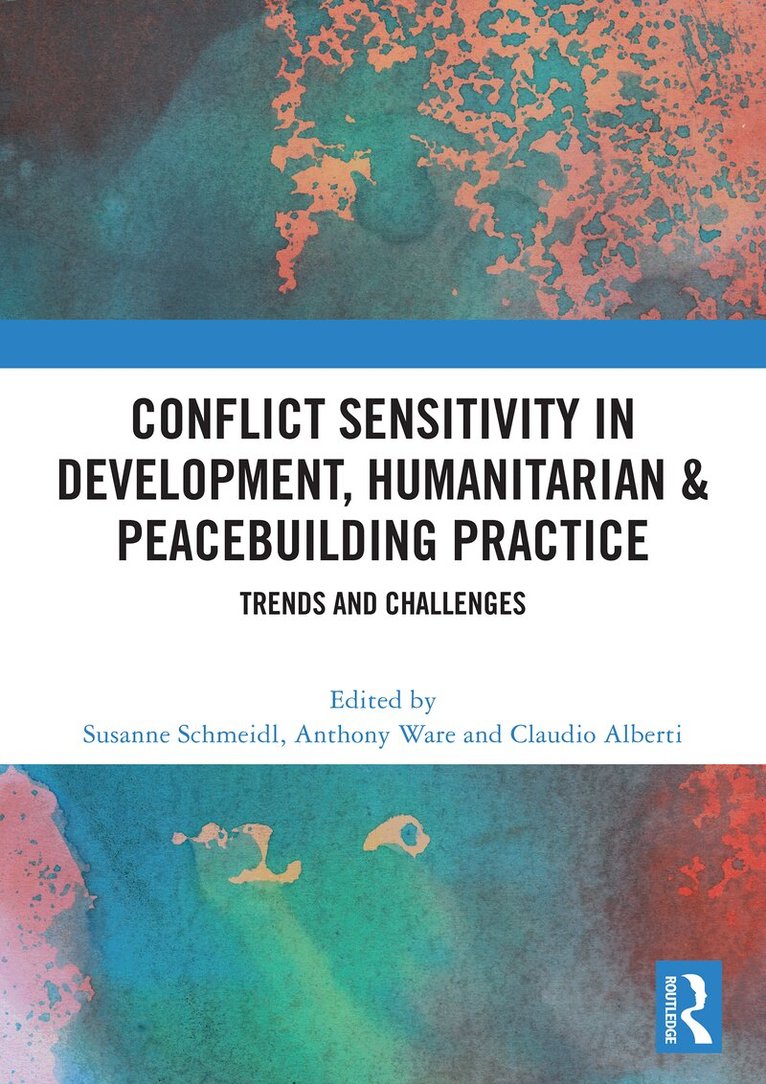
    Conflict Sensitivity in Development, Humanitarian & Peacebuilding Practice

    Trends and Challenges

    AvSusanne Schmeidl,Anthony Ware

    Häftad, Engelska, 2026

    681 kr

    Beställningsvara. Skickas inom 10-15 vardagar. Fri frakt över 249 kr.

    Beskrivning

    Inspired by Mary Anderson’s influential work Do No Harm (1999), this book encourages critical reflection on the development and contemporary relevance of conflict sensitivity approaches in international development, humanitarian action and peacebuilding.Despite the widespread acceptance of conflict sensitivity, particularly in the context of worsening crises, there has been a surprising lack of critical discussion and evaluation of the framework and its application. This book fills this gap by bringing together a diverse collection of articles, practice notes and reflections from academics and practitioners in the field of conflict sensitivity. It provides a comprehensive platform for valuable debate, highlighting strengths, areas for improvement and practical guidance for real- world application, based on 25 years of conflict sensitivity/ do no harm practice and innovation. By integrating insights from practitioners, the book aims to bridge the gap between theory and practice. Advocating the systematic integration of conflict sensitivity into humanitarian, development and peacebuilding efforts, the book offers practical guidance for implementation and adaptation in different contexts and programmes.As a valuable resource, it deepens understanding and promotes accountability to the populations that humanitarian, development and peacebuilding actors seek to support, including actors advancing conflict sensitivity in their own contexts. It serves as a springboard for further academic research on conflict sensitivity. This book was originally published as a special issue of Development in Practice.

    Produktinformation

    • Utgivningsdatum:2026-06-22
    • Mått:174 x 246 x 10 mm
    • Vikt:330 g
    • Format:Häftad
    • Språk:Engelska
    • Antal sidor:162
    • Förlag:Taylor & Francis Ltd
    • ISBN:9781032910321

    Utforska kategorier

    • Referensverk och tvärvetenskap inom Samhälle och politik
    • Sociologi inom Samhälle och politik
    • Politik och statsskick inom Samhälle och politik

    Mer om författaren

    Susanne Schmeidl is an experienced peacebuilding researcher and practitioner with a focus on Afghanistan, conflict sensitivity, forced displacement, indigenous peacebuilding approaches and critical methodologies. She has over two decades of experience working in (post)- conflict settings and is currently advising various organisations on how to work with conflict sensitivity in Afghanistan.Anthony Ware is Associate Professor in International and Community Development at Alfred Deakin Institution, Deakin University, Melbourne, Australia. His research focuses on humanitarian/ international development approaches in conflict- affected situations, with particular interest in Myanmar, the Rohingya conflict, conflict- sensitivity/ do no harm, everyday peace and community- led development.Claudio Alberti, an associate researcher at swisspeace, holds a PhD from Trinity College Dublin. He specialises in adaptive peacebuilding approaches and the linkages between development, humanitarian and peacebuilding. Over the past decade, he has held progressively responsible positions in these sectors across various contexts.

    Innehållsförteckning

    • Introduction – Conflict sensitivity/Do No Harm (DNH) in development, humanitarian, and peacebuilding practice: reflections and emerging trends 1. Looking back to look forward 2. Necessary complexity in the Anthropocene: new approaches in socio-ecological systems thinking, Do No Harm, and fragility integration 3. Conflict sensitivity/Do No Harm (DNH) through an everyday peace lens: analysing a Rohingya–Rakhine program in Myanmar 4. Humanitarian cash assistance: risks and opportunities for local peace 5. Depoliticised humanitarianism: critiquing the effectiveness of international aid for the Bedouin communities in the Jerusalem periphery 6. Peace responsiveness: a paradigm shift to deliver on conflict sensitivity and sustaining peace 7. A conflict-sensitivity dilemma: how conflict denialism constrains spaces for conflict-sensitive actions for peacebuilding 8. Far beyond a tool: Do No Harm as spiritual (trans)formation for interfaith cooperation and action 9. The reform of freetown port: lessons from Political Economy Analysis (PEA) to make conflict sensitivity more efficient 10. Conflict sensitivity and activism: insights from Cambodia’s resource conflicts 11. Beyond box-ticking: how conflict sensitivity can help bring about a more equitable aid system 12. Building a culture of conflict sensitivity within a consortium 13. The localisation discourse in post-2021 Myanmar: implications for conflict sensitivity 14. Conflict-sensitive research: bringing research ethics into practice