• Fri frakt över 249 kr
  • •
  • Snabba leveranser
  • •
  • Billiga böcker
Kundservice

Du är på sajten för privatpersoner.

Företag, bibliotek eller offentlig verksamhet?

Du handlar på classic.bokus.com, där alla dina funktioner finns intakta.
Till classic.bokus.com
Bokus logotyp. Gå till startsidan.
  • Erbjudanden
  • Nyheter
  • Student
  • Topplistor
  • Barn & ungdom
  • Bokus Play
  • E-böcker
  • Pocketböcker
  • Spel & pussel

10% rabatt på allt med kod: NYSTART10 →

Sidfot

Mina sidor

    Hjälp

    • Kundservice
    • Vanliga frågor och svar
    • Frakt och leverans
    • Retur vid ångerrätt
    • Reklamera vara
    • Betalning
    • Köpvillkor
    • Allmänna villkor
    • Information om webbplatsens tillgänglighet

    Om Bokus

    • Om oss
    • Pressrum
    • För studenter
    • För företag
    • För bibliotek och offentlig verksamhet
    • För leverantörer
    • Hållbarhet

    Populärt

    • Aktuella erbjudanden
    • Presentkort
    • Studentlitteratur
    • Nya böcker
    • Topplistor
    • Signerade böcker
    • Engelska böcker

    Inspiration

    • Boktips
    • BookTok
    • Populära bokserier
    • Barnbokskaraktärer
    • Populära författare
    Logotyp för Bokus
    Följ oss på Facebook (extern länk)Följ oss på Instagram (extern länk)Följ oss på YouTube (extern länk)Följ oss på TikTok (extern länk)
    bokus @ CookiesAnpassa cookiesIntegritetspolicyKöpvillkor
    Till Citymail hemsida (extern länk)Till Budbee hemsida (extern länk)Till Postnord hemsida (extern länk)Till Schenker hemsida (extern länk)Till Early Bird hemsida (extern länk)Till Walleys hemsida (extern länk)
    1. Språk och ordböcker
    2. Språkvetenskap och lingvistik

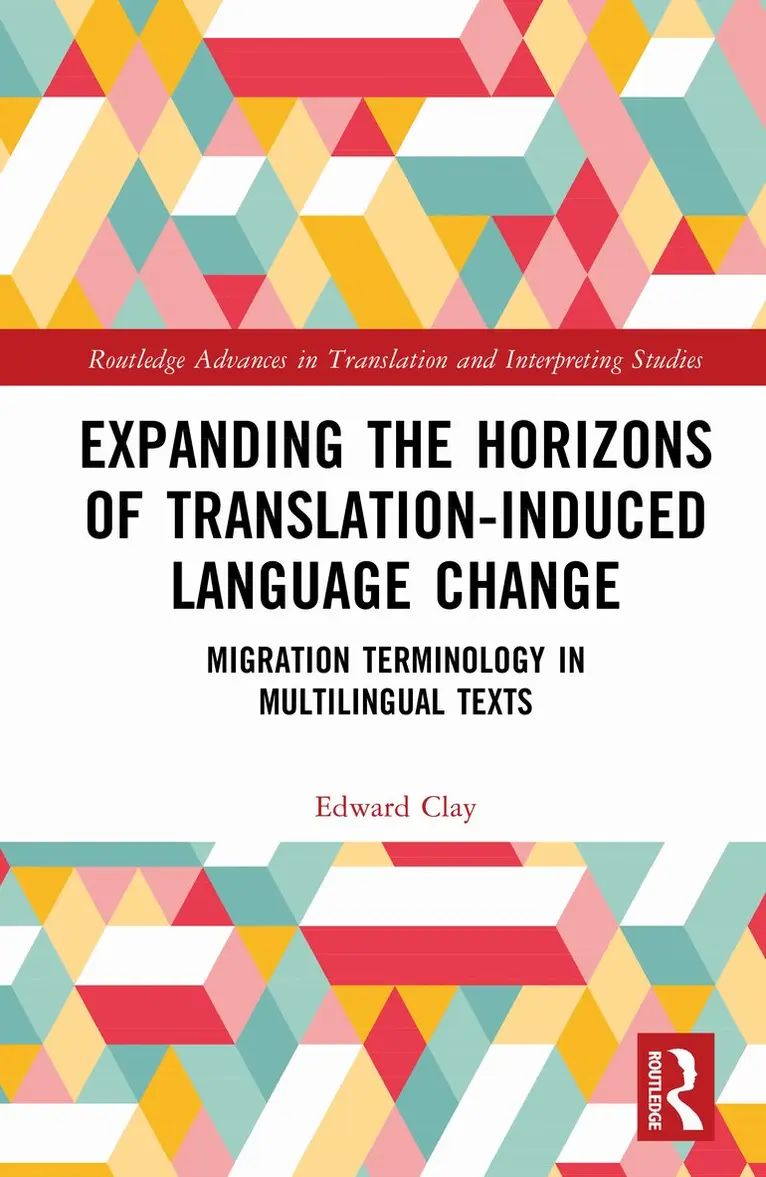
    Expanding the Horizons of Translation-Induced Language Change

    Migration Terminology in Multilingual Texts

    AvEdward Clay

    Inbunden, Engelska, 2025

    Del i serien Routledge Advances in Translation and Interpreting Studies

    2 227 kr

    Beställningsvara. Skickas inom 10-15 vardagar. Fri frakt över 249 kr.

    Fler format och utgåvor

    E-bok

    829 kr

    E-bok

    829 kr

    Beskrivning

    This book offers a comprehensive examination of translation-induced language change, arguing for a view of translation as a language contact scenario supported by case studies from multilingual texts on migration.The volume explores how language change arises through contact between languages in translation with linguistic features carrying over from a source text and becoming embedded, over time, in a target language. Clay applies this theory to a number of novel contexts, including migration terminology in multilingual legal texts and newspaper articles, and observes it using innovative quantitative and qualitative methodologies. This phenomenon is observed through in-depth corpus-based case studies involving English, French, and Italian to show the potential for translation to shape terminology in the field of migration across different genres. The volume also extends its conclusions to consider the ways in which this approach might be applied to other domains and new methodologies might be developed in response.This book will appeal to scholars interested in the intersection of language and the law, in such fields as translation studies, corpus linguistics, and terminology.

    Produktinformation

    • Utgivningsdatum:2025-11-13
    • Mått:152 x 229 x 13 mm
    • Vikt:440 g
    • Format:Inbunden
    • Språk:Engelska
    • Serie:Routledge Advances in Translation and Interpreting Studies
    • Antal sidor:142
    • Förlag:Taylor & Francis Ltd
    • ISBN:9781032911243

    Utforska kategorier

    • Språkvetenskap och lingvistik inom Språk och ordböcker
    • Socialrätt och hälso- och sjukvårdsrätt inom Juridik

    Mer om författaren

    Edward Clay is a Research Fellow at the University of Birmingham, UK.

    Innehållsförteckning

    • Part I: Theoretical Considerations Chapter 1. Introduction 1.1 Outline of the book Chapter 2. Terminology and translation-induced language change 2.1 What is terminology? 2.1.1 Concepts and terms 2.1.2 Terminological variation 2.1.3 Interlingual variation in terminology 2.1.4 Determinologisation 2.2 Translation-induced language change 2.2.1 Language change and language contact 2.2.2 Translation as a contact scenario 2.2.3 Case studies: Discursive features 2.2.4 Case studies: Morphosyntax and lexis 2.2.5 Limitations and counterarguments 2.2.6 Possible causes 2.3 Concluding remarks Chapter 3. Multilingual legal text production – a site for translation-induced language change? 3.1 Legal translation 3.2 The EU translation process 3.3 Term formation and translation in the EU 3.4 Translation technology in the EU 3.5 Concluding remarks Chapter 4. The language of migration law and migration in the press 4.1 The language of migration law 4.2 Migration in the press Part II: Empirical Applications Chapter 5. Observing translation-induced language change in EU legal discourse on migration 5.1 Corpus-based approach 5.2 The EUMigrLaw corpus 5.2.1 Defining legal discourse 5.2.2 Creating the EUMigrLaw corpus 5.2.3 The development of EU migration and asylum law 5.3 The EUMigrLaw corpus analysis 5.3.1 Methodology 5.3.2 Quantitative analysis – Intralingual terminological variation 5.3.3 Quantitative analysis – Interlingual terminological variation 5.3.4 Qualitative analysis – General observations 5.3.5 Influence of English terminology 5.3.6 The case of IRREGULAR MIGRANT 5.4 Summary of results 5.5 Discussion Chapter 6. Crossing genre boundaries – Expanding the research scope 6.1 The MigrationInTheNews corpus 6.2 Building the MigrationInTheNews corpus 6.3 Methodology 6.3.1 Three indicators of terminological convergence/divergence 6.4 Quantitative results on terminological convergence/divergence 6.5 Terminological trends 6.5.1 THIRD-COUNTRY NATIONAL 6.5.2 IRREGULAR MIGRANT 6.5.3 UNION CITIZEN 6.5.4 ASYLUM SEEKER and REFUGEE 6.5.5 MIGRANT WORKER 6.6 Discussion 6.6.1 Translation-induced language change and determinologisation 6.6.2 Factors preventing cross-over 6.6.3 A widening terminological gap 6.6.4 The influence of the media on legal discourse Chapter 7. Conclusion