• Fri frakt över 249 kr
  • •
  • Snabba leveranser
  • •
  • Billiga böcker
Kundservice

Du är på sajten för privatpersoner.

Företag, bibliotek eller offentlig verksamhet?

Du handlar på classic.bokus.com, där alla dina funktioner finns intakta.
Till classic.bokus.com
Bokus logotyp. Gå till startsidan.
  • Erbjudanden
  • Nyheter
  • Student
  • Topplistor
  • Barn & ungdom
  • Bokus Play
  • E-böcker
  • Pocketböcker
  • Spel & pussel

10% rabatt på allt med kod NYSTART10 →

Sidfot

Mina sidor

    Hjälp

    • Kundservice
    • Vanliga frågor och svar
    • Frakt och leverans
    • Retur vid ångerrätt
    • Reklamera vara
    • Betalning
    • Köpvillkor
    • Allmänna villkor
    • Information om webbplatsens tillgänglighet

    Om Bokus

    • Om oss
    • Pressrum
    • För studenter
    • För företag
    • För bibliotek och offentlig verksamhet
    • För leverantörer
    • Hållbarhet

    Populärt

    • Aktuella erbjudanden
    • Presentkort
    • Studentlitteratur
    • Nya böcker
    • Topplistor
    • Signerade böcker
    • Engelska böcker

    Inspiration

    • Boktips
    • BookTok
    • Populära bokserier
    • Barnbokskaraktärer
    • Populära författare
    Logotyp för Bokus
    Följ oss på Facebook (extern länk)Följ oss på Instagram (extern länk)Följ oss på YouTube (extern länk)Följ oss på TikTok (extern länk)
    bokus @ CookiesAnpassa cookiesIntegritetspolicyKöpvillkor
    Till Citymail hemsida (extern länk)Till Budbee hemsida (extern länk)Till Postnord hemsida (extern länk)Till Schenker hemsida (extern länk)Till Early Bird hemsida (extern länk)Till Walleys hemsida (extern länk)
    1. Historia och arkeologi
    2. Historia
    3. Historia: särskilda händelser och ämnen
    4. Socialhistoria och kulturhistoria

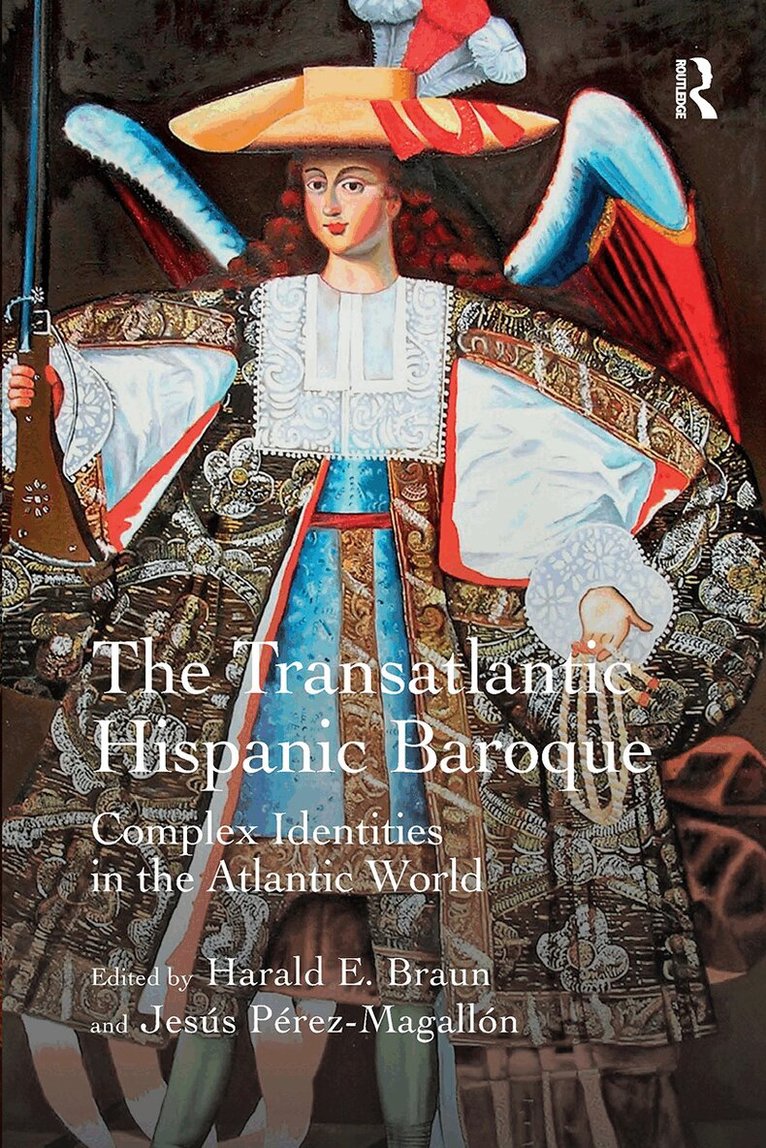
    Transatlantic Hispanic Baroque

    Complex Identities in the Atlantic World

    AvHarald E. Braun,Jesús Pérez-Magallón

    Häftad, Engelska, 2024

    629 kr

    Beställningsvara. Skickas inom 10-15 vardagar. Fri frakt över 249 kr.

    Fler format och utgåvor

    Inbunden

    2 495 kr

    Beskrivning

    Gathering a group of internationally renowned scholars, this volume presents cutting-edge research on the complex processes of identity formation in the transatlantic world of the Hispanic Baroque. Identities in the Hispanic world are deeply intertwined with sociological concepts such as class and estate, with geography and religion (i.e. the mixing of Spanish Catholics with converted Jews, Muslims, Dutch and German Protestants), and with issues related to the ethnic diversity of the world’s first transatlantic empire and its various miscegenations. Contributors to this volume offer the reader diverse vantage points on the challenging problem of how identities in the Hispanic world may be analyzed and interpreted. A number of contributors relate earlier processes and formations to Neo-Baroque and postmodern conceptualisations of identity. Given the strong interest in identity and identity-formation within contemporary cultural studies, the book will be of interest to a broad group of readers from the fields of law, geography, history, anthropology and literature.

    Produktinformation

    • Utgivningsdatum:2024-10-14
    • Mått:156 x 234 x undefined mm
    • Vikt:453 g
    • Format:Häftad
    • Språk:Engelska
    • Antal sidor:330
    • Förlag:Taylor & Francis Ltd
    • ISBN:9781032921914

    Utforska kategorier

    • Socialhistoria och kulturhistoria inom Historia och arkeologi
    • Mellanösterns historia inom Historia och arkeologi
    • Historia inom Historia och arkeologi

    Mer om författaren

    Harald E. Braun is Senior Lecturer in European History (1300-1700) at the University of Liverpool. He is the author of Juan de Mariana and Early Modern Spanish Political Thought (2007). He co-edited Contexts of Conscience in Early Modern Europe (2004), The Renaissance Conscience (2011), and Theorising the Ibero-American Atlantic (2013), and has published articles and chapters on early modern intellectual history, especially the history of early modern Spanish political thought, culture, and communication. Jesús Pérez-Magallón is Professor of Hispanic Studies at McGill University. His principal areas of research are the origins of modernity, particularly the transition from the Baroque to the Enlightenment, and nineteenth-century intellectual history. Other research areas are the Hispanic Baroque, Golden Age Drama, and Textuality and Nationalism. He has published extensively, including Construyendo la modernidad. La cultura española en el tiempo de los novatores (1675-1725) (2002), and Calderón. Icono cultural e identitario del conservadurismo político (2010). He was awarded the Encomienda de la Orden del Mérito Civil by the Spanish government (2009), and is a recipient of the McGill University-Faculty of Arts Award for High Distinction in Research (2000).

    Innehållsförteckning

    • Introduction, Harald E. Braun and Jesús Pérez-Magallón. Part I The Constitution of Identities in the Hispanic Baroque: Person and individual: Baroque identities in theology and law, Bartolomé Clavero; Towards a constructionist essentialism: critical race studies and the Baroque, Ruth Hill; Higher education, ‘soft power,’ and Catholic identity: a case study from early modern Salamanca, Harald E. Braun; ‘The people of the King’: autonomy and collective identity in Coyaima, Renée Soulodre-La France. Part II Hispanic Baroque: Religion, Politics, Society: Baroque religion in Spain: Spanish or European?, Henry Kamen; The Baroque and the influence of the Spanish monarchy in Europe (1580-1648), José Javier Ruiz Ibáñez; Rethinking identity: crisis of rule and reconstruction of identity in the monarchy of Spain, Pablo Fernández Albaladejo; The preacher feeds and the sermon soothes: body and metaphor in Jesuit preaching, Carlos-Urani Montiel and Shiddarta Vásquez Córdoba. Part III The Urban World and the Hispanic Baroque: The Creole metropolis, Manuel Lucena Giraldo; Foreign communities in the cities of the Catholic monarchy: a comparative perspective between the overseas dominions and the Crown of Castile, Manuel Herrero Sánchez; Writing Madrid, writing identity: a spatial dialogue between the 17th and 18th centuries, Jesús Pérez-Magallón; The city and the phoenix: earthquakes, royal obsequies, and urban rivalries in mid-18th-century Peru, José R. Jouve Martín; The imagery of Jerusalem in the colonial city, Patricia Saldarriaga. Part IV Neo-Baroque Approaches to Identity: Elegies for a homeland: a Baroque chronicle, a Marxist critique, and conflicting identities in colonial Guatemala, W. George Lovell; Neo-Baroque Catholic evangelism in post-secular Mexico, Kristin Norget; La Fiesta de Santo Tomás as a technology of culture: memory, carnival, and syncretism in the modern Guatemalan identity, Anabel Quan-Haase and Kim Martin. Index.