• Fri frakt över 249 kr
  • •
  • Snabba leveranser
  • •
  • Billiga böcker
Kundservice

Du är på sajten för privatpersoner.

Företag, bibliotek eller offentlig verksamhet?

Du handlar på classic.bokus.com, där alla dina funktioner finns intakta.
Till classic.bokus.com
Bokus logotyp. Gå till startsidan.
  • Erbjudanden
  • Nyheter
  • Student
  • Topplistor
  • Barn & ungdom
  • Bokus Play
  • E-böcker
  • Pocketböcker
  • Spel & pussel

10% rabatt på allt med kod NYSTART10 →

Sidfot

Mina sidor

    Hjälp

    • Kundservice
    • Vanliga frågor och svar
    • Frakt och leverans
    • Retur vid ångerrätt
    • Reklamera vara
    • Betalning
    • Köpvillkor
    • Allmänna villkor
    • Information om webbplatsens tillgänglighet

    Om Bokus

    • Om oss
    • Pressrum
    • För studenter
    • För företag
    • För bibliotek och offentlig verksamhet
    • För leverantörer
    • Hållbarhet

    Populärt

    • Aktuella erbjudanden
    • Presentkort
    • Studentlitteratur
    • Nya böcker
    • Topplistor
    • Signerade böcker
    • Engelska böcker

    Inspiration

    • Boktips
    • BookTok
    • Populära bokserier
    • Barnbokskaraktärer
    • Populära författare
    Logotyp för Bokus
    Följ oss på Facebook (extern länk)Följ oss på Instagram (extern länk)Följ oss på YouTube (extern länk)Följ oss på TikTok (extern länk)
    bokus @ CookiesAnpassa cookiesIntegritetspolicyKöpvillkor
    Till Citymail hemsida (extern länk)Till Budbee hemsida (extern länk)Till Postnord hemsida (extern länk)Till Schenker hemsida (extern länk)Till Early Bird hemsida (extern länk)Till Walleys hemsida (extern länk)
    1. Naturvetenskap och teknik
    2. Teknik och industri
    3. Tillverkningsteknik
    • Nyhet

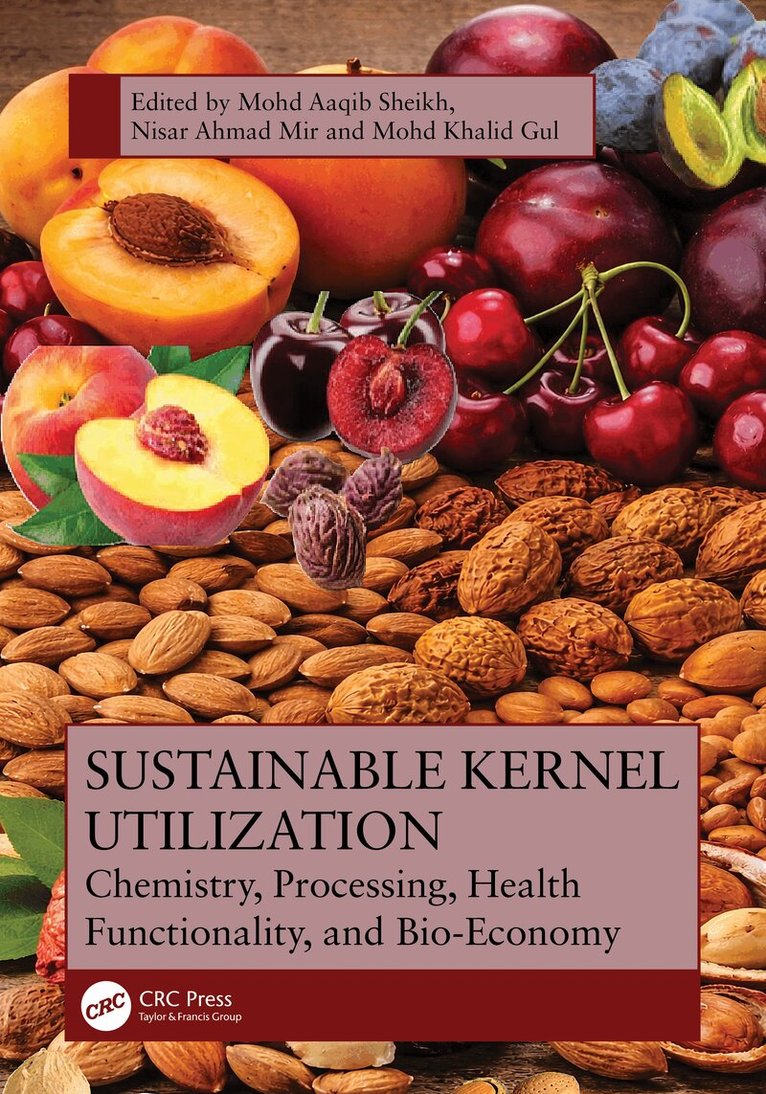
    Sustainable Kernel Utilization

    Chemistry, Processing, Health Functionality, and Bio-Economy

    AvMohd Aaqib Sheikh,Nisar Ahmad Mir

    Inbunden, Engelska, 2026

    2 650 kr

    Beställningsvara. Skickas inom 10-15 vardagar. Fri frakt över 249 kr.

    Beskrivning

    Prunus fruits are categorized as drupes or stone fruits. The fleshy mesocarp surrounding the pit is edible, and within this pit lies the kernel, which is a rich source of nutrients and phytochemicals. During Prunus fruit processing, a significant quantity of pits is produced, but typically thrown away, charred, or disposed of in landfills, leading to various environmental issues. This book explores the sustainability of nutrient-dense Prunus kernels and offers practical insights, case studies, and expert perspectives. Sustainable Kernel Utilization: Chemistry, Processing, Health Functionality, and Bio-Economy provides a comprehensive understanding of the compositional characteristics of Prunus kernels. It offers a road map for sustainable and innovative approaches utilized in Prunus kernels stewardship into valuable products. Readers will discover strategies to enhance the economic potential of Prunus kernels, while minimizing their environmental impact. Key Features:Provides a comprehensive understanding of Prunus kernels, including their nutritional composition, toxic compounds, bioactive compounds, nutraceutical potential, and diverse applicationsDiscusses conventional and novel techniques and innovations employed during post-harvest handling and storage of Prunus kernelsAddresses the current processing challenges, opportunities, and sustainable strategic approaches to utilizing Prunus kernels as an alternative nutrient-dense resourceCovers waste reduction strategies, food security, sustainability, cost-effectiveness, and diverse applications of Prunus kernels

    Produktinformation

    • Utgivningsdatum:2026-08-31
    • Mått:178 x 254 x 21 mm
    • Vikt:820 g
    • Format:Inbunden
    • Språk:Engelska
    • Antal sidor:344
    • Förlag:Taylor & Francis Ltd
    • ISBN:9781032951164

    Utforska kategorier

    • Tillverkningsteknik inom Naturvetenskap och teknik

    Mer om författaren

    Dr. Mohd Aaqib Sheikh (M.Tech., Ph.D.) is currently serving as Assistant Professor at Thapar Institute of Engineering and Technology, Patiala, Punjab, India. He holds a Ph.D. in Food Engineering and Technology and an M.Tech. in Food Process Engineering, establishing a strong academic foundation in food science and process engineering. He further advanced his research training through a National Post-Doctoral Fellowship at the National Institute of Technology, Rourkela, Odisha. Prior to his current appointment, Dr. Sheikh served as Assistant Professor in the Department of Food Technology at Eternal University, Baru Sahib, Himachal Pradesh, where he contributed to teaching, research, and academic development. His work has been recognized through competitive national fellowships, including the National Post-Doctoral Fellowship from the Science and Engineering Research Board (SERB), Government of India, and the Senior Research Fellowship awarded by the Indian Council of Medical Research (ICMR), New Delhi. These distinctions reflect his contributions to research in food science, particularly in the area of sustainable plant-based systems. Dr. Sheikh’s research focuses on key areas within contemporary food science, including agro-waste utilization, detoxification of industrial by-products, extraction and functional modification of plant proteins, product development, and biodegradable packaging materials. His work is directed toward improving resource efficiency and supporting sustainable food systems. He has authored 30 research and review articles in peer-reviewed journals and contributed 13 book chapters published by Elsevier, CRC Press, and Springer. In addition, he serves as a reviewer for several scientific journals, contributing to the evaluation and dissemination of scholarly research.Dr. Nisar Ahmad Mir (M.Tech., Ph.D.) received his Ph.D. from the Department of Food Engineering and Technology, Sant Longowal Institute of Engineering and Technology (Deemed to Be University, under the Ministry of Education, Government of India). Currently, he is an assistant professor in the Department of Food Technology, Islamic University of Science and Technology, Awantipora, Jammu & Kashmir. He received a National Post-Doctoral Fellowship from the Science and Engineering Research Board, Department of Science and Technology, Government of India. His research interests focus on cereal and pseudocereal protein characterization, modification, and their applications in food systems. He has published more than 20 research and review articles. He has also published more than 15 book chapters with publishers, including Apple Academic Press, Springer, and Elsevier. He is also serving as a reviewer for journals such as Trends in Food Science and Technology, Food Hydrocolloids, Food Chemistry, International Journal of Biological Macromolecules, Heliyon, Journal of Food Processing and Preservation, Journal of Food Process Engineering, and International Journal of Food Properties.Dr. Mohd Khalid Gul (M.Tech., Ph.D.) works as an academic visiting researcher at the School of Food Science and Nutrition, University of Leeds, Leeds, United Kingdom. His primary affiliation is with the National Institute of Technology, Rourkela, India, where he works as an assistant professor in food process engineering. Khalid has worked in various positions in the past, including as a post-doctoral fellow at Gyeongsang National University in South Korea and Shanghai Jiao Tong University in China, as an assistant professor at the Islamic University of Science and Technology in Awantipora, India, and with Coca-Cola India. His work spans academic institutions and industries located in India, South Korea, China, and the United Kingdom. His research interests include investigating the different aspects of food colloids, such as their functionalities and modifications, sensory-satiety relationships, interactions between proteins and polysaccharides, encapsulation, and food safety. To date, Khalid has published over 62 peer-reviewed journal articles and book chapters. He is part of the editorial board for Food Packaging and Shelf Life and is Associate Editor for Frontiers in Nutrition—Food Science.

    Innehållsförteckning

    • 1 Overview of Waste Utilization of Food and Agro-Waste: Rational, Valorization, Applications, and Bio-Economy 2 Prunes Fruit Processing Techniques 3 Prunus Fruit Processing Wastes and Byproducts 4 Plum (Prunus domestica L.) Kernel: Processing, Characterization, and Utilization 5 Apricot (Prunus armeniaca) Kernel: Processing, Characterization, and Utilization 6 Peach (Prunus persica) Kernel: Processing, Characterization, and Utilization 7 Nectarine (Prunus persica var. nucipersica) Kernel: Processing, Characterization, and Utilization 8 Almond (Prunus dulcis) Kernel: Processing, Characterization, and Utilization 9 Cherry (Prunus avium) Kernels: Processing, Characterization, and Utilization