• Fri frakt över 249 kr
  • •
  • Snabba leveranser
  • •
  • Billiga böcker
Kundservice

Du är på sajten för privatpersoner.

Företag, bibliotek eller offentlig verksamhet?

Du handlar på classic.bokus.com, där alla dina funktioner finns intakta.
Till classic.bokus.com
Bokus logotyp. Gå till startsidan.
  • Erbjudanden
  • Nyheter
  • Student
  • Topplistor
  • Barn & ungdom
  • Bokus Play
  • E-böcker
  • Pocketböcker
  • Spel & pussel

10% rabatt på allt med kod: NYSTART10 →

Sidfot

Mina sidor

    Hjälp

    • Kundservice
    • Vanliga frågor och svar
    • Frakt och leverans
    • Retur vid ångerrätt
    • Reklamera vara
    • Betalning
    • Köpvillkor
    • Allmänna villkor
    • Information om webbplatsens tillgänglighet

    Om Bokus

    • Om oss
    • Pressrum
    • För studenter
    • För företag
    • För bibliotek och offentlig verksamhet
    • För leverantörer
    • Hållbarhet

    Populärt

    • Aktuella erbjudanden
    • Presentkort
    • Studentlitteratur
    • Nya böcker
    • Topplistor
    • Signerade böcker
    • Engelska böcker

    Inspiration

    • Boktips
    • BookTok
    • Populära bokserier
    • Barnbokskaraktärer
    • Populära författare
    Logotyp för Bokus
    Följ oss på Facebook (extern länk)Följ oss på Instagram (extern länk)Följ oss på YouTube (extern länk)Följ oss på TikTok (extern länk)
    bokus @ CookiesAnpassa cookiesIntegritetspolicyKöpvillkor
    Till Citymail hemsida (extern länk)Till Budbee hemsida (extern länk)Till Postnord hemsida (extern länk)Till Schenker hemsida (extern länk)Till Early Bird hemsida (extern länk)Till Walleys hemsida (extern länk)
    1. Kultur
    2. Konstböcker

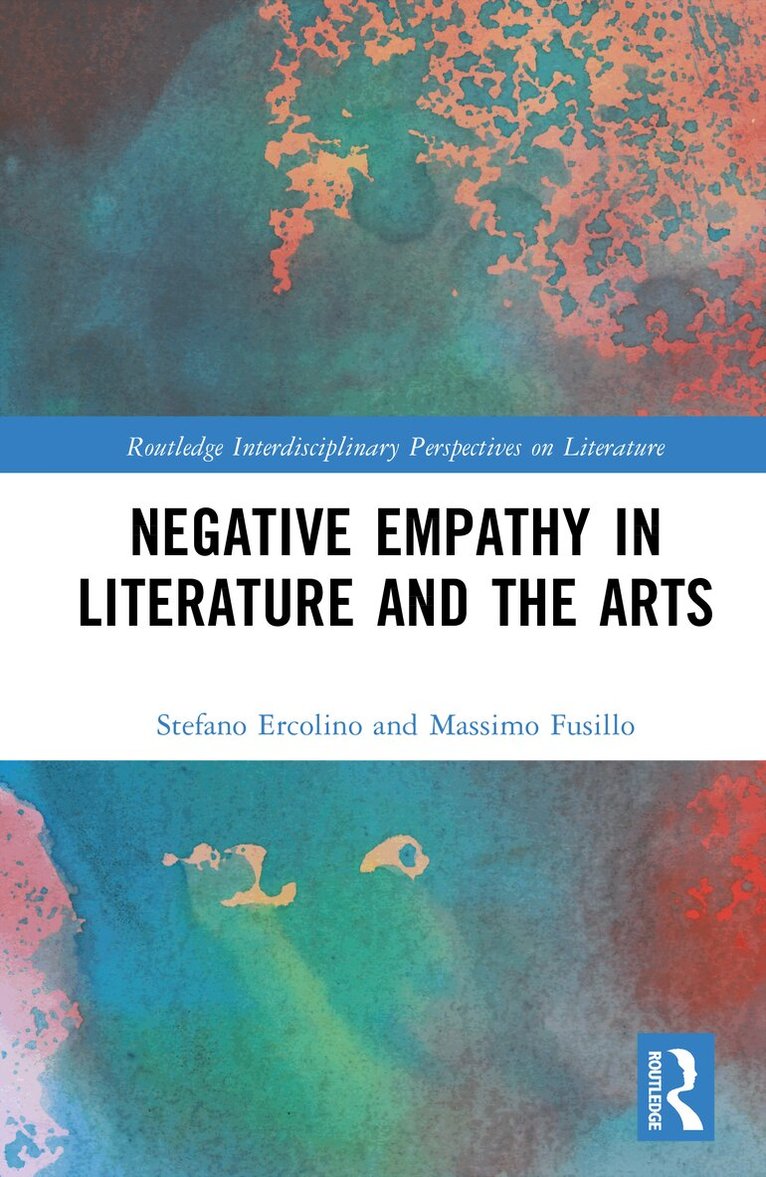
    Negative Empathy in Literature and the Arts

    AvStefano Ercolino,Massimo Fusillo

    Inbunden, Engelska, 2025

    Del i serien Routledge Interdisciplinary Perspectives on Literature

    2 784 kr

    Beställningsvara. Skickas inom 10-15 vardagar. Fri frakt över 249 kr.

    Beskrivning

    Negative Empathy in Literature and the Arts explores how readers and viewers engage cognitively and affectively with ethically troubling artworks across literature, the visual and performing arts, and screen media. Drawing on aesthetics, cultural history and theory, psychology, and neuroscience, Stefano Ercolino and Massimo Fusillo introduce the concept of “negative empathy” to describe the ambivalent and destabilizing emotional responses elicited by representations of negativity in art. Rather than dismissing empathy as naïve, the authors argue for a more nuanced understanding of its darker forms and their cognitive and ethical value. Through a comparative and intermedial approach, the book analyzes case studies from Littell’s The Kindly Ones to Wilson’s Deafman Glance; from Verdi’s Macbeth and Nitsch’s Theatre of Orgies and Mysteries to Caravaggio’s Martyrdom of Saint Matthew, Mapplethorpe’s “X” Portfolio, Kiefer’s The Seven Heavenly Palaces, Haneke’s The White Ribbon, and Gilligan’s Breaking Bad—offering a compelling new theory of aesthetic engagement.

    Produktinformation

    • Utgivningsdatum:2025-12-23
    • Mått:152 x 229 x 15 mm
    • Vikt:530 g
    • Format:Inbunden
    • Språk:Engelska
    • Serie:Routledge Interdisciplinary Perspectives on Literature
    • Antal sidor:186
    • Förlag:Taylor & Francis Ltd
    • ISBN:9781032958729

    Utforska kategorier

    • Konstböcker inom Kultur
    • Litteraturvetenskap inom Skönlitteratur
    • Psykologi: känslor inom Psykologi och pedagogik

    Mer om författaren

    Stefano Ercolino teaches literary theory and comparative literature at Ca’ Foscari University of Venice. He is the author of The Maximalist Novel: From Thomas Pynchon’s “Gravity’s Rainbow” to Roberto Bolaño’s “2666” and The Novel-Essay, 1884–1947. He co-edited Experimental Criticism: Franco Moretti and Literature.Massimo Fusillo teaches comparative literature at the Scuola Normale Superiore in Pisa. He is the author of several books, including The Fetish: Literature, Cinema, Visual Art. He co-edited The Gesamtkunstwerk as Synergy of the Arts and Thinking Narratively: Between Novel-Essay and Narrative Essay.

    Recensioner i media

    This timely contribution to narrative aesthetics revives and critically builds out from an underutilized aesthetic concept with theoretical nuance and creativity.-Sianne Ngai, George M. Pullman Distinguished Service Professor of English, University of Chicago, USAErcolino and Fusillo take Lipps’ notion of negative empathy and do some serious reconceptualizing aimed at making it a key item in the aesthetician’s toolbox. The result is an illuminating, often disturbing bringing together of works in many media: from Medea to Macbeth (opera), from Caravaggio to Kiefer.-Greg Currie, Emeritus Professor, University of York, UKErcolino and Fusillo cast a great deal of light on the imaginative empathy that, despite our moral distance, we extend to objectionable characters in literature and the arts. Original, analytically acute, and culturally rich.-Garry L. Hagberg, author of Living in Words: Literature, Autobiographical Language, and the Composition of SelfhoodStefano Ercolino and Massimo Fusillo’s study explores the dark side of empathetic responses to fiction, offering striking insights into its cognitive, ethical, and affective potential. Meticulously researched and supported by a broad range of close readings from multiple media, this book represents a major contribution to debates on narrative empathy. -Marco Caracciolo, Associate Professor of English and Literary Theory, Ghent University, BelgiumMacbeth, Caravaggio, Marina Abramovic and Walter White – This book traces “negative empathy” from the short duration of an image, a theatre play, and a performance to the long duration of novels and TV series, introducing empathy’s conflicted sibling and demonstrating how it provokes engagement and reflective distance in audiences.-Karin Kukkonen, Professor, University of Oslo, Norway

    Innehållsförteckning

    • List of FiguresWhy Negative Empathy?1. History and Theory of an Idea1.1 Resonance and Distance1.2 Empathetic Suffering1.3 Identification, Catharsis, Stimmung2. Seductions of Rhetoric2.1 Inner Torment, Psychological Complexity, Eloquence2.2 Brothers in the Night: Jonathan Littell’s The Kindly Ones3. In the Rhythm of the Scene3.1 Tragic Lacerations3.1.1 Empathy and Estrangement3.1.2 Medea’s Theatricality3.1.3 Repeating the Abnormal Act: Robert Wilson’s Deafman Glance3.2 The Force of the Voice3.2.1 The Dramaturgy of the Antagonist in Melodrama3.2.2 A Broken and Expressionist Song: Giuseppe Verdi’s Macbeth3.3 Beyond Representation3.3.1 Shadowy Actions3.3.2 The Ecstasy of Ritual Dismemberment: Hermann Nitsch’s Theater of Orgies and Mysteries4. Nostalgia and Anguish for Life4.1 The Power of Images, the Power of Empathy4.2 Stimmungseinfühlung4.3 Abstraction against Empathy4.4 Embodied Vision: Caravaggio’s Martyrdom of St. Matthew5. The Multiplied Gaze5.1 On Medusa’s Side5.1.1 The Frozen Moment5.1.2 Power Games5.1.3 Aestheticizing the Extreme: Robert Mapplethorpe’s “X” Portfolio5.2 Labyrinths of Perception5.2.1 Immersive Environments5.2.2 Among the Ruins of History: Anselm Kiefer’s Seven Heavenly Palaces6. Audiovisual Simulations6.1 In the Darkness of Their Eyes6.1.1 Identifying with Bad People6.1.2 Empathizing with a Community: Michael Haneke’s The White Ribbon6.2 Serial Pleasures6.2.1 TV Antiheroes6.2.2 Challenging Empathy: Vince Gilligan’s Breaking BadBibliographyIndex