• Fri frakt över 249 kr
  • •
  • Snabba leveranser
  • •
  • Billiga böcker
Kundservice

Du är på sajten för privatpersoner.

Företag, bibliotek eller offentlig verksamhet?

Du handlar på classic.bokus.com, där alla dina funktioner finns intakta.
Till classic.bokus.com
Bokus logotyp. Gå till startsidan.
  • Erbjudanden
  • Nyheter
  • Student
  • Topplistor
  • Barn & ungdom
  • Bokus Play
  • E-böcker
  • Pocketböcker
  • Spel & pussel

10% rabatt på allt med kod: NYSTART10 →

Sidfot

Mina sidor

    Hjälp

    • Kundservice
    • Vanliga frågor och svar
    • Frakt och leverans
    • Retur vid ångerrätt
    • Reklamera vara
    • Betalning
    • Köpvillkor
    • Allmänna villkor
    • Information om webbplatsens tillgänglighet

    Om Bokus

    • Om oss
    • Pressrum
    • För studenter
    • För företag
    • För bibliotek och offentlig verksamhet
    • För leverantörer
    • Hållbarhet

    Populärt

    • Aktuella erbjudanden
    • Presentkort
    • Studentlitteratur
    • Nya böcker
    • Topplistor
    • Signerade böcker
    • Engelska böcker

    Inspiration

    • Boktips
    • BookTok
    • Populära bokserier
    • Barnbokskaraktärer
    • Populära författare
    Logotyp för Bokus
    Följ oss på Facebook (extern länk)Följ oss på Instagram (extern länk)Följ oss på YouTube (extern länk)Följ oss på TikTok (extern länk)
    bokus @ CookiesAnpassa cookiesIntegritetspolicyKöpvillkor
    Till Citymail hemsida (extern länk)Till Budbee hemsida (extern länk)Till Postnord hemsida (extern länk)Till Schenker hemsida (extern länk)Till Early Bird hemsida (extern länk)Till Walleys hemsida (extern länk)
    1. Filosofi och religion
    2. Filosofi
    3. Filosofiska discipliner

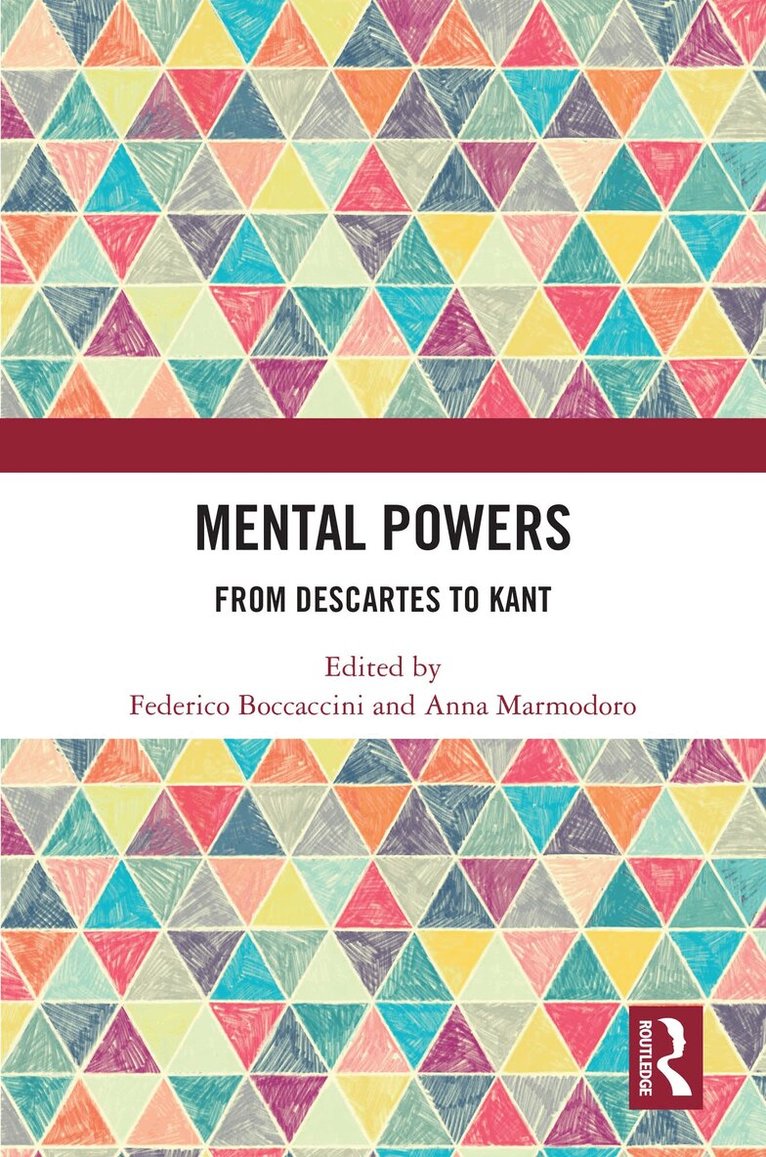
    Mental Powers

    From Descartes to Kant

    AvFederico Boccaccini,Anna Marmodoro

    Inbunden, Engelska, 2025

    2 421 kr

    Beställningsvara. Skickas inom 10-15 vardagar. Fri frakt över 249 kr.

    Beskrivning

    Scholars of the history of philosophy of mind have focused by and large on the early modern critique of the Aristotelian-scholastic theory of vegetative, sensory and intellectual faculties of the soul. While it is true that the early moderns attacked and abandoned the ‘old’ metaphysical conception of soul’s faculties, many thinkers of the period still continued to debate about, for or against, the limits and nature of the powers of thought – from Descartes to Kant. The notion of ‘mental power’ is central to these debates, and yet it has received little attention by specialists in modern philosophy. Taking into consideration some representative figures of modern thought like Descartes, Cudworth, Locke, Spinoza, Leibniz, Hume and Kant, this edited volume presents a general account of the concept of ‘mental power’ in the seventeenth and eighteenth centuries, focusing on the issue of how a sample of influential thinkers of that period analyzed, described and conceived the human agent’s mental abilities and skills as governing perception, action and moral behavior. This leads to innovative narrative which partially accounts for, in a broad sense, the rise of modern psychology and philosophy of mind. This book was originally published as a special issue of the British Journal for the History of Philosophy.

    Produktinformation

    • Utgivningsdatum:2025-09-29
    • Mått:156 x 234 x 16 mm
    • Vikt:530 g
    • Format:Inbunden
    • Språk:Engelska
    • Antal sidor:192
    • Förlag:Taylor & Francis Ltd
    • ISBN:9781032969923

    Utforska kategorier

    • Filosofiska discipliner inom Filosofi och religion

    Mer om författaren

    Federico Boccaccini is Senior Research Fellow of the Brazilian National Council for Scientific and Technological Development (CNPq) at the Department of Philosophy of the Federal University of Pernambuco, Recife, Brazil.Anna Marmodoro is Leonard and Elizabeth Eslick Professor of Philosophy at Saint Louis University, USA, and concomitantly Honorary Professor of Philosophy at Durham University, UK.

    Innehållsförteckning

    • Introduction - Mental Powers. From Descartes to Kant. 1. Descartes: new thoughts on the senses. 2. Salving the phenomena of mind: energy, hegemonikon, and sympathy in Cudworth. 3. Locke on attention. 4. Consciousness, ideas of ideas and animation in Spinoza’s Ethics. 5. Substance and force: or why it matters what we think. 6. A powerless conscience: Hume on reflection and acting conscientiously. 7. Kant on the spontaneous power of the mind. 8. Kant on the faculty of apperception.