Federico Boccaccini – författare
Visar alla böcker från författaren Federico Boccaccini. Handla med fri frakt och snabb leverans.
5 produkter
Mental Powers
From Descartes to Kant
Av Federico Boccaccini, Anna Marmodoro
Inbunden, 2025
2512 kr
Lägg i varukorg
Scholars of the history of philosophy of mind have focused by and large on the early modern critique of the Aristotelian-scholastic theory of vegetative, sensory and intellectual faculties of the soul. While it is true that the early moderns attacked and abandoned the ‘old’ metaphysical conception …
Mental Powers
From Descartes to Kant
Av Anna Marmodoro, Federico Boccaccini
E-bok, 2025
1000 kr
Lägg i varukorg
Scholars of the history of philosophy of mind have focused by and large on the early modern critique of the Aristotelian-scholastic theory of vegetative, sensory and intellectual faculties of the soul. While it is true that the early moderns attacked and abandoned the 'old' metaphysical conception …
Mental Powers
From Descartes to Kant
Av Anna Marmodoro, Federico Boccaccini
E-bok, 2025
1000 kr
Lägg i varukorg
Scholars of the history of philosophy of mind have focused by and large on the early modern critique of the Aristotelian-scholastic theory of vegetative, sensory and intellectual faculties of the soul. While it is true that the early moderns attacked and abandoned the 'old' metaphysical conception …
Franz Brentano
Av Mauro Antonelli, Federico Boccaccini
2018
18210 kr
Lägg i varukorg
Franz Brentano (1838–1917) was a leading philosopher and psychologist of the nineteenth century. Indeed, the impact of his scholarship was so great that he became synonymous with a school of thought and a new approach in scientific philosophy. The Brentano School stood against the Idealistic and …
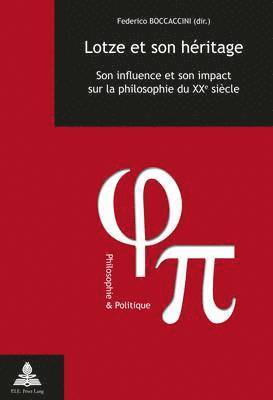
Lotze et son héritage
Son influence et son impact sur la philosophie du XXe siècle
Av Federico Boccaccini, Gabriel Fragnière m. fl.
Häftad, 2015
1101 kr
Lägg i varukorg
Rudolf Hermann Lotze (1817–1881) fut l’une des figures majeures de la philosophie allemande au XIX e siècle. Philosophe, logicien, psychologue, médecin, il a connu à son époque une renommée extraordinaire. Professeur de philosophie à l’Université de Göttingen, où il succéda à Herbart, il mena un …