• Fri frakt över 249 kr
  • •
  • Snabba leveranser
  • •
  • Billiga böcker
Kundservice

Du är på sajten för privatpersoner.

Företag, bibliotek eller offentlig verksamhet?

Du handlar på classic.bokus.com, där alla dina funktioner finns intakta.
Till classic.bokus.com
Bokus logotyp. Gå till startsidan.
  • Erbjudanden
  • Nyheter
  • Student
  • Topplistor
  • Barn & ungdom
  • Bokus Play
  • E-böcker
  • Pocketböcker
  • Spel & pussel

10% rabatt på allt med kod: NYSTART10 →

Sidfot

Mina sidor

    Hjälp

    • Kundservice
    • Vanliga frågor och svar
    • Frakt och leverans
    • Retur vid ångerrätt
    • Reklamera vara
    • Betalning
    • Köpvillkor
    • Allmänna villkor
    • Information om webbplatsens tillgänglighet

    Om Bokus

    • Om oss
    • Pressrum
    • För studenter
    • För företag
    • För bibliotek och offentlig verksamhet
    • För leverantörer
    • Hållbarhet

    Populärt

    • Aktuella erbjudanden
    • Presentkort
    • Studentlitteratur
    • Nya böcker
    • Topplistor
    • Signerade böcker
    • Engelska böcker

    Inspiration

    • Boktips
    • BookTok
    • Populära bokserier
    • Barnbokskaraktärer
    • Populära författare
    Logotyp för Bokus
    Följ oss på Facebook (extern länk)Följ oss på Instagram (extern länk)Följ oss på YouTube (extern länk)Följ oss på TikTok (extern länk)
    bokus @ CookiesAnpassa cookiesIntegritetspolicyKöpvillkor
    Till Citymail hemsida (extern länk)Till Budbee hemsida (extern länk)Till Postnord hemsida (extern länk)Till Schenker hemsida (extern länk)Till Early Bird hemsida (extern länk)Till Walleys hemsida (extern länk)
    1. Ekonomi och Ledarskap
    2. Nationalekonomi
    3. Ekonomisk historia
    • Nyhet

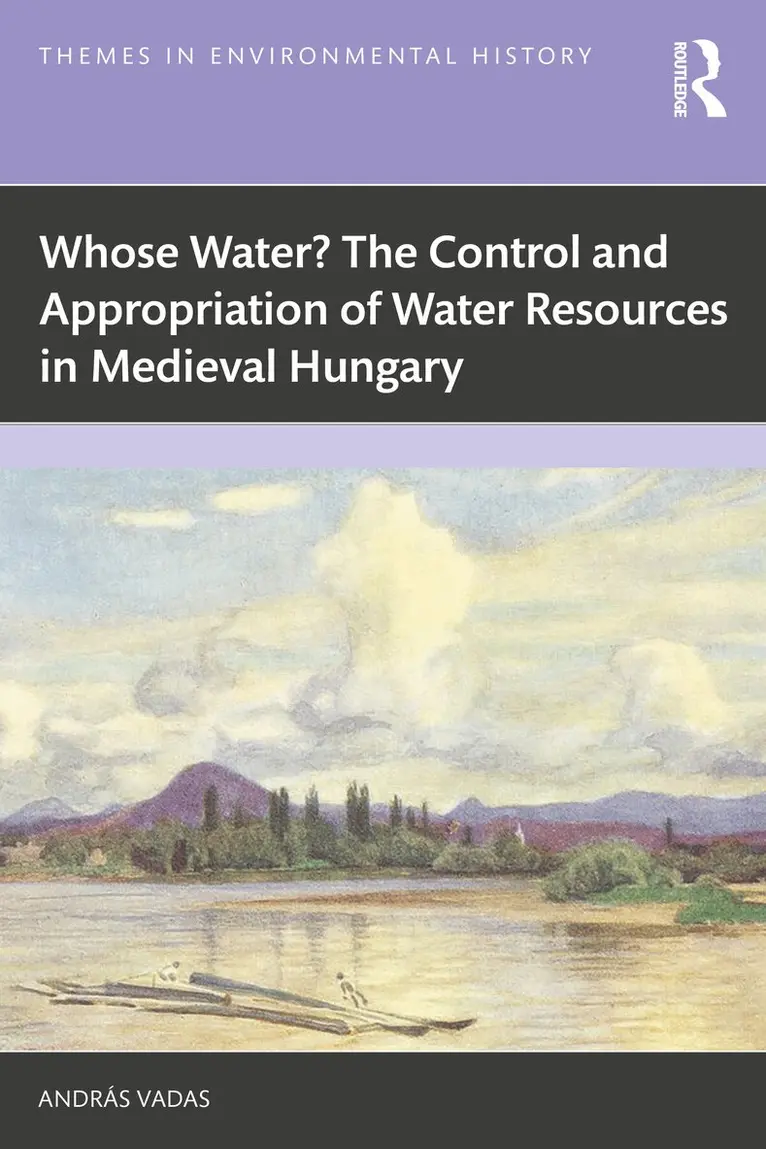
    Whose Water? The Control and Appropriation of Water Resources in Medieval Hungary

    AvAndrás Vadas

    Inbunden, Engelska, 2026

    Del i serien Themes in Environmental History

    2 493 kr

    Beställningsvara. Skickas inom 10-15 vardagar. Fri frakt över 249 kr.

    Fler format och utgåvor

    E-bok

    Kommande

    E-bok

    Kommande

    Beskrivning

    Whose Water? The Control and Appropriation of Water Resources in Medieval Hungary addresses conflicts surrounding water management, a space where different economic and other socio-political interests meet and sometimes clash. The geographical space that it focuses on is the Kingdom of Hungary, and the time frame is the period from the foundation of the Christian state around the year 1000 to the late medieval period. Modern politics focuses on who has legitimate claims in water-related disputes, but for historians, it is certainly more relevant to understand how such conflicts were approached and resolved in the past. These questions include what kind of disputes unfolded concerning water use; to what degree water was conceived as a private or common good; and how different interests were aligned with each other. Throughout the book’s chapters, it is argued that the use of water by the societies of the Kingdom of Hungary in the Middle Ages gave rise to complex sets of customs and norms that, until the modern era, were the most important principles for settling water-use disputes. Whose Water? The Control and Appropriation of Water Resources in Medieval Hungary will be of interest to students and scholars of environmental and landscape history, as well as those studying the legal and urban history of premodern Europe.

    Produktinformation

    • Utgivningsdatum:2026-08-10
    • Mått:156 x 234 x 19 mm
    • Vikt:770 g
    • Format:Inbunden
    • Språk:Engelska
    • Serie:Themes in Environmental History
    • Antal sidor:314
    • Förlag:Taylor & Francis Ltd
    • ISBN:9781032980706

    Utforska kategorier

    • Ekonomisk historia inom Ekonomi och Ledarskap
    • Naturvetenskapens historia inom Naturvetenskap och teknik
    • Historia: särskilda händelser och ämnen inom Historia och arkeologi

    Mer om författaren

    András Vadas is an associate professor in medieval history at Eötvös Loránd University, Budapest, Hungary. He graduated from the same institution (PhD, 2015) and the Central European University (PhD, 2020). He was awarded a Fulbright Postdoctoral Scholarship at Georgetown University (2017) and taught at Columbia University as an István Deák Visiting Professor (2025). He is the author or editor of about a dozen books in English and Hungarian on the environmental, urban, and economic history of premodern Central Europe. His first English- language monograph, The Environmental Legacy of War on the Hungarian-Ottoman Frontier, was published in 2023.

    Innehållsförteckning

    • List of Figures and TablesList of AbbreviationsAcknowledgmentsA Note on Names1. Introduction1.1. Riverine Landscapes as Conflict Environments in Premodern Europe – Some Historiographic Reflections1.1.1. New Directions in Research – Where Environmental, Social, and Technological History Meet1.1.2. Hungary and Central Europe – Research Traditions and Recent Results1.2. The Goals of this Work 1.2.1. Time and Space1.2.2. About Sources 1.3. The Structure of the Book2. The Spread of Water Mills in Medieval Hungary with a Central European Overview2.1. Mills and Benedictines – Some Preliminary Considerations2.2. The First Water Mills in the Region – Historical Evidence, Linguistics, and (the Lack of) Archaeological Data2.3. Conclusions3. Waterscapes as Conflict Environments in Late Medieval Hungary3.1. Legal Regulations and Practice of Mill Construction in Medieval Hungary3.1.1. Locus molendini – A Place, a Right, a Claim?3.1.2. Locus Molendini in Early Literacy – First References and Terminological Unifications3.1.3. Terminological Uniformity – Uniformity in Meaning?3.1.4. Mills and Mill Sites – How Do They Relate to Each Other?3.2. Rivers in Urban Landscapes – Rivers, Streams, Moats, and Disputes3.2.1. Major Waterways and Mills – The Example of Buda, Óbuda, and Pest3.2.2. Streams and Mills in Urban Environments – the Cases of Zagreb and Felhévíz3.2.2.1. Felhévíz and its Hot Springs3.2.3. Urban Moats and Water-Use3.2.3.1. Building Moats, Using Their Waters – A Short Overview 3.2.3.2. The Case of Sopron3.2.3.3. The Case of Prešov3.2.3.4. Moats, Urban Topographies, and Mills – Some Conclusions3.3 Rivers in Mining Areas – Abundance of Water versus Lack of Access?3.3.1. Mining Town Privileges and Water-Use3.3.2. Early Urban Privileges and Water Use3.3.3. Kremnica and Its Water Mills 3.3.4. The Foundation of Nová Baňa and its Water Mills3.3.5. Mills in Mining Towns: Who Was Entitled to What?3.4. Rivers as Borders – Another Minefield?3.4.1. The Border between Ľubotín and Orlov – What Can a Single Case Reveal?3.4.2. Riverbed Changes and Estate Borders – Was There a Medieval Customary Law in Hungary?3.4.3. Riverbeds and Borders – Some Conclusions3.5. Conclusions: Rivers as Conflict Environments4. The Men behind the Wheel… Building on Water in the Middle Ages4.1. The Renovation of the Moat of Sopron in 1540 – A Unique Source4.1.1. The Expenditures on the Work4.1.2. The Labor Organization4.2. Millers4.3. Ditch and Pond Diggers and Pond Masters4.4. Conclusions5. Conclusions and Outlook5.1. The Politics of Water – An EpilogueAppendicesBibliographyIndex