• Fri frakt över 249 kr
  • •
  • Snabba leveranser
  • •
  • Billiga böcker
Kundservice

Du är på sajten för privatpersoner.

Företag, bibliotek eller offentlig verksamhet?

Du handlar på classic.bokus.com, där alla dina funktioner finns intakta.
Till classic.bokus.com
Bokus logotyp. Gå till startsidan.
  • Erbjudanden
  • Nyheter
  • Student
  • Topplistor
  • Barn & ungdom
  • Bokus Play
  • E-böcker
  • Pocketböcker
  • Spel & pussel

10% rabatt på allt med kod: NYSTART10 →

Sidfot

Mina sidor

    Hjälp

    • Kundservice
    • Vanliga frågor och svar
    • Frakt och leverans
    • Retur vid ångerrätt
    • Reklamera vara
    • Betalning
    • Köpvillkor
    • Allmänna villkor
    • Information om webbplatsens tillgänglighet

    Om Bokus

    • Om oss
    • Pressrum
    • För studenter
    • För företag
    • För bibliotek och offentlig verksamhet
    • För leverantörer
    • Hållbarhet

    Populärt

    • Aktuella erbjudanden
    • Presentkort
    • Studentlitteratur
    • Nya böcker
    • Topplistor
    • Signerade böcker
    • Engelska böcker

    Inspiration

    • Boktips
    • BookTok
    • Populära bokserier
    • Barnbokskaraktärer
    • Populära författare
    Logotyp för Bokus
    Följ oss på Facebook (extern länk)Följ oss på Instagram (extern länk)Följ oss på YouTube (extern länk)Följ oss på TikTok (extern länk)
    bokus @ CookiesAnpassa cookiesIntegritetspolicyKöpvillkor
    Till Citymail hemsida (extern länk)Till Budbee hemsida (extern länk)Till Postnord hemsida (extern länk)Till Schenker hemsida (extern länk)Till Early Bird hemsida (extern länk)Till Walleys hemsida (extern länk)
    1. Psykologi och pedagogik
    2. Pedagogik
    3. Specialundervisning
    • Nyhet

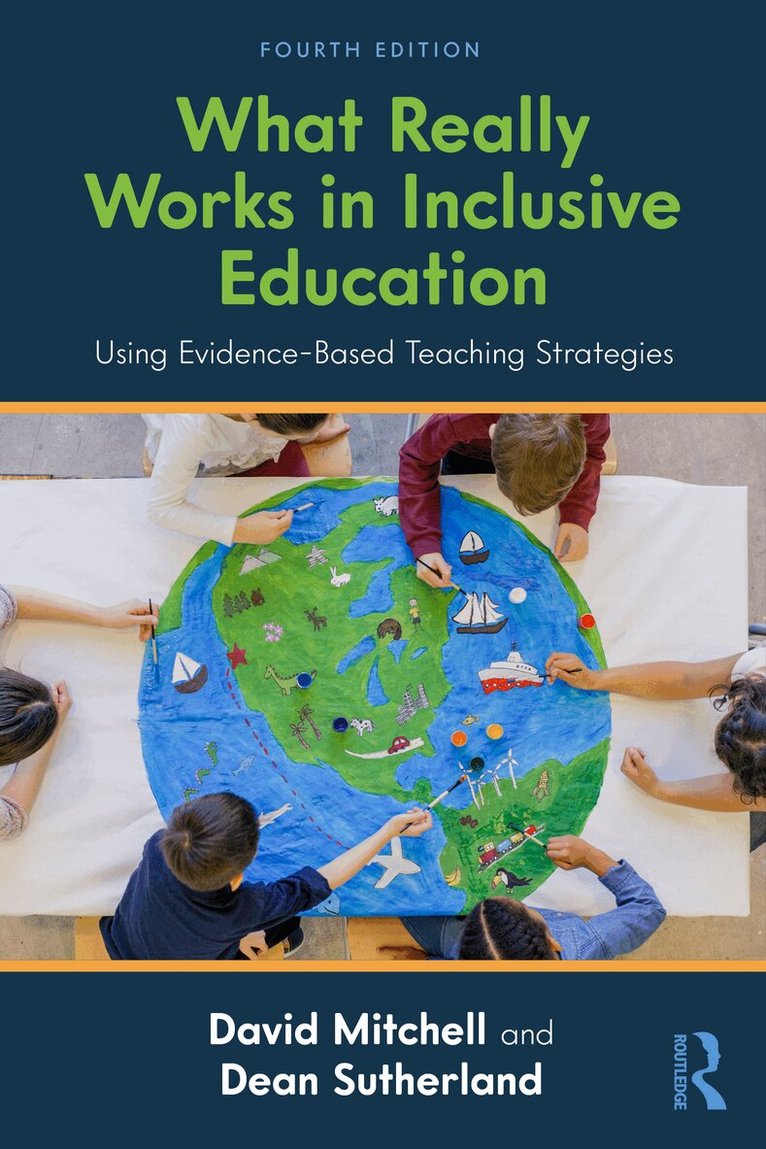
    What Really Works in Inclusive Education

    Using Evidence-Based Teaching Strategies

    AvDavid Mitchell,Dean Sutherland

    Häftad, Engelska, 2026

    539 kr

    Beställningsvara. Skickas inom 10-15 vardagar. Fri frakt över 249 kr.

    Fler format och utgåvor

    Inbunden

    2 355 kr

    Beskrivning

    This fully revised and updated fourth edition of the bestselling What Really Works in Inclusive Education focuses on more than 32 specific, evidence-based teaching strategies for addressing the needs of diverse learners. A significant revision with nine new chapters, this edition takes a whole-child approach to inclusive education. It is a book for all educators of all learners.The strategies are based on high-quality research drawn from a range of countries and have a strong theoretical rationale, including inclusive education, neuroscience, ecology and a model of learning and teaching. The expert authors also consider behavioural challenges facing learners and how they can be interpreted in an evolutionary context. Key features include:Teaching strategies grouped into four approaches to learning: behavioural, social, cognitive and mixed;New chapters on diversities among learners, comprehensive mathematics programmes, music, exercise, dance, the natural environment and the future of education;Expansion of topics including artificial intelligence, diet and exercise, and multi-tiered systems of support; andAn extended scope to include those with disabilities, and those from low socio-economic backgrounds, ethnic minorities and LGBTQ+ learners.To assist readers, it includes examples of strategies being used in schools, recommended videos, suggested discussion topics and learning activities.This essential text is ideal for classroom teachers, school leaders, teacher educators, educational psychologists, special needs coordinators, educational researchers and students in initial teacher education seeking practical, evidence-based resources for inclusive teaching.

    Produktinformation

    • Utgivningsdatum:2026-07-24
    • Mått:232 x 28 x 147 mm
    • Vikt:780 g
    • Format:Häftad
    • Språk:Engelska
    • Antal sidor:472
    • Upplaga:4
    • Förlag:Taylor & Francis Ltd
    • ISBN:9781032993157

    Utforska kategorier

    • Specialundervisning inom Psykologi och pedagogik

    Mer om författaren

    David Mitchell is Adjunct Professor, School of Educational Studies and Leadership, University of Canterbury, Christchurch, New Zealand.Dean Sutherland is Associate Professor, School of Psychology, Speech and Hearing, University of Canterbury, Christchurch, New Zealand.

    Innehållsförteckning

    • PrefaceChapter 1 IntroductionPART I FOUNDATIONSChapter 2 Learners with additional needs and their educational outcomesChapter 3 Evidence-based educationChapter 4 NeuroscienceChapter 5 Quality education for allChapter 6 An ecological modelChapter 7 A learning and teaching modelChapter 8 Learning from evolutionPART II STRATEGIES A. Behavioural Strategies Chapter 9 Strategy 1: Behavioural assessment and approachesChapter 10 Strategy 2: Review and practiceChapter 11 Strategy 3: Direct instructionChapter 12 Strategy 4: Formative assessment and feedbackChapter 13 Strategy 5: School-wide positive behaviour supportB. Social strategies Chapter 14 Strategy 6: Cooperative group teachingChapter 15 Strategy 7: Peer tutoring and peer influencesChapter 16 Strategy 8: Social skills trainingChapter 17 Strategy 9: Collaborative teachingChapter 18 Strategy 10: Family engagement and supportChapter 19 Strategy 11: School cultureChapter 20 Strategy 12: Classroom climateChapter 21 Strategy 13: Social and emotional learningChapter 22 Strategy 14: Inter-agency cooperationC. Cognitive strategies Chapter 23 Strategy 15: Cognitive strategy instructionChapter 24 Strategy 16: Self-regulated learningChapter 25 Strategy 17: Memory strategiesChapter 26 Strategy 18: Reading comprehension and phonological awarenessChapter 27 Strategy 19: Comprehensive reading programmesChapter 28 Strategy 20: Comprehensive mathematics programmesD. Mixed strategies Chapter 29 Strategy 21: Cognitive behavioural therapyChapter 30 Strategy 22: Assistive technology (including Artificial Intelligence)Chapter 31 Strategy 23: Augmentative and alternative communicationChapter 32 Strategy 24: The natural environmentChapter 33 Strategy 25 The built environmentChapter 34 Strategy 26: Visual learning and communicationChapter 35 Strategy 27: Early interventionChapter 36 Strategy 28: Transition from school to post-school environmentsChapter 37 Strategy 29: Multi-tiered systems of supportChapter 38 Strategy 30: Universal Design for LearningChapter 39 Strategy 31: MusicChapter 40 Strategy 32: Exercise and dancePART III CONCLUSION Chapter 41 From research to practiceChapter 42 The future of education: A transformative journeyChapter 43 ConclusionIndex