• Fri frakt över 249 kr
  • •
  • Snabba leveranser
  • •
  • Billiga böcker
Kundservice

Du är på sajten för privatpersoner.

Företag, bibliotek eller offentlig verksamhet?

Du handlar på classic.bokus.com, där alla dina funktioner finns intakta.
Till classic.bokus.com
Bokus logotyp. Gå till startsidan.
  • Erbjudanden
  • Nyheter
  • Student
  • Topplistor
  • Barn & ungdom
  • Bokus Play
  • E-böcker
  • Pocketböcker
  • Spel & pussel

10% rabatt på allt med kod: NYSTART10 →

Sidfot

Mina sidor

    Hjälp

    • Kundservice
    • Vanliga frågor och svar
    • Frakt och leverans
    • Retur vid ångerrätt
    • Reklamera vara
    • Betalning
    • Köpvillkor
    • Allmänna villkor
    • Information om webbplatsens tillgänglighet

    Om Bokus

    • Om oss
    • Pressrum
    • För studenter
    • För företag
    • För bibliotek och offentlig verksamhet
    • För leverantörer
    • Hållbarhet

    Populärt

    • Aktuella erbjudanden
    • Presentkort
    • Studentlitteratur
    • Nya böcker
    • Topplistor
    • Signerade böcker
    • Engelska böcker

    Inspiration

    • Boktips
    • BookTok
    • Populära bokserier
    • Barnbokskaraktärer
    • Populära författare
    Logotyp för Bokus
    Följ oss på Facebook (extern länk)Följ oss på Instagram (extern länk)Följ oss på YouTube (extern länk)Följ oss på TikTok (extern länk)
    bokus @ CookiesAnpassa cookiesIntegritetspolicyKöpvillkor
    Till Citymail hemsida (extern länk)Till Budbee hemsida (extern länk)Till Postnord hemsida (extern länk)Till Schenker hemsida (extern länk)Till Early Bird hemsida (extern länk)Till Walleys hemsida (extern länk)
    1. Samhälle och politik
    2. Samhälle och kultur
    3. Kultur och medier
    4. Referensverk och tvärvetenskap

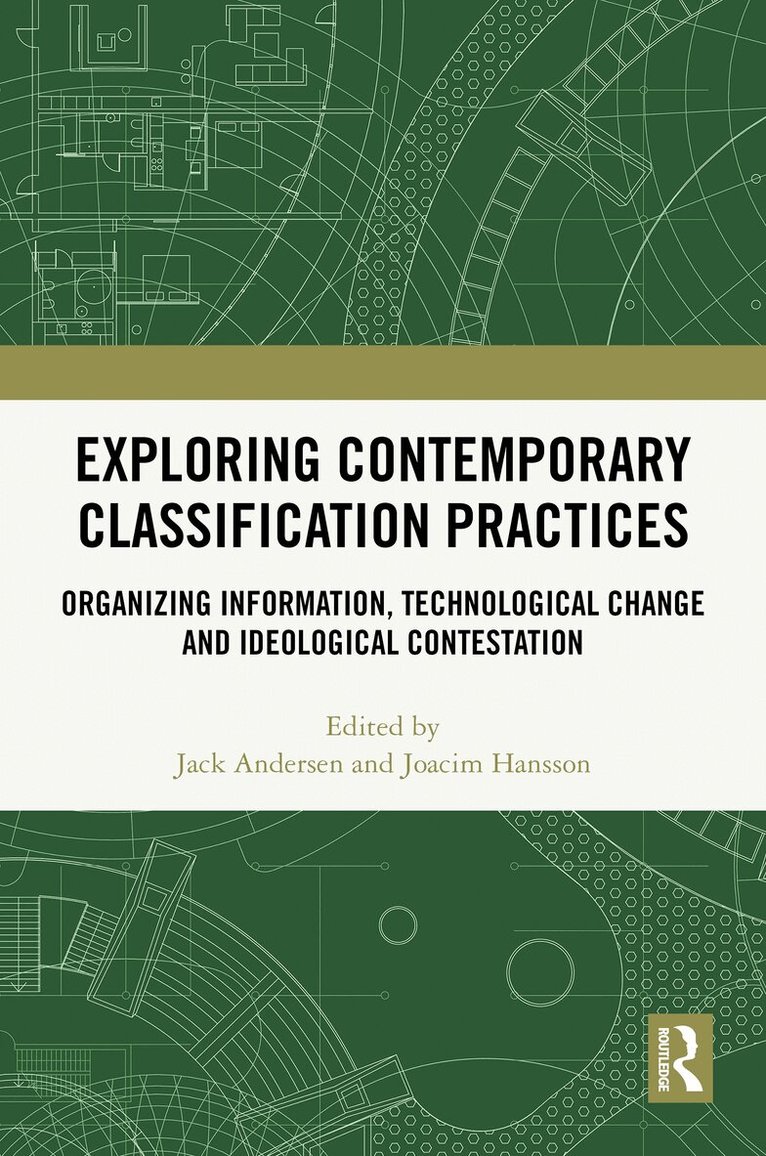
    Exploring Contemporary Classification Practices

    Organizing Information, Technological Change and Ideological Contestation

    AvJack Andersen,Joacim Hansson

    Inbunden, Engelska, 2025

    2 386 kr

    Beställningsvara. Skickas inom 10-15 vardagar. Fri frakt över 249 kr.

    Beskrivning

    The contributions in Exploring Contemporary Classification Practices analyse various aspects of classification and their importance to contemporary debates surrounding cultural heritage and information access.Specific focus is on systems of classification, media technologies, and cultural institutions (such as libraries, archives, and museums) and how they respond to challenges, including classificatory bias, truth, neutrality, institutional tradition, and technological innovation. Raising awareness of classification practices in modern culture serves to emphasize how sorting things into categories is both an everyday accomplishment and a highly cultural and political activity with consequences for those who are classified and for those who classify. Throughout this book, ‘classification’ is defined as the practice and activity of systematically ordering and categorizing entities to bring structure and understanding to diverse contexts. This book addresses several timely issues both in terms of theoretical advancement and empirical diversity. The scholarly discussion on the classification and organization of knowledge has developed with digital technologies from a bibliographic paradigm into something much wider, as the need for metadata and classification has become critical for usability and legitimacy. This development has also led research on classification and knowledge organization to confront a new, post-humanist reality with not only emerging varieties of information currents in society, but also the development of new theoretical and methodological strands, such as post-colonial and intersectional perspectives, and digital humanities methodologies. In doing so, this book seeks to address critical questions for the archives, library, and museum sectors concerning the organization of information.Exploring Contemporary Classification Practices will, therefore be of interest to academics, researchers, and practitioners with interests in library and information science, archives, cultural heritage, and digital heritage.

    Produktinformation

    • Utgivningsdatum:2025-07-15
    • Mått:156 x 234 x 17 mm
    • Vikt:570 g
    • Format:Inbunden
    • Språk:Engelska
    • Antal sidor:210
    • Förlag:Taylor & Francis Ltd
    • ISBN:9781032997230

    Utforska kategorier

    • Referensverk och tvärvetenskap inom Samhälle och politik

    Mer om författaren

    Jack Andersen is an Associate Professor with a PhD in the Department of Communication at the University of Copenhagen. His research focuses on how classification practices, particularly in digital media, influence the categorization, understanding, and treatment of information, individuals, and groups in society. Andersen investigates the social, cultural, and political implications of these practices, which range from algorithms to digital archiving. His work incorporates concepts from rhetorical genre theory, classification theory, cultural techniques, communication and media theory, as well as cultural and social theory.Joacim Hansson is Professor of Library and Information Science at the Department of Cultural Sciences, Linnaeus University, Sweden. His research focuses on three main areas: Library Studies, with a special focus on the institutional identities of public libraries in contemporary democratic development; Document Theory; and Knowledge Organization with a special focus on classification theory and the relationship between metadata practices and societal development, from both historical and contemporary perspectives. He is Academic Leader at the European University for Well-being (EUniWell) and Head of the Linnaeus University Critical Knowledge Organization Research Group.

    Innehållsförteckning

    • 1. Exploring Classification Practices in Contemporary Culture: An Introduction; Part 1: The Use of Technologies in Classification Work: Social and Cultural Implications; 2. Classifying Humans in the Age of AI; 3. The Automation of Genre: Popular Culture, Classification and the Will to Automate; 4. Classification, Photography, Eugenics: The Colonial Machine in Sápmi; Part 2: Cultural Heritage and New Materialism; 5. The Value of Damaged Goods: Experimenting with New Materialist Classification; 6. Metadata for Indigenous Collections: the case of Museum of World Culture; 7. The Artist’s Name – On Rhizomatic Structures and a Gendering Divider; Part 3: Classification as method and analytic strategy; 8. LGBTQ+ Fiction Indexing: Comparing the Value of Professional Index Terms, Social Tags and Automatically Assigned Terms for Information Retrieval; 9. Selecting Everything: Digitization as an Act of Classification; 10. Representing the Aboutness of Fiction: Three Perspectives Toward Classification and Access to Fictional Content; 11. Boundary Work and the Classification of Scientific Quality in Infrastructures for Performance-Based Research Funding