• Fri frakt över 249 kr
  • •
  • Snabba leveranser
  • •
  • Billiga böcker
Kundservice

Du är på sajten för privatpersoner.

Företag, bibliotek eller offentlig verksamhet?

Du handlar på classic.bokus.com, där alla dina funktioner finns intakta.
Till classic.bokus.com
Bokus logotyp. Gå till startsidan.
  • Erbjudanden
  • Nyheter
  • Student
  • Topplistor
  • Barn & ungdom
  • Bokus Play
  • E-böcker
  • Pocketböcker
  • Spel & pussel

10% rabatt på allt med kod: NYSTART10 →

Sidfot

Mina sidor

    Hjälp

    • Kundservice
    • Vanliga frågor och svar
    • Frakt och leverans
    • Retur vid ångerrätt
    • Reklamera vara
    • Betalning
    • Köpvillkor
    • Allmänna villkor
    • Information om webbplatsens tillgänglighet

    Om Bokus

    • Om oss
    • Pressrum
    • För studenter
    • För företag
    • För bibliotek och offentlig verksamhet
    • För leverantörer
    • Hållbarhet

    Populärt

    • Aktuella erbjudanden
    • Presentkort
    • Studentlitteratur
    • Nya böcker
    • Topplistor
    • Signerade böcker
    • Engelska böcker

    Inspiration

    • Boktips
    • BookTok
    • Populära bokserier
    • Barnbokskaraktärer
    • Populära författare
    Logotyp för Bokus
    Följ oss på Facebook (extern länk)Följ oss på Instagram (extern länk)Följ oss på YouTube (extern länk)Följ oss på TikTok (extern länk)
    bokus @ CookiesAnpassa cookiesIntegritetspolicyKöpvillkor
    Till Citymail hemsida (extern länk)Till Budbee hemsida (extern länk)Till Postnord hemsida (extern länk)Till Schenker hemsida (extern länk)Till Early Bird hemsida (extern länk)Till Walleys hemsida (extern länk)
    1. Samhälle och politik
    2. Samhälle och kultur
    3. Kultur och medier
    4. Referensverk och tvärvetenskap

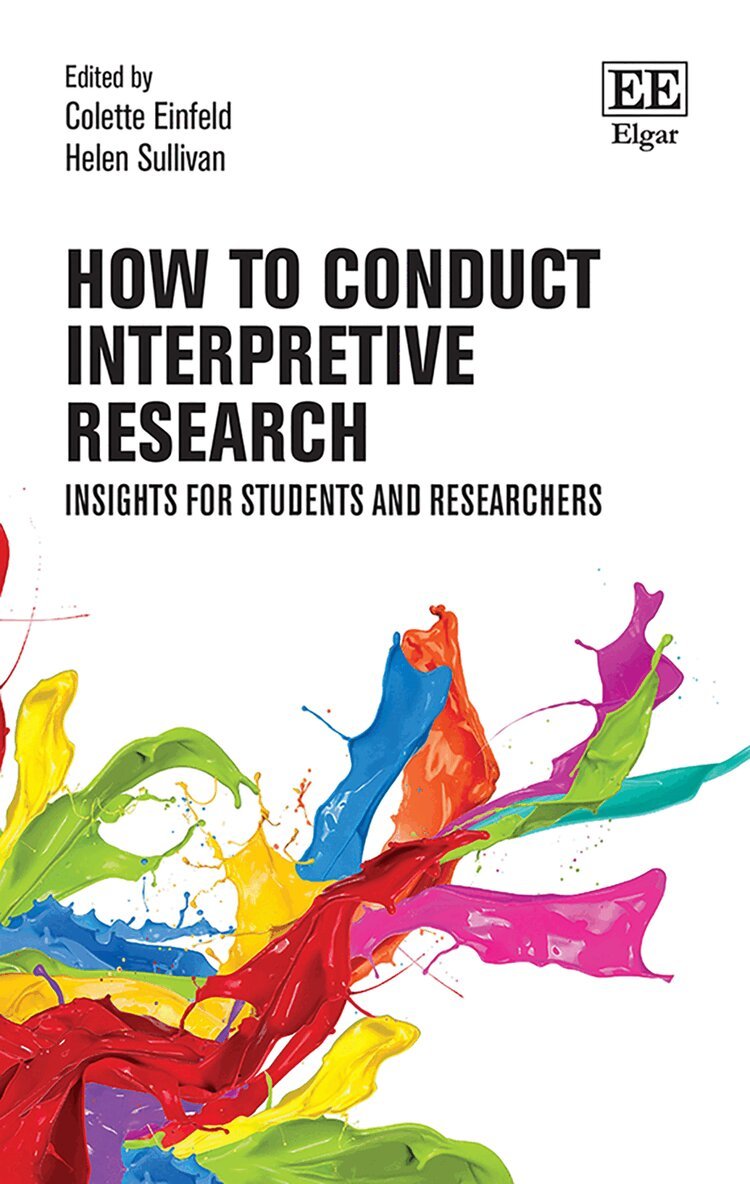
    How to Conduct Interpretive Research

    Insights for Students and Researchers

    AvColette Einfeld,Helen Sullivan

    Inbunden, Engelska, 2025

    Del i serien How to Research Guides

    1 522 kr

    Beställningsvara. Skickas inom 5-8 vardagar. Fri frakt över 249 kr.

    Beskrivning

    This innovative book provides valuable insights into the processes and methodologies of interpretive research. Colette Einfeld and Helen Sullivan bring together contributors at different stages of their careers to share their experiences of writing, supervising, and examining both interpretive and critical PhDs.Chapters analyse how to approach an interpretive research path, demonstrating how this can differ from conventional dissertations and projects. Academics discuss the experiences and challenges of fieldwork, including detailed case studies such as indigenous land claims in Cambodia, and research ‘by proxy’ in Myanmar. Einfeld and Sullivan emphasise the importance of flexibility in interpretive approaches and challenge the traditional narrative that emotions are separate from research, advocating for a thoughtful and rigorous approach to produce stronger results. The book also assesses the expectations of supervisors and examiners and explores what a career as an interpretive researcher can look like.How to Conduct Interpretive Research is a vital resource for academic researchers and students, particularly new PhD students who are considering different research paths. Its focus on political science, international relations, and social sciences also make this prime readership for scholars of these disciplines.

    Produktinformation

    • Utgivningsdatum:2025-07-18
    • Mått:156 x 234 x undefined mm
    • Format:Inbunden
    • Språk:Engelska
    • Serie:How to Research Guides
    • Förlag:Edward Elgar Publishing Ltd
    • ISBN:9781035313983

    Utforska kategorier

    • Referensverk och tvärvetenskap inom Samhälle och politik
    • Sociologi inom Samhälle och politik

    Mer om författaren

    Edited by Colette Einfeld and Helen Sullivan, College of Asia and Pacific, The Australian National University

    Recensioner i media

    ‘In an age where computational methods dominate the social sciences, this book offers a timely and vital reminder of the power and necessity of deep, situated interpretation. Through rich, reflective accounts of interpretive fieldwork, it demonstrates how meaning emerges not from data alone, but through engaged, context-sensitive inquiry. For anyone grappling with the tension between mechanistic analysis and the lived realities of research participants, this volume is both a guide and an inspiration.’

    Innehållsförteckning

    • ContentsForeword xiIntroduction to How to Conduct Interpretive Research 1Colette Einfeld and Helen Sullivan1 Doing fieldwork in interpretive research: encounters online,offline, and in the spaces in-between 16Berit Bliesemann de Guevara and Louise Ridden2 Kairotic meshwork – thesis-making enacted in the selvedge 32Tamara Mulherin3 Moving in and out of the field: discourse, logics, and criticalexplanation 48Steven Griggs and David Howarth4 When creativity meets pragmatism: an experiential accountof conducting document analysis and interviews for aninterpretive project 65Hali Aprimadya5 Fieldwork experience about Indigenous land claims andlivelihood reconfigurations in the upland regions of Cambodia 80Sarou Long6 Emotions in interpretive research 94Helen Sullivan7 Policy translation in interpretive policy research: insightsfrom a think tank in Thailand 107Pobsook Chamchong and Piyapong Boossabong8 Preserving the craft: reflections on teaching an interpretivemethods spring school 124John Boswell, Jack Corbett, Tamara Metze and R. A. W. Rhodes9 Observations on supervision – navigation and negotiation 135Colette Einfeld and Helen Sullivan10 Don’t overcook the turkey: how to avoid overstructuringinterpretive research 148Stephen Jeffares11 Examining interpretive theses: a personal reflection 162Sophie Yates and Janine O’FlynnConclusion to How to Conduct Interpretive Research: what’s next? 176Helen Sullivan and Colette Einfeld