• Fri frakt över 249 kr
  • •
  • Snabba leveranser
  • •
  • Billiga böcker
Kundservice

Du är på sajten för privatpersoner.

Företag, bibliotek eller offentlig verksamhet?

Du handlar på classic.bokus.com, där alla dina funktioner finns intakta.
Till classic.bokus.com
Bokus logotyp. Gå till startsidan.
  • Erbjudanden
  • Nyheter
  • Student
  • Topplistor
  • Barn & ungdom
  • Bokus Play
  • E-böcker
  • Pocketböcker
  • Spel & pussel

10% rabatt på allt med kod NYSTART10 →

Sidfot

Mina sidor

    Hjälp

    • Kundservice
    • Vanliga frågor och svar
    • Frakt och leverans
    • Retur vid ångerrätt
    • Reklamera vara
    • Betalning
    • Köpvillkor
    • Allmänna villkor
    • Information om webbplatsens tillgänglighet

    Om Bokus

    • Om oss
    • Pressrum
    • För studenter
    • För företag
    • För bibliotek och offentlig verksamhet
    • För leverantörer
    • Hållbarhet

    Populärt

    • Aktuella erbjudanden
    • Presentkort
    • Studentlitteratur
    • Nya böcker
    • Topplistor
    • Signerade böcker
    • Engelska böcker

    Inspiration

    • Boktips
    • BookTok
    • Populära bokserier
    • Barnbokskaraktärer
    • Populära författare
    Logotyp för Bokus
    Följ oss på Facebook (extern länk)Följ oss på Instagram (extern länk)Följ oss på YouTube (extern länk)Följ oss på TikTok (extern länk)
    bokus @ CookiesAnpassa cookiesIntegritetspolicyKöpvillkor
    Till Citymail hemsida (extern länk)Till Budbee hemsida (extern länk)Till Postnord hemsida (extern länk)Till Schenker hemsida (extern länk)Till Early Bird hemsida (extern länk)Till Walleys hemsida (extern länk)
    1. Psykologi och pedagogik
    2. Pedagogik
    3. Utbildningsstrategier och utbildningspolitik

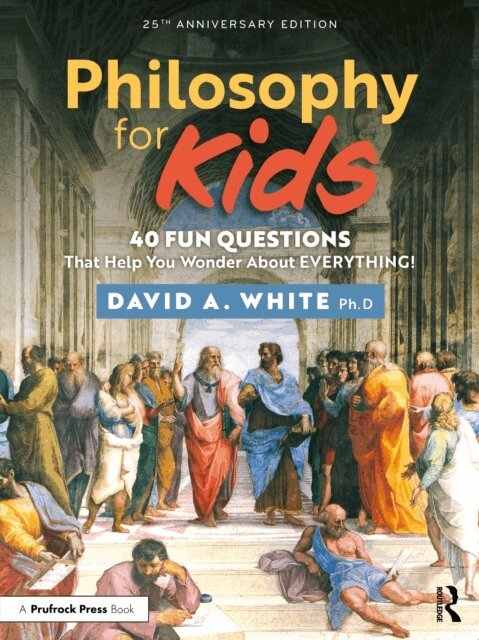
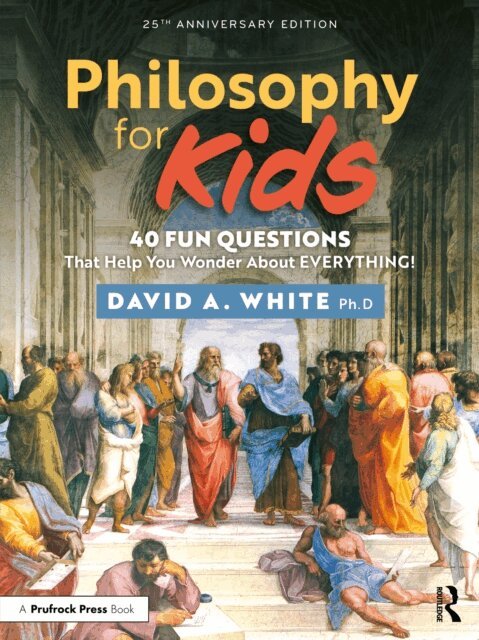
    Philosophy for Kids

    40 Fun Questions That Help You Wonder About Everything!

    AvDavid White

    Häftad, Engelska, 2025

    389 kr

    Beställningsvara. Skickas inom 10-15 vardagar. Fri frakt över 249 kr.

    Fler format och utgåvor

    E-bok

    470 kr

    E-bok

    471 kr

    Beskrivning

    Inspire animated discussions of questions that concern kids—and all of us—with this innovative, interactive book. Open your students’ minds to the wonders of philosophy.Allow them to grapple with the questions philosophers have discussed since the ancient Greeks. Questions include: “Who are your friends?,” “Can computers think?,” “Can something logical not make sense?,” and “Can you think about nothing?” Young minds will find these questions to be both entertaining and informative. If you have ever wondered about questions like these, you are well on your way to becoming a philosopher!Philosophy for Kids offers young people the opportunity to become acquainted with the wonders of philosophy. Packed with exciting activities arranged around the topics of values, knowledge, reality, and critical thinking, this book can be used individually or by the whole class. Each activity allows kids to increase their understanding of philosophical concepts and issues and enjoy themselves at the same time.In addition to learning about a challenging subject, students philosophizing in a classroom setting, as well as the casual reader of Philosophy for Kids, will sharpen their ability to think critically about these and similar questions. Experiencing the enjoyment of philosophical thought enhances a young person’s appreciation for the importance of reasoning throughout the traditional curriculum of subjects. The book includes activities, teaching tips, a glossary of terms, and suggestions for further reading.Grades 4–12

    Produktinformation

    • Utgivningsdatum:2025-12-22
    • Mått:210 x 280 x 12 mm
    • Vikt:400 g
    • Format:Häftad
    • Språk:Engelska
    • Antal sidor:192
    • Upplaga:2
    • Förlag:Taylor & Francis Ltd
    • ISBN:9781041045441

    Utforska kategorier

    • Utbildningsstrategier och utbildningspolitik inom Psykologi och pedagogik
    • Undervisning i specifika ämnen inom Psykologi och pedagogik

    Mer om författaren

    David A. White has a doctorate in philosophy from the University of Toronto and taught philosophy in colleges and universities from 1967 to 2025. He has written nine books and over 50 articles in philosophy, literary criticism, and educational theory. In 1985, he received a Fellowship from the American Council of Learned Societies to study the function of myth in Plato’s philosophy. Since 1993, he has taught programs in philosophy for the gifted centers and various magnet schools of the Chicago Public School system, the International Baccalaureate program at Lincoln Park High School in Chicago, and Northwestern University’s Center for Talent Development, grades 4–9.

    Innehållsförteckning

    • Part I—Values Question #1. Are you a fair and just person? Question #2. How do you know who your friends are? Question #3. Should you be rewarded for your efforts in school? Question #4. Should you let little things bother you? Question #5. Is it your duty to give to charity? Question #6. Will having fun make you happier than studying? Question #7. Should you ever tell a lie? Question #8. Are there times when you should be violent? Question #9. Do you sometimes feel weird when you are with others? Question #10. Do we control technology or does technology control us? Part II—Knowledge Question #11. How do you know for certain that things move? Question #12. What makes something you say true? Question #13. Can you doubt that you exist? Question #14. Does a tree make a sound if it falls in a forest with no one around? Question #15. Are you certain that the law of gravity is really a law? Question #16. How can you tell when you know something? Question #17. Can another person understand your feelings? Question #18. Can you lie to yourself? Question #19. Do you perceive things as they are or only as they seem to be? Question #20. Can computers think? Part III—Reality Question #21. Can you think about nothing at all? Question #22. Does anything ever happen by chance? Question #23. What happens to numbers when you are not using them? Question #24. Are numbers and people equally real? Question #25. Is time what you see when you look at a clock? Question #26. If the universe came from the Big Bang, where did the Big Bang come from? Question #27. Are you the same person you were five years ago? Question #28. Do you have a free will? Question #29. Does anything depend on everything? Question #30. Are impossible things ever possible? Part IV—Critical Thinking Question #31. Is it important to speak and write so you can be understood? Question #32. Should you always listen to the opinions of others? Question #33. Should you criticize people or the opinions people have? Question #34. Why is “because” such an important word? Question #35. Is it always easy to tell what causes things to happen? Question #36. If many people think something is true, is it true? Question #37. Do two wrongs balance out and make an action right? Question #38. “I am lying.” True or false? Question #39. Can something logical ever not make sense? Question #40. “I wonder . . .” what it means to define something?