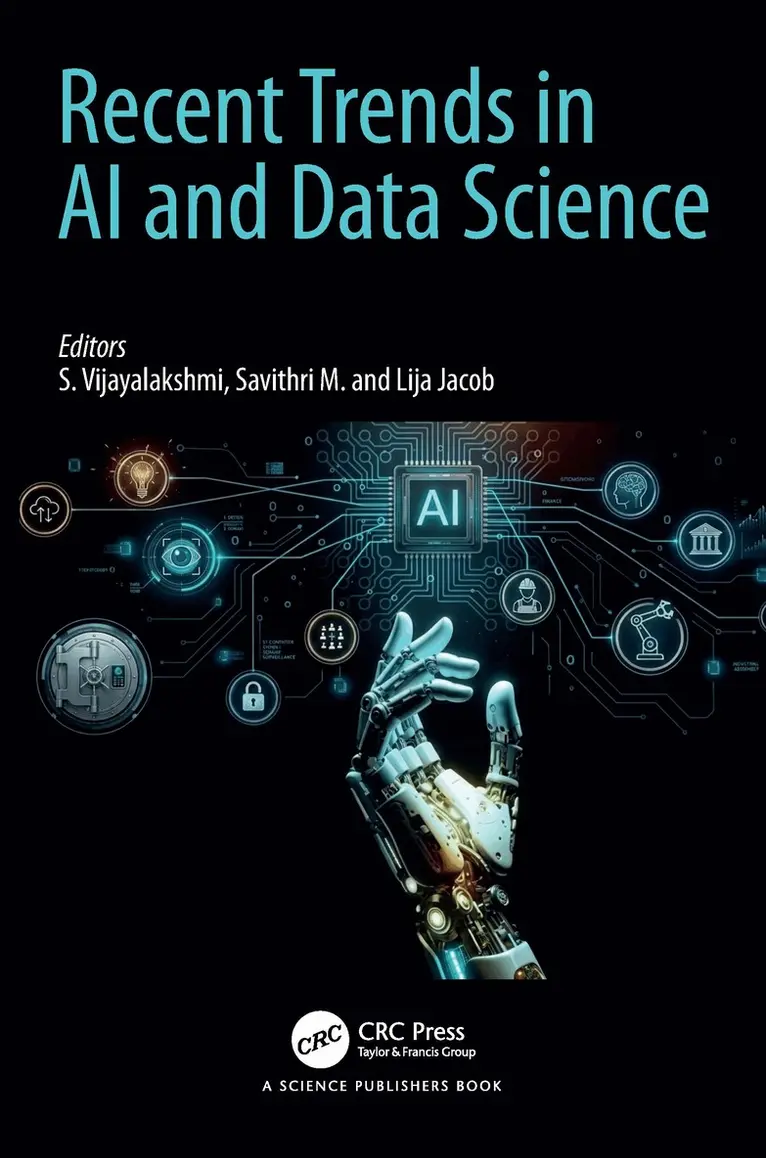
Inbunden, Engelska, 2026
Recent Trends in AI and Data Science
Av S. Vijayalakshmi, Savithri M., Lija Jacob
2136 kr
Beställningsvara. Skickas inom 10-15 vardagar. Fri frakt över 249 kr.
Beskrivning
This book presents the recent and multidisciplinary concepts of disruptive technologies, emerging technologies and design thinking. These themes enable the readers to enhance their creativity and innovation, and explore a human-centered approach for improved problem-solving. As the articles presented here are the extended, selected best outcome of the conference titled IACIDS, the book promotes collaboration and exchange of ideas among the authors and readers. The scope of these technologies in the current world is vast and continues to grow as organizations across various industries recognize the value of adopting a design-led approach to innovation. Disruptive technologies have a significant impact on the existing industries and often create new ones, leading to increased productivity, efficiency, and innovation. The importance of disruptive technologies in the current world can be seen in several way such as driving economic growth, improving quality of life, driving innovation, thus shaping the future. Design thinking is being applied in various domains such as product design, service design, user experience design, organizational design, and societal design. It is also increasingly being used in fields such as healthcare, education, and government to create more effective and efficient systems. One of the key advantages of design thinking is its ability to bring together diverse perspectives and disciplines, which allows for a more comprehensive understanding of a problem and the development of more innovative solutions. As a result, design thinking is becoming an important tool for organizations looking to drive innovation, increase efficiency, and improve customer satisfaction.
Produktinformation
- Utgivningsdatum: 2026-09-21
- Mått: 156 x 234 x 16 mm
- Vikt: 670 g
- Format: Inbunden
- Språk: Engelska
- Antal sidor: 268
- Förlag: Taylor & Francis Ltd
- ISBN: 9781041052937
Betyg & recensioner
0 recensioner
Inga recensioner tillgängliga.