• Fri frakt över 249 kr
  • •
  • Snabba leveranser
  • •
  • Billiga böcker
Kundservice

Du är på sajten för privatpersoner.

Företag, bibliotek eller offentlig verksamhet?

Du handlar på classic.bokus.com, där alla dina funktioner finns intakta.
Till classic.bokus.com
Bokus logotyp. Gå till startsidan.
  • Erbjudanden
  • Nyheter
  • Student
  • Topplistor
  • Barn & ungdom
  • Bokus Play
  • E-böcker
  • Pocketböcker
  • Spel & pussel

10% rabatt på allt med kod: NYSTART10 →

Sidfot

Mina sidor

    Hjälp

    • Kundservice
    • Vanliga frågor och svar
    • Frakt och leverans
    • Retur vid ångerrätt
    • Reklamera vara
    • Betalning
    • Köpvillkor
    • Allmänna villkor
    • Information om webbplatsens tillgänglighet

    Om Bokus

    • Om oss
    • Pressrum
    • För studenter
    • För företag
    • För bibliotek och offentlig verksamhet
    • För leverantörer
    • Hållbarhet

    Populärt

    • Aktuella erbjudanden
    • Presentkort
    • Studentlitteratur
    • Nya böcker
    • Topplistor
    • Signerade böcker
    • Engelska böcker

    Inspiration

    • Boktips
    • BookTok
    • Populära bokserier
    • Barnbokskaraktärer
    • Populära författare
    Logotyp för Bokus
    Följ oss på Facebook (extern länk)Följ oss på Instagram (extern länk)Följ oss på YouTube (extern länk)Följ oss på TikTok (extern länk)
    bokus @ CookiesAnpassa cookiesIntegritetspolicyKöpvillkor
    Till Citymail hemsida (extern länk)Till Budbee hemsida (extern länk)Till Postnord hemsida (extern länk)Till Schenker hemsida (extern länk)Till Early Bird hemsida (extern länk)Till Walleys hemsida (extern länk)
    1. Psykologi och pedagogik
    2. Psykologi
    3. Socialpsykologi och gruppsykologi
    • Nyhet

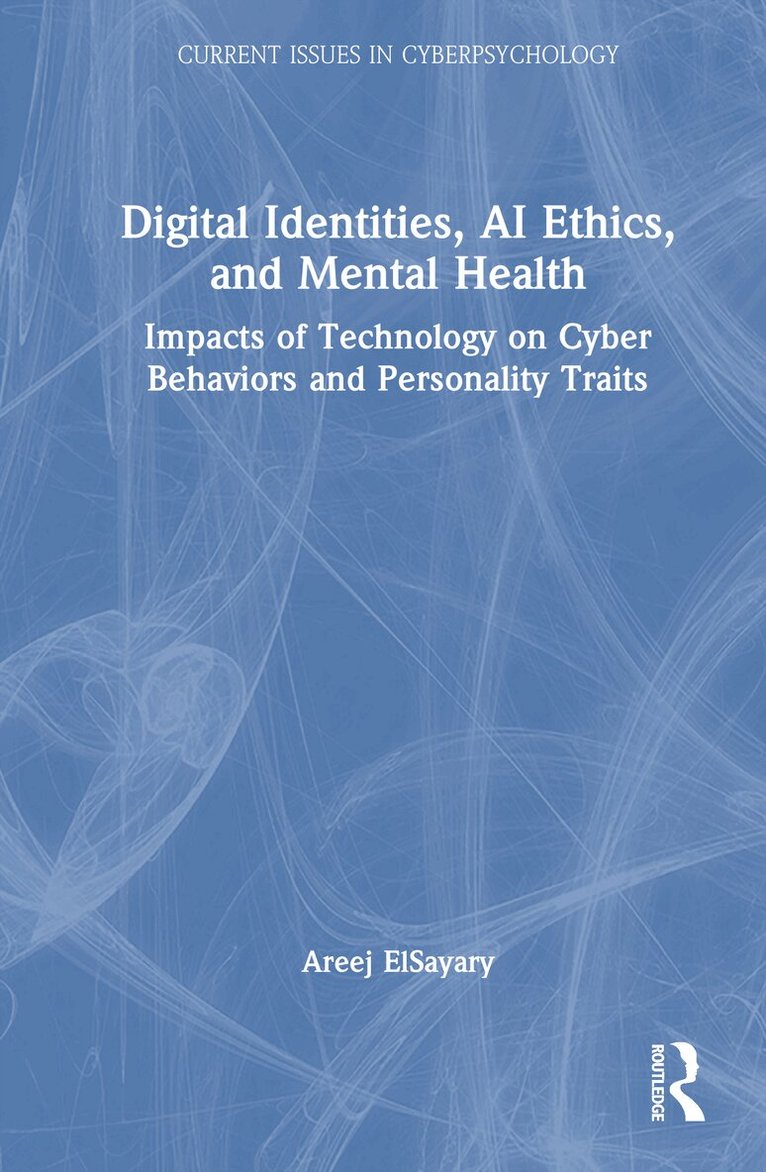
    Digital Identities, AI Ethics, and Mental Health

    Impacts of Technology on Cyber Behaviors and Personality Traits

    AvAreej ElSayary

    Inbunden, Engelska, 2026

    Del i serien Current Issues in Cyberpsychology

    2 493 kr

    Beställningsvara. Skickas inom 10-15 vardagar. Fri frakt över 249 kr.

    Fler format och utgåvor

    E-bok

    847 kr

    E-bok

    847 kr

    Häftad

    759 kr

    Beskrivning

    This highly topical book provides an integrated framework for understanding how artificial intelligence, personality traits, gender, and cultural contexts shape youth digital engagement and mental health outcomes.Grounded in cyberpsychology and extensive empirical research, AI ethics, and developmental psychology, this book addresses the urgent need for evidence-based approaches to supporting young people's well-being in an increasingly AI-mediated digital world. It explores the dual nature of digital technology, offering unique opportunities for connection, learning, and self-expression while simultaneously introducing distinctive risks to mental health and well-being. It examines how personality trait models mediate the effects of cyber behavior on well-being and ethical AI engagement. Further topics include an exploration of AI as an active participant in shaping youth behavior and identity, how personality traits significantly predict resilience to online risks and ethical AI engagement, gender differences in digital engagement creating distinct opportunities and vulnerabilities, cultural contexts fundamentally shaping cyber behaviors and ethical perspectives, and that ethical AI design must prioritize youth developmental vulnerabilities. With actionable recommendations to foster digital well-being and responsible AI use, this book is a comprehensive guide for promoting ethical and psychologically healthy digital practices.The unique blend of theoretical insights, empirical data, and practical interventions makes this book an essential resource for students and academics in cyberpsychology, social psychology and identity, AI ethics, cyber behavior studies, and mental health. It will also be of interest to mental health professionals, researchers, policymakers, and educators interested in understanding the impact of cyber behaviors on youth well-being.

    Produktinformation

    • Utgivningsdatum:2026-08-24
    • Mått:156 x 234 x 24 mm
    • Vikt:910 g
    • Format:Inbunden
    • Språk:Engelska
    • Serie:Current Issues in Cyberpsychology
    • Antal sidor:384
    • Förlag:Taylor & Francis Ltd
    • ISBN:9781041109624

    Utforska kategorier

    • Socialpsykologi och gruppsykologi inom Psykologi och pedagogik
    • Psykologi: jaget, identitet och personlighet inom Psykologi och pedagogik
    • Artificiell intelligens inom Data och IT

    Mer om författaren

    Areej ElSayary is an Associate Professor and Chair of the General Education department within the College of Interdisciplinary Studies at Zayed University. As an ICF-certified coach, cyberpsychologist, and Mental Health Ambassador, ElSayary's professional practice integrates cyberpsychology and computer-mediated communication within the ICF Code of Ethics and Core Competencies framework. Her academic credentials include recognition as a Senior Fellow of the Higher Education Academy (SFHEA) and certification as an associate of the Blackboard Academy. She has designed and delivered numerous high-impact teacher training programs across the United Arab Emirates, contributing significantly to regional educational advancement. Her research encompasses cognitive development, cyberpsychology, artificial intelligence, human-computer interaction, entrepreneurship, innovation, design thinking, and interdisciplinary education.

    Innehållsförteckning

    • Table of ContentsPrefaceStream 1 – Digital Identity and Psychological ImpactChapter 1: Introduction - The Digital Age and Its Impact On Youth1.1. Introduction: The Transformative Power of Digital Technology1.2. The Dual Nature of Digital Technology: Opportunities and Risks1.2.1. Positive Outcomes: Building Skills, Connection, and Well-being1.2.2. Adverse Impacts: Risks to Mental Health and Well-being1.3. Defining the Core Domains: Cyberpsychology, AI Ethics, and Digital Well-Being1.4. Connecting to UN Sustainable Development Goals and Digital Well-being1.5. The Four-Stream Conceptual Framework: From Theory to Application to Future Vision1.5.1 Stream 1: Foundational Theories and Concepts (Chapters 2 and 3)1.5.2 Stream 2: AI Mechanisms and Mental Health Implications (Chapters 4–6) 1.5.3 Stream 3: Individual and Cultural Differences (Chapters 7–9) 1.5.4 Stream 4: Applications, Interventions, and Future Directions (Chapters 10–12)1.6. Key Themes That Integrate Across All Chapters1.7. How This Book Is Organized: A Reader’s Guide1.7.1. Pathway 1: Sequential Reading for New Learners1.7.2. Pathway 2: Topic-Focused Navigation1.7.3. Pathway 3: Educational & Training Curriculum1.7.4. Pathway 4: Policy & Practice Fast-Track1.7.5. Pathway 5: Customized Learning Combinations1.8. Key Concepts and Terminology1.8.1. Core Psychological Concepts1.8.2. AI and Technology Concepts1.8.3. Individual Difference Concepts1.8.4. Ethical Concepts1.9. Summary and ReflectionsChapter 2: Theoretical Lenses on Cyber Behavior and AI Ethics2.1. Introduction to Cyber Behavior and the Influence of AI2.2. Cyberpsychology as the Foundational Framework2.2.1. Scope of Cyber Behaviors2.3. Computer-Mediated Communication: The AI-Shaped Channels of Cyber Behavior2.4. Core Theoretical Frameworks2.4.1. Theory of Planned Behavior (TPB)2.4.2. Social Cognitive Theory (SCT)2.4.3. Social Identity Theory (SIT)2.5. Personality Psychology and Cyber Behavior2.5.1. Big Five Model2.5.2. HEXACO Framework2.5.3. Dark Personality Traits2.6. Comprehensive Mental Health Model2.6.1. Emotional Well-being2.6.2. Psychological Well-Being2.6.3. Social Well-being2.6.4. Mental Health Continuum2.7. An Integrated Framework for Understanding AI-Mediated Cyber Behavior 2.8. Summary and ReflectionsChapter 3: The Evolving Role of AI in The Formation of Digital Identities3.1. Introduction3.2. The Cybernetic Self: Identity in a Digital Age3.3. The Role of Social Feedback and Comparison3.4. AI as an Architect of Identity3.5. Cultural and Gendered Dimensions of Digital Identity3.5.1. Cultural Influences3.5.2. Gender Differences3.6. The Double-Edged Sword: Positive and Negative Effects3.6.1. Positive Effects of AI on Digital Identity Formation3.6.2. Negative Effects of AI on Digital Formation3.7. Ethical Challenges in AI-Driven Identity Formation3.8. Summary and ReflectionsStream 2 – CyberPsychology and Mental HealthChapter 4: Understanding How AI Reshapes Cyber Behavior4.1. Introduction: AI as a Driver of Behavioral Patterns4.2. Core AI Mechanisms: How Algorithms Shape Behavior4.2.1. Recommendation Algorithms: The Foundation of Behavioral Curation4.2.2. Feedback Loops and Reinforcement Cycles4.2.3. Engagement Optimization and Attention Capture4.2.4. Data Collection and Behavioral Profiling4.2.5. The Interaction Between AI Mechanisms and Individual Differences4.3. AI’s Impact on Aggressive Behaviors4.3.1. Online Disinhibition and Ethical Detachment4.3.2. Moral Disengagement and Algorithmic Reinforcement4.3.3. Cyberbullying and AI Moderation4.4. AI’s Impact on Addictive Behaviors4.5. AI’s Impact on Social-Commercial Behaviors4.5.1. Social Identity and Commercial Engagement4.5.2. AI-Contextualized Risk Spectrum4.6. AI for Positive Digital Engagement4.7. Summary and ReflectionsChapter 5: The Interplay Between Cyber Behavior, AI Ethics, and Mental Health5.1. Introduction: The Cyber-AI-Mental Health Nexus5.2. Mental Health Effects of Cyber Behavior5.3. Ethical Risks in AI and Their Psychological Impact5.4. Personality Traits and Psychological Moderators of AI’s Mental Health Effects5.5. AI as a Tool for Mental Health Support5.6. Ethical AI Design for Psychological Well-being5.7. Policy, Education, and Design Interventions5.8. Summary and ReflectionsChapter 6: AI Ethical Use and Its Impact on Mental Health6.1. Introduction: The Ethical Imperative in Mental Health AI6.2. Foundational Ethical Principles for Mental Well-being• 6.2.1. From Classical Ethics to Operational Principles• 6.2.2. Principles of Ethical AI for Mental Well-being6.3. ‘Ethical by Design’: From Principles to Practice6.3.1 Data Governance and Privacy by Default6.3.2 Algorithmic Fairness and Bias Mitigation6.3.3. Upholding User Autonomy and Meaningful Consent6.3.4. Ensuring Safety through Accountability and Human Oversight6.4. Ethical Obligations Toward Vulnerable Populations6.4.1. Psychological Benefits of Ethically Aligned AI Tools6.4.2. Unethical AI Practices and Their Mental Health Implications6.4.3. How Harms Concentrate in Specific Vulnerable Populations6.5. Governance and Ethical Readiness6.6. Summary and ReflectionsStream 3 – Personality Traits, Gender Differences and Cultural PerspectivesChapter 7: Personality Traits in the Digital and AI-Driven World7.1. Introduction: Why Personality Matters in a Digital World7.2. Big Five Traits and Cyber Behavior7.3. The HEXACO Model and Ethical Engagement with AI7.4. The Dark Tetrad and Antisocial Cyber Behavior7.5. Personality and Ethical Decision-Making in AI Contexts7.5.1. The Limitations of Personality Models in Digital Contexts7.6. Designing Ethical and Inclusive Digital Interventions7.7. Summary and ReflectionsChapter 8: Gender Differences in Digital and AI Interactions8.1. Introduction: Why Gender Matters in Digital and AI Contexts8.2. Gendered Patterns in Digital Engagement8.3. Emotional Sensitivity and Relational Focus Among Females8.4. Competition, Risk, and Digital Ethics Among Males8.5. Gendered Mental Health Outcomes and Ethical Implications8.6. Inclusive Digital and AI Design for Gender Equity8.7. Summary and ReflectionsChapter 9: Cultural Perspectives on Cyber Behavior and AI Ethics9.1. Introduction: Why Culture Matters in Digital and AI Ethics9.2. Cultural Norms and Cyber Behavior in the Gulf and Middle East9.3. Individualism and Digital Openness in Western Cultures9.4. Cultural Perceptions of Privacy and Data Ethics9.4.1. Implications for Companies and Policymakers9.5. AI Adoption and Cultural Compatibility in the Gulf Region9.6. Cultural Challenges in Global AI Design and Ethics9.7. Moving Beyond Hofstede: A Detailed, Value-Based Approach9.8. Summary and ReflectionsStream 4 – Promoting and Sustaining Ethical Digital Well-beingChapter 10: Promoting Digital Well‑Being and Ethical AI Use: Strategies and Interventions10.1. Introduction: Youth at the Center of Digital Well-being and AI Ethics10.2. Digital Literacy and Ethics in School Curricula10.3. Parenting for Digital Balance and Responsibility10.4. Policy Measures for Ethical AI and Youth Protection10.5. Tackling Cyberbullying, Misinformation, and Harmful Content10.6. Designing Ethical AI Tools for Young Users10.7. Multi-Stakeholder Collaboration for a Safer Digital Future10.8. Summary and Reflections10.9 Future Research Directions and Open QuestionsChapter 11: Emerging Trends in Youth Cyber Behavior and Digital Resilience11.1. Introduction: Emerging Trends in Cyber Behavior and Digital Resilience11.2. Personality Traits and Digital Resilience11.2.1. Big Five Personality Traits and Coping with Digital Threats11.2.2. HEXACO Traits, Vulnerabilities, and Interventions11.2.3. The Dark Tetrad and Digital Vulnerabilities11.3. Gender-Specific Vulnerabilities and Strengths11.4. Cultural Factors in Personality and Digital Resilience11.5. Ethical AI in Youth Platforms11.6. Actionable Interventions for Youth Digital Well-being11.6.1. An Empathy-Building Module for Young Men11.6.2. A Critical Digital Literacy Program for Young Women11.6.3. A Culturally-Sensitive Resilience Program11.7. Practical Recommendations for Parents11.8. Research and Innovation for the Future of Digital Well-being11.9. Summary and ReflectionsChapter 12: Future Directions in CyberPsychology, AI Ethics, and Digital Well-being12.1. Introduction: Where Are We Headed?12.2. AI in Social Media: Opportunities and Psychological Risks12.3. Reimagining AI in Education: Personalized Futures and Ethical Dilemmas12.4. Personality in 2035: Traits as Predictors of Adaptation and Risk12.5. Gendered Futures: Online Risk and Opportunity12.6. Designing the Future: Proactive Ethical Frameworks12.7. Two Futures: A Utopian and Dystopian Vision for 203512.7.1 The Choice Ahead12.8. Summary and Reflections