• Fri frakt över 249 kr
  • •
  • Snabba leveranser
  • •
  • Billiga böcker
Kundservice

Du är på sajten för privatpersoner.

Företag, bibliotek eller offentlig verksamhet?

Du handlar på classic.bokus.com, där alla dina funktioner finns intakta.
Till classic.bokus.com
Bokus logotyp. Gå till startsidan.
  • Erbjudanden
  • Nyheter
  • Student
  • Topplistor
  • Barn & ungdom
  • Bokus Play
  • E-böcker
  • Pocketböcker
  • Spel & pussel

10% rabatt på allt med kod: NYSTART10 →

Sidfot

Mina sidor

    Hjälp

    • Kundservice
    • Vanliga frågor och svar
    • Frakt och leverans
    • Retur vid ångerrätt
    • Reklamera vara
    • Betalning
    • Köpvillkor
    • Allmänna villkor
    • Information om webbplatsens tillgänglighet

    Om Bokus

    • Om oss
    • Pressrum
    • För studenter
    • För företag
    • För bibliotek och offentlig verksamhet
    • För leverantörer
    • Hållbarhet

    Populärt

    • Aktuella erbjudanden
    • Presentkort
    • Studentlitteratur
    • Nya böcker
    • Topplistor
    • Signerade böcker
    • Engelska böcker

    Inspiration

    • Boktips
    • BookTok
    • Populära bokserier
    • Barnbokskaraktärer
    • Populära författare
    Logotyp för Bokus
    Följ oss på Facebook (extern länk)Följ oss på Instagram (extern länk)Följ oss på YouTube (extern länk)Följ oss på TikTok (extern länk)
    bokus @ CookiesAnpassa cookiesIntegritetspolicyKöpvillkor
    Till Citymail hemsida (extern länk)Till Budbee hemsida (extern länk)Till Postnord hemsida (extern länk)Till Schenker hemsida (extern länk)Till Early Bird hemsida (extern länk)Till Walleys hemsida (extern länk)
    1. Medicin
    2. Andra medicinska specialiteter
    3. Klinisk psykologi
    4. Psykoterapi som behandlingsmetod
    • Nyhet

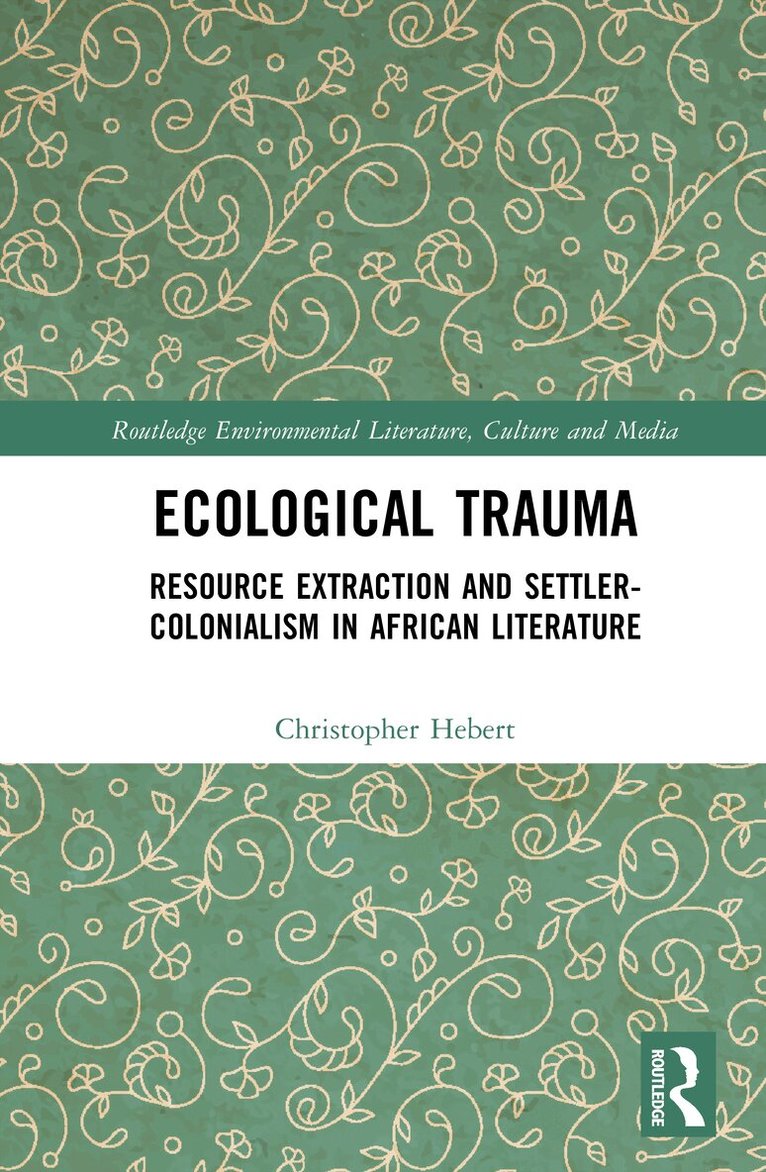
    Ecological Trauma

    Resource Extraction and Settler-Colonialism in African Literature

    AvChristopher Hebert

    Inbunden, Engelska, 2026

    Del i serien Routledge Environmental Literature, Culture and Media

    2 784 kr

    Beställningsvara. Skickas inom 10-15 vardagar. Fri frakt över 249 kr.

    Fler format och utgåvor

    E-bok

    926 kr

    E-bok

    653 kr

    Beskrivning

    Intervening in debates across literary trauma theory and ecocriticism, this book argues that in an age increasingly defined by the impacts of anthropogenic climate change on society and ecology, it is necessary to graft the ethical concerns of trauma studies onto the lessons of ecocriticism, especially in the context of African literatures.Drawing upon a corpus of African literary texts ranging temporally from 1950 to 2021 and geographically from Nigeria and Cameroon to South Africa, Botswana, Zambia, and Zimbabwe, this book examines how ecological trauma is bound up in human systems of exchange, extraction, and domination. Each text portrays ecological trauma from a different geographical and historical perspective, but they all underscore the wide-ranging ecological and human costs of resource extraction and settler-colonialism across the African continent. Ultimately, this book explores the connections between human and nonhuman communities victimized by anthropogenic climate change and dissects the difficult relationships between land, ecology, and human influence.This book will be of interest to scholars and graduate students working in the fields of African literatures, the environmental humanities, trauma studies, and postcolonial studies, as well as all those interested in narrative in the Anthropocene.

    Produktinformation

    • Utgivningsdatum:2026-08-11
    • Mått:156 x 234 x 13 mm
    • Vikt:520 g
    • Format:Inbunden
    • Språk:Engelska
    • Serie:Routledge Environmental Literature, Culture and Media
    • Antal sidor:182
    • Förlag:Taylor & Francis Ltd
    • ISBN:9781041131816

    Utforska kategorier

    • Psykoterapi som behandlingsmetod inom Medicin
    • Olycksfalls- och akutmedicin inom Medicin
    • Miljövetenskap och miljöpolitik inom Naturvetenskap och teknik

    Mer om författaren

    Christopher R. Hebert is an independent scholar working at the intersection of ecocriticism and literary trauma theory. He holds a B.S. in English from the United States Military Academy at West Point, and an M.A. and Ph.D. in African Studies from Ghent University, Belgium, where he was a Fulbright Scholar from 2021 to 2022. His work has previously been published in Research in African Literatures and ARIEL: A Review of International English Literature.

    Recensioner i media

    'This book is a bold and compelling intervention at the intersection of trauma theory, ecocriticism, and African literary studies. Its concept of ecological trauma opens new ways of understanding the entangled effects of resource extraction, settler colonialism, and environmental degradation in African contexts, while also reimagining trauma as an experience that exceeds the human. Traversing canonical and contemporary texts—from Tutuola and Okri to Mbue, Mda, and Serpell—this lucid and richly contextualized study not only traces how fiction bears witness to ecological harm, but also develops a capacious green trauma theory that is both ethically attuned and methodologically innovative. An important contribution to the environmental humanities, it will be of great interest to scholars of African literature, trauma studies, and planetary crisis.'- Stef Craps, Professor of English Literature, Ghent University'From the folkloric fever dreams of Amos Tutuola to the worldbuilding imagination of Namwali Serpell, Chris Hebert offers green trauma theory as a framework for engaging African literary production. His readings of texts from West and Southern Africa illuminate the toxic impact of capitalism and settler colonialism on African environments, but also how African writers have envisioned aesthetic, philosophical, and cosmological responses to this ecological moment.'- J. Roger Kurtz, Professor of English Literature, Drexel University

    Innehållsförteckning

    • Introduction: The Question of Ecological Trauma 1 Imagining the Natural World in West African Ecofiction 2 Resource Extraction as Ecological Trauma in the Niger Delta and Beyond 3 Settler‑Colonialism and Environmental Violence in South African Fiction 4 Cultivation, Disintegration, and Regeneration in the Works of Southern African Women Writers 5 Africanfuturist Visions of Ecological Crisis Conclusion: The Trauma of the Everyday