• Fri frakt över 249 kr
  • •
  • Snabba leveranser
  • •
  • Billiga böcker
Kundservice

Du är på sajten för privatpersoner.

Företag, bibliotek eller offentlig verksamhet?

Du handlar på classic.bokus.com, där alla dina funktioner finns intakta.
Till classic.bokus.com
Bokus logotyp. Gå till startsidan.
  • Erbjudanden
  • Nyheter
  • Student
  • Topplistor
  • Barn & ungdom
  • Bokus Play
  • E-böcker
  • Pocketböcker
  • Spel & pussel

10% rabatt på allt med kod: NYSTART10 →

Sidfot

Mina sidor

    Hjälp

    • Kundservice
    • Vanliga frågor och svar
    • Frakt och leverans
    • Retur vid ångerrätt
    • Reklamera vara
    • Betalning
    • Köpvillkor
    • Allmänna villkor
    • Information om webbplatsens tillgänglighet

    Om Bokus

    • Om oss
    • Pressrum
    • För studenter
    • För företag
    • För bibliotek och offentlig verksamhet
    • För leverantörer
    • Hållbarhet

    Populärt

    • Aktuella erbjudanden
    • Presentkort
    • Studentlitteratur
    • Nya böcker
    • Topplistor
    • Signerade böcker
    • Engelska böcker

    Inspiration

    • Boktips
    • BookTok
    • Populära bokserier
    • Barnbokskaraktärer
    • Populära författare
    Logotyp för Bokus
    Följ oss på Facebook (extern länk)Följ oss på Instagram (extern länk)Följ oss på YouTube (extern länk)Följ oss på TikTok (extern länk)
    bokus @ CookiesAnpassa cookiesIntegritetspolicyKöpvillkor
    Till Citymail hemsida (extern länk)Till Budbee hemsida (extern länk)Till Postnord hemsida (extern länk)Till Schenker hemsida (extern länk)Till Early Bird hemsida (extern länk)Till Walleys hemsida (extern länk)
    1. Samhälle och politik
    2. Samhälle och kultur
    3. Kultur och medier
    4. Medievetenskap

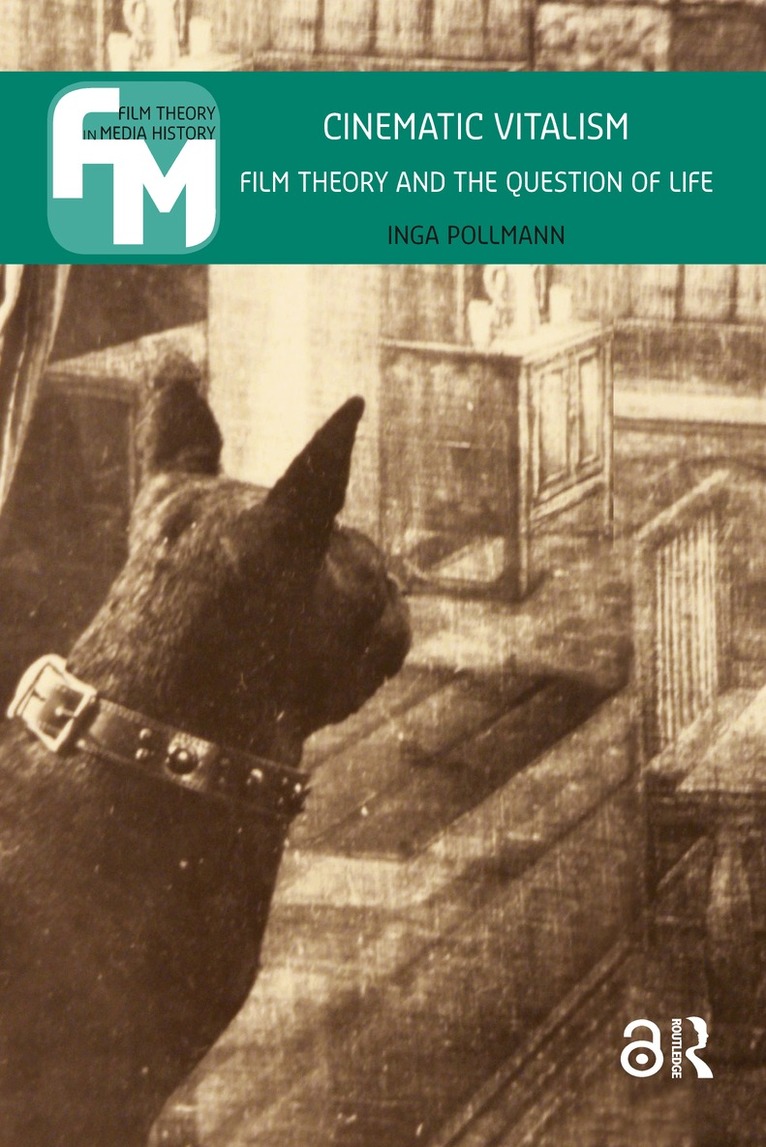
    Cinematic Vitalism

    Film Theory and the Question of Life

    AvInga Pollmann

    Häftad, Engelska, 2025

    Del i serien Film Theory in Media History

    664 kr

    Beställningsvara. Skickas inom 11-20 vardagar. Fri frakt över 249 kr.

    Fler format och utgåvor

    Inbunden

    1 222 kr

    Beskrivning

    This book argues that there are constitutive links between early twentieth-century German and French film theory and practice, on the one hand, and vitalist conceptions of life in biology and philosophy, on the other. By considering classical film-theoretical texts and their filmic objects in the light of vitalist ideas percolating in scientific and philosophical texts of the time, Cinematic Vitalism reveals the formation of a modernist, experimental and cinematic strand of vitalism in and around the movie theater. The book focuses on the key concepts including rhythm, environment, mood, and development to show how the cinematic vitalism articulated by film theorists and filmmakers maps out connections among human beings, milieus, and technologies that continue to structure our understanding of film. This book draws new connections between twentieth-century German and French film theory and practice and vitalist conceptions of life from biology and philosophy.

    Produktinformation

    • Utgivningsdatum:2025-12-01
    • Mått:156 x 234 x undefined mm
    • Format:Häftad
    • Språk:Engelska
    • Serie:Film Theory in Media History
    • Antal sidor:296
    • Förlag:Taylor & Francis Ltd
    • ISBN:9781041177012

    Utforska kategorier

    • Medievetenskap inom Samhälle och politik
    • Historia inom Historia och arkeologi

    Mer om författaren

    Inga Pollmann is Assistant Professor in Film Studies in the Department of Germanic and Slavic Languages and Literatures at the University of North Carolina at Chapel Hill.

    Innehållsförteckning

    • Acknowledgements, Introduction: ‘The sanguine, pulsating, enterprising modern life’: Cinema and Vitalism 1. Taking Life for a Spin 2. Turn-of-the-century Vitalism and Philosophy of Life 3. Early Film Theory 4. Cinematic Vitalism Chapter 1: Vitalism and Abstraction: Rhythm and Non-Organic Life from Hans Richter to Sergei Eisenstein 1. The Reinvention of Cinema in Abstract Film 2. A Universal Language 3. Bergson, Intuition, and Art 4. Setting Form into Motion: Scroll Paintings and Empathy 5. Transition to Film 6. Back into Matter: from Abstraction to Montage Chapter 2: New Worlds: Uexküll’s Umwelt Theory at the Movies 1. Forays 2. A Meditation on Mediated Dogs 3. The Agony of the Starfish: Uexküll’s Chronophotography 4. Of Ticks and Humans 5. Against Anthropocentrism: Umwelt and Cinema 6. A Necessary Field of Action: Benjamin, Umwelt, and Play 7. Painlevé’s Cinema of Bewilderment Chapter 3: The Interweaving of World and Self: Transformations of Stimmung in Expressionist and Kammerspiel Film 1. The Mediation of a Dog’s World 2. A Brief Aesthetic History of Stimmung 3. Turn-of-the-Century Vitalist Stimmung and the Cinema: Georg Simmel and Hugo von Hofmannsthal 4. Balázs, Kammerspielfilm, and Expressionism 5. The Kammerspiel Film: Naturalist Plots and Progressive Aesthetics Chapter 4: Open Bodies, Open Stories: Evolution, Narration and Spectatorship in Postwar Film Theory 1. The Axolotl and the Cinema: Bazin, Bergson, and Evolution 2. Cinema’s Milieu 3. Life and the Temporalities of Film and Painting 4. Post-Apocalyptic Life: Kracauer’s Theory of Film 5. Conclusion: Vital Cinema, Bibliography.