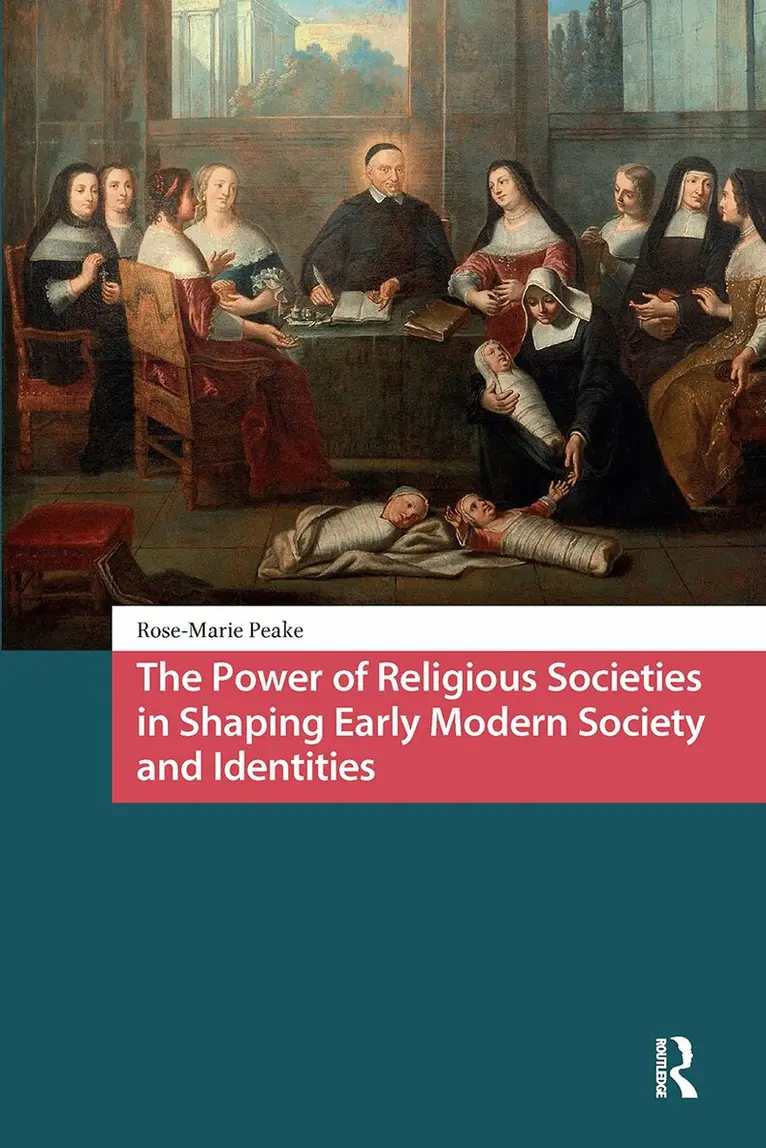
Häftad, Engelska, 2025
Power of Religious Societies in Shaping Early Modern Society and Identities
Del i serien Crossing Boundaries: Turku Medieval and Early Modern Studies
700 kr
Beställningsvara. Skickas inom 10-15 vardagar. Fri frakt över 249 kr.
Beskrivning
Produktinformation
- Utgivningsdatum: 2025-12-01
- Mått: 156 x 234 x 13 mm
- Vikt: 460 g
- Format: Häftad
- Språk: Engelska
- Serie: Crossing Boundaries: Turku Medieval and Early Modern Studies
- Antal sidor: 246
- Förlag: Taylor & Francis Ltd
- ISBN: 9781041188841
Utforska kategorier
Mer om författaren
Dr Rose-Marie Peake is a postdoctoral researcher at the Academy of Finland Centre of Excellence in the History of Experiences, Tampere University. She specializes in the religious and gender history of early modern France.
Recensioner i media
Books like Rose-Marie Peake’s The Power of Religious Societies in Shaping Early Modern Society and Identity show how even writings with a practical lens, such as those aimed at creating the unique identity of the Daughters of Charity by Louise de Marillac and Vincent de Paul, have unrecognized importance in the way they developed their theology intentionally to shape the character both of the Daughters as an active order of women and, through the Daughters, to influence society as well. In the case of writings from the Daughters of Charity, the portrayal of Marillac provides a model to teach not only through words, but also through example. Key to Peake’s argument is the concept of “moral management,” that is, the way an organization lives out a value system and transmits that value system to others. As part of the “Crossing Boundaries” series, Peake employs this interdisciplinary concept for the first time in studies of the seventeenth century. [...] This book would appeal to anyone interested in the voices of women in the Catholic tradition, but particularly to those with an interest in early modern women or early modern French theology and spirituality. -- Elissa Cutter, Georgian Court University. The Catholic Historical Review 2025.
Betyg & recensioner
0 recensioner
Inga recensioner tillgängliga.