• Fri frakt över 249 kr
  • •
  • Snabba leveranser
  • •
  • Billiga böcker
Kundservice

Du är på sajten för privatpersoner.

Företag, bibliotek eller offentlig verksamhet?

Du handlar på classic.bokus.com, där alla dina funktioner finns intakta.
Till classic.bokus.com
Bokus logotyp. Gå till startsidan.
  • Erbjudanden
  • Nyheter
  • Student
  • Topplistor
  • Barn & ungdom
  • Bokus Play
  • E-böcker
  • Pocketböcker
  • Spel & pussel

10% rabatt på allt med kod NYSTART10 →

Sidfot

Mina sidor

    Hjälp

    • Kundservice
    • Vanliga frågor och svar
    • Frakt och leverans
    • Retur vid ångerrätt
    • Reklamera vara
    • Betalning
    • Köpvillkor
    • Allmänna villkor
    • Information om webbplatsens tillgänglighet

    Om Bokus

    • Om oss
    • Pressrum
    • För studenter
    • För företag
    • För bibliotek och offentlig verksamhet
    • För leverantörer
    • Hållbarhet

    Populärt

    • Aktuella erbjudanden
    • Presentkort
    • Studentlitteratur
    • Nya böcker
    • Topplistor
    • Signerade böcker
    • Engelska böcker

    Inspiration

    • Boktips
    • BookTok
    • Populära bokserier
    • Barnbokskaraktärer
    • Populära författare
    Logotyp för Bokus
    Följ oss på Facebook (extern länk)Följ oss på Instagram (extern länk)Följ oss på YouTube (extern länk)Följ oss på TikTok (extern länk)
    bokus @ CookiesAnpassa cookiesIntegritetspolicyKöpvillkor
    Till Citymail hemsida (extern länk)Till Budbee hemsida (extern länk)Till Postnord hemsida (extern länk)Till Schenker hemsida (extern länk)Till Early Bird hemsida (extern länk)Till Walleys hemsida (extern länk)
    1. Ekonomi och Ledarskap
    2. Företagsekonomi
    3. Affärsstrategi

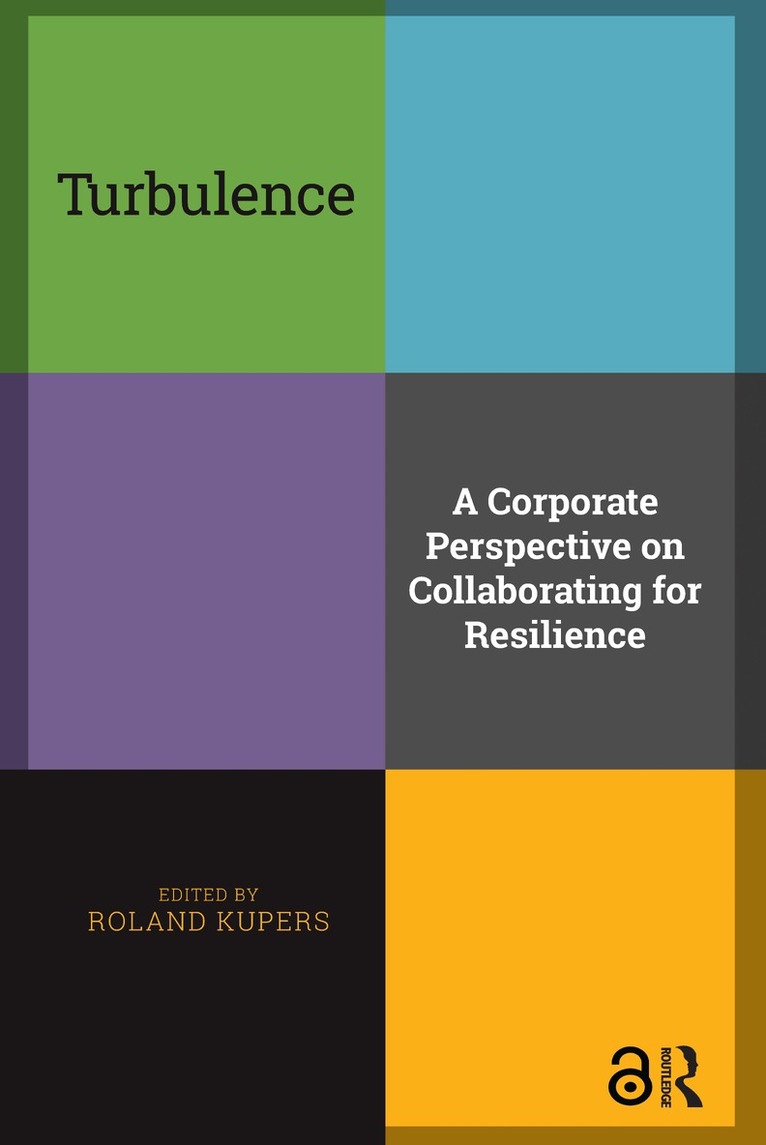
    Turbulence

    A Corporate Perspective on Collaborating for Resilience

    AvRoland Kupers

    Häftad, Engelska, 2025

    681 kr

    Beställningsvara. Skickas inom 10-15 vardagar. Fri frakt över 249 kr.

    Beskrivning

    The ever tighter coupling of our food, water and energy systems, in the context of a changing climate is leading to increasing turbulence in the world. As a consequence, it becomes ever more crucial to develop cities, regions, and economies with resilience in mind. Because of their global reach, substantial resources, and information-driven leadership structures, multinational corporations can play a major, constructive role in improving our understanding and design of resilient systems. This volume is the product of the Resilience Action Initiative, a collaboration among Dow, DuPont, IBM, McKinsey & Co., Shell, Siemens, Swiss Re, Unilever, and Yara designed to explore possible corporate contributions to global resilience, especially at the nexus of water, food and energy. Aggressively forward-thinking, and consistent with an enlightened self-interest, the ideas considered here represent a corporate perspective on the broad collaborations required for a more resilient world.

    Produktinformation

    • Utgivningsdatum:2025-12-01
    • Mått:156 x 234 x undefined mm
    • Vikt:350 g
    • Format:Häftad
    • Språk:Engelska
    • Antal sidor:188
    • Förlag:Taylor & Francis Ltd
    • ISBN:9781041189978

    Utforska kategorier

    • Affärsstrategi inom Ekonomi och Ledarskap
    • Miljövetenskap och miljöpolitik inom Naturvetenskap och teknik
    • Regional planering inom Naturvetenskap och teknik

    Mer om författaren

    Roland Kupers is an associate fellow in the Smith School of Enterprise and the Environment at the University of Oxford.

    Innehållsförteckning

    • Editor’s introduction (Roland Kupers) Preface (Peter Voser) Preface: Turbulence — by way of an introduction (Michel Liès) Part I Introduction to RAI 1 The Resilience action initiative: An introduction (Maike Boggemann and Norbert Both) Understanding the ‘stress nexus’ The Resilience Action Initiative Definition of resilience The RAI approach Knowledge projects The challenges of resilience in practice Broader sharing and dialogue Collaboration and leadership Part II The resilience lens 2 A pragmatic frame to explore resilience (Marco Albani and Roland Kupers) A diagnostic frame Beyond a diagnostic frame The boundary conundrum The difficult relationship between efficiency and resilience Dealing with multiple scales Making system assumptions explicit Open questions and dilemmas 3 A resilience lens for enterprise risk management (David N. Bresch, Jaap Berghuijs, Rainer Egloff, Roland Kupers) Enriching corporate risk management Structural resilience Integrative resilience Transformative resilience 4 Multi-sector collaboration for resilience (Dr Mark Smith) Change for resilience Collaboration for systemic change Applying collaboration to resilience Conclusion: A collaborative agenda for resilience 5 Building resilience through teamwork. Seven tips to make it work (Marco Albani and Kimberly Henderson) Part III Resilience in action 6 The case for green infrastructure (Neil C. Hawkins and Glenn Prickett) Introduction and objective Green infrastructure: Concept and definition Green infrastructure: Solution examples Identifying areas of opportunity Key conclusions Moving forward 7 Nexus! Resilience in a pressure cooker (Herman van der Meyden) The game development process The game mechanics Simulating aspects of resilience Insights from a year of Nexus! sessions 8 Getting to resilience from the bottom-up. From upscaling to downscaling, from valuation to values and from having to sharing — How corporates can leverage the next generation’s way of working to increase resilience (Thekla Teunis) Fading boundaries and stronger horizontal and local networks Initial results Main lessons Barriers for breakthrough bottom-up innovation Business value 9 Corporations and Resilience (Simone Arizzi, Maximilian Egger, Dawn Rittenhaus and Peter Williams) The Resilience Action Initiative Conclusion Epilogue (Brian Walker), Conclusion, Appendix, Author biographies, Bibliography, Index.