• Fri frakt över 249 kr
  • •
  • Snabba leveranser
  • •
  • Billiga böcker
Kundservice

Du är på sajten för privatpersoner.

Företag, bibliotek eller offentlig verksamhet?

Du handlar på classic.bokus.com, där alla dina funktioner finns intakta.
Till classic.bokus.com
Bokus logotyp. Gå till startsidan.
  • Erbjudanden
  • Student
  • Topplistor
  • Barn & ungdom
  • Bokus Play
  • E-böcker
  • Ljudböcker
  • Pocketböcker
  • Spel och pussel

Pocketfynda! Hundratals böcker för 49 kr/st →

Sidfot

Mina sidor

    Hjälp

    • Kundservice
    • Vanliga frågor och svar
    • Frakt och leverans
    • Retur vid ångerrätt
    • Reklamera vara
    • Betalning
    • Köpvillkor
    • Allmänna villkor
    • Information om webbplatsens tillgänglighet

    Om Bokus

    • Om oss
    • Pressrum
    • För studenter
    • För företag
    • För bibliotek och offentlig verksamhet
    • För leverantörer
    • Hållbarhet

    Populärt

    • Aktuella erbjudanden
    • Presentkort
    • Studentlitteratur
    • Nya böcker
    • Topplistor
    • Signerade böcker
    • Engelska böcker

    Inspiration

    • Boktips
    • BookTok
    • Barnbokskaraktärer
    • Populära författare
    Logotyp för Bokus
    Följ oss på Facebook (extern länk)Följ oss på Instagram (extern länk)Följ oss på YouTube (extern länk)Följ oss på TikTok (extern länk)
    bokus @ CookiesAnpassa cookiesIntegritetspolicyKöpvillkor
    Till Citymail hemsida (extern länk)Till Budbee hemsida (extern länk)Till Postnord hemsida (extern länk)Till Schenker hemsida (extern länk)Till Early Bird hemsida (extern länk)Till Walleys hemsida (extern länk)
    1. Ekonomi och Ledarskap
    2. Ledarskapsböcker
    3. Projektledning

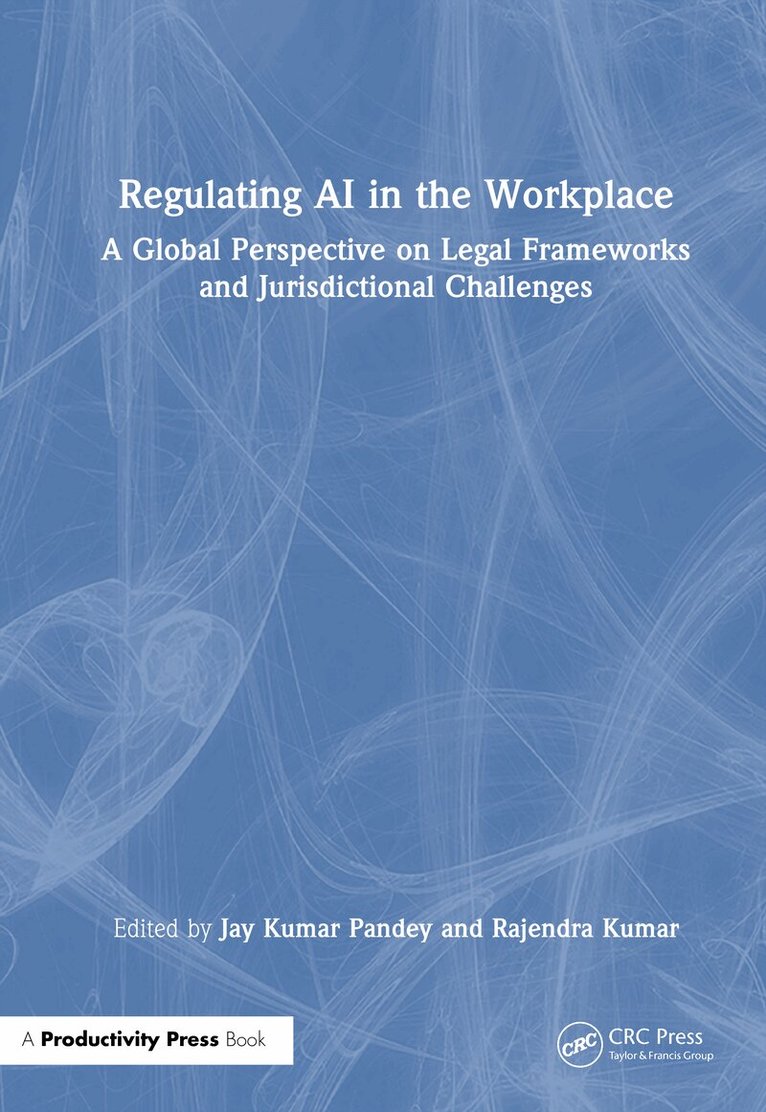
    Regulating AI in the Workplace

    A Global Perspective on Legal Frameworks and Jurisdictional Challenges

    AvJay Kumar Pandey,Rajendra Kumar

    Inbunden, Engelska, 2027

    1 993 kr

    Kommande

    Beskrivning

    The proliferation of artificial intelligence technologies across workplace environments represents one of the most significant transformations in employment relations since industrialization. Unlike previous technological disruptions, contemporary AI systems-encompassing machine learning algorithms, predictive analytics, and increasingly sophisticated autonomous decision-making platforms-fundamentally alter the nature of work itself, challenging established legal doctrines and regulatory frameworks worldwide.This edited volume provides a comprehensive analysis of how different jurisdictions approach AI regulation in workplace contexts. While existing literature tends to focus on broad AI governance or sector-specific applications, this collection specifically examines the intersection of employment law, data protection, discrimination law, and emerging AI governance frameworks across multiple legal systems. The book’s distinctive contribution lies in its comparative methodology-analyzing how various jurisdictions grapple with similar challenges while developing divergent regulatory responses.What distinguishes this collection from existing works is its emphasis on jurisdictional diversity and practical implementation challenges. Rather than proposing universal solutions, the volume acknowledges that AI workplace regulation emerges from distinct legal traditions, cultural contexts, and economic imperatives. Through detailed case studies spanning developed and emerging economies, contributors examine how legal systems adapt existing employment protections while developing novel regulatory mechanisms for AI-driven workplace transformation. This approach provides essential insights for HR executives, policymakers, legal practitioners, and scholars navigating the complex terrain of AI workplace regulation in an interconnected yet legally fragmented global economy.

    Produktinformation

    • Utgivningsdatum:2027-01-28
    • Mått:178 x 254 x undefined mm
    • Format:Inbunden
    • Språk:Engelska
    • Antal sidor:400
    • Förlag:Taylor & Francis Ltd
    • ISBN:9781041272038

    Utforska kategorier

    • Projektledning inom Ekonomi och Ledarskap
    • Försäljning och marknadsföring inom Ekonomi och Ledarskap
    • IT-rätt och kommunikationsrätt inom Juridik

    Mer om författaren

    Dr. Jay Kumar Pandey is currently working as an Assistant Professor in the Department EEE at Shri Ramswaroop Memorial University, Barabanki (U.P.) India. Dr. Pandey has completed his Ph.D in 2022. Dr. Pandey has done his M.Tech with specialization in Power Control (Instrumentation) and also done his MBA from Finance and Marketing. His subjects of interest are related to Artificial Intelligence, Biomedical Image Processing, Image Processing, IoT, Machine Learning and Solar PV. Dr. Pandey has published 4 edited book in IGI and Apple Academy & CRC Press. He has 14 years of teaching and research experience has published more than 20 research papers in national and international journals /conferences & more than 15 Book Chapters. Dr. Pandey is also Editor of Journal of Technology Innovations and Energy United States.Dr. Rajendra Kumar brings exceptional interdisciplinary expertise as a distinguished legal scholar with a Ph.D. in Law from the University of Lucknow, specializing in AI governance frameworks and autonomous systems regulation. His unique profile combines advanced academic credentials with substantial practical legal experience as an Advocate practicing before High Courts and the Supreme Court of India for over five years. His comprehensive educational background includes an LL.M. in Human Rights Law from Babasaheb Bhimrao Ambedkar University, an LL.B. (Hons.) from the University of Lucknow, and qualification for UGC-NET for Assistant Professor in Law (2019). Dr. Kumar's doctoral research specifically examines the intersection of artificial intelligence, autonomous systems, and legal frameworks within the Indian context, involving extensive empirical analysis and international comparative approaches.Dr. Kumar's scholarly excellence is demonstrated through his rare achievement of publishing in SCOPUS-indexed international publications, including a book chapter titled "Revolutionizing Early Warning Systems for Natural Disasters: Integrating AI and ML-Driven Models, Tools, and Platforms" published by Bentham Science Publishers, Netherlands, and "Ethical Implications of the Use of Artificial Intelligence" published by Redshine Publication, London, UK. His practical legal experience provides direct exposure to cutting-edge legal issues arising from technological advancement, ensuring comprehensive understanding of both theoretical regulatory frameworks and pragmatic implementation challenges. As an innovative educator, Dr. Kumar has developed pioneering e-learning content for jurisprudence courses at the University of Lucknow, demonstrating forward-thinking approaches essential for addressing autonomous agent governance challenges in modern legal practice.

    Innehållsförteckning

    • Chapter 1. Constitutional Foundations of AI Workplace Regulation Chapter 2. Employment Law Evolution: From Industrial Relations to Algorithmic Management Chapter 3. Data Protection Regimes and Workplace AI: A Comparative Analysis Chapter 4. Anti-Discrimination Law and Algorithmic Bias: Global Approaches Chapter 5. European Union: The AI Act’s Workplace Provision Chapter 6. United States: Sectoral Regulation and State-Level Innovation Chapter 7. United Kingdom: Post-Brexit AI Governance in Employment Chapter 8. India: AI Maturity Leadership and Workforce Transformation Chapter 9. China: State-Led AI Development and Labor Market Control Chapter 10. Japan: Society 5.0 and Human-AI Collaboration Chapter 11. Singapore: Smart Nation Initiative and Regulatory Sandboxes Chapter 12. Healthcare AI: Patient Safety and Professional Liability Chapter 13. Financial Services: Algorithmic Trading and Risk Management Chapter 14. Manufacturing: Industry 4.0 and Worker Safety Chapter 15. Public Sector: Algorithmic Government and Administrative Law Chapter 16. Transportation: Autonomous Vehicles and Employment Displacement Chapter 17. Regulatory Enforcement Mechanisms: Auditing and Accountability Chapter 18. Professional Liability and Insurance: Adapting Traditional Frameworks Chapter 19. International Cooperation and Regulatory Harmonization Chapter 20. Future Trajectories: Emerging Technologies and Regulatory Innovation