• Fri frakt över 249 kr
  • •
  • Snabba leveranser
  • •
  • Billiga böcker
Kundservice

Du är på sajten för privatpersoner.

Företag, bibliotek eller offentlig verksamhet?

Du handlar på classic.bokus.com, där alla dina funktioner finns intakta.
Till classic.bokus.com
Bokus logotyp. Gå till startsidan.
  • Erbjudanden
  • Nyheter
  • Student
  • Topplistor
  • Barn & ungdom
  • Bokus Play
  • E-böcker
  • Pocketböcker
  • Spel & pussel

10% rabatt på allt med kod: NYSTART10 →

Sidfot

Mina sidor

    Hjälp

    • Kundservice
    • Vanliga frågor och svar
    • Frakt och leverans
    • Retur vid ångerrätt
    • Reklamera vara
    • Betalning
    • Köpvillkor
    • Allmänna villkor
    • Information om webbplatsens tillgänglighet

    Om Bokus

    • Om oss
    • Pressrum
    • För studenter
    • För företag
    • För bibliotek och offentlig verksamhet
    • För leverantörer
    • Hållbarhet

    Populärt

    • Aktuella erbjudanden
    • Presentkort
    • Studentlitteratur
    • Nya böcker
    • Topplistor
    • Signerade böcker
    • Engelska böcker

    Inspiration

    • Boktips
    • BookTok
    • Populära bokserier
    • Barnbokskaraktärer
    • Populära författare
    Logotyp för Bokus
    Följ oss på Facebook (extern länk)Följ oss på Instagram (extern länk)Följ oss på YouTube (extern länk)Följ oss på TikTok (extern länk)
    bokus @ CookiesAnpassa cookiesIntegritetspolicyKöpvillkor
    Till Citymail hemsida (extern länk)Till Budbee hemsida (extern länk)Till Postnord hemsida (extern länk)Till Schenker hemsida (extern länk)Till Early Bird hemsida (extern länk)Till Walleys hemsida (extern länk)
    1. Naturvetenskap och teknik
    2. Geovetenskap
    3. Geografi

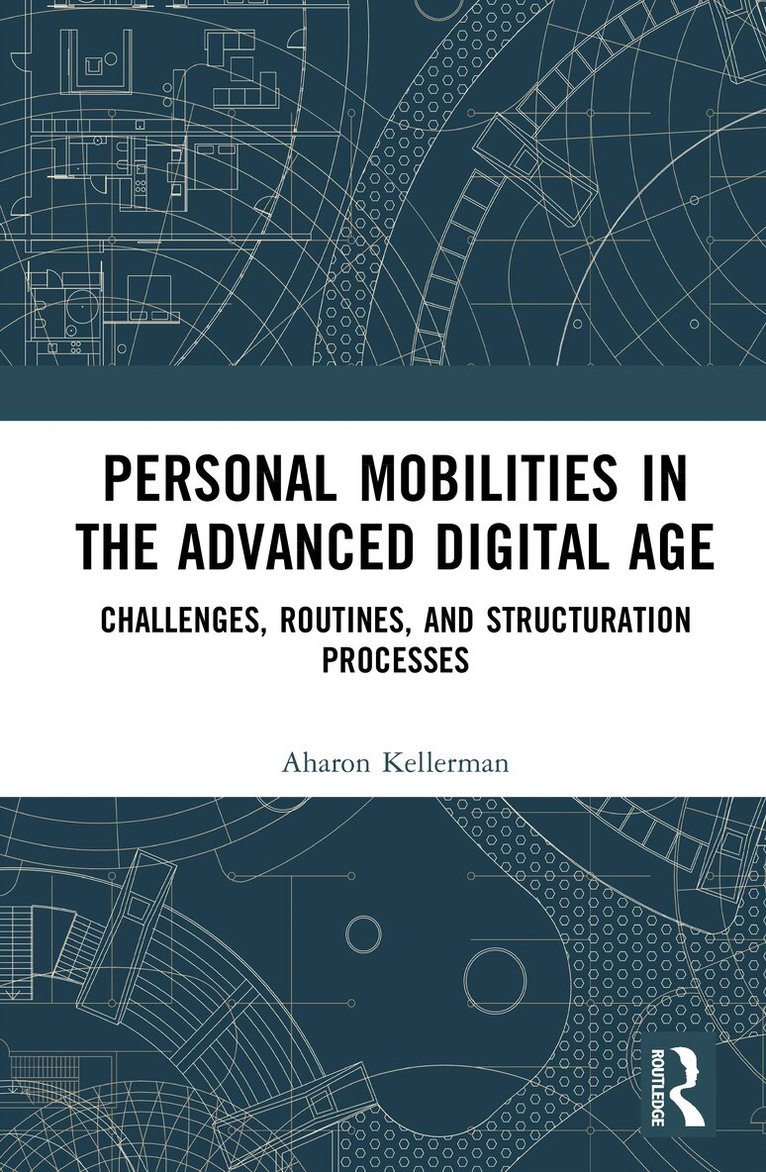
    Personal Mobilities in the Advanced Digital Age

    Challenges, Routines, and Structuration Processes

    AvAharon Kellerman

    Inbunden, Engelska, 2026

    2 423 kr

    Slutsåld

    Beskrivning

    The book focuses on recent changes in personal mobility driven by technological advances, aiming for a structurationist interpretation of personal mobility, thus exploring ongoing tensions between societal mobility structures, on the one hand, and human agency or individual mobility practices, on the other.This book primarily examines challenging structures for the virtual mobility of individuals, mostly through smartphones, as digital technologies advance, and on the consequent emergence of new personal mobility patterns in everyday activities such as work, networking, and shopping. Therefore, the book outlines the evolving nature of personal mobility and societal change in the third decade of the 21st century. Contemporary structural dimensions involved in the pursuit of personal mobility include technology and networks as allocative resources, and distance, time, compulsion, work, regulation, and volatility as authoritative ones.Personal Mobilities in the Advanced Digital Age will be valuable as a primary or supplementary resource in mobility courses at all study levels, notably for geographers and sociologists, and it may serve as a valuable tool for research projects across various areas of mobility studies. It will also prove to be helpful for urban planners, transportation planners, and Internet specialists in their practical professional work.

    Produktinformation

    • Utgivningsdatum:2026-10-15
    • Mått:156 x 234 x undefined mm
    • Format:Inbunden
    • Språk:Engelska
    • Antal sidor:200
    • Förlag:Taylor & Francis Ltd
    • ISBN:9781041273486

    Utforska kategorier

    • Geografi inom Naturvetenskap och teknik
    • Regional planering inom Naturvetenskap och teknik
    • Informationsteknik: allmänt inom Data och IT

    Mer om författaren

    Aharon Kellerman is an Emeritus Professor at the School of Environmental Sciences, University of Haifa. He is also the Past-President of Zefat Academic College. His research specialties include personal mobility, the geography of information, and socio-spatial dimensions of information technologies.

    Innehållsförteckning

    • Introduction 2. Technologies 3. Networks 4. Distance 5. Time 6. Compulsion 7. Work 8. Regulation 9. Volatility 10. Conclusion