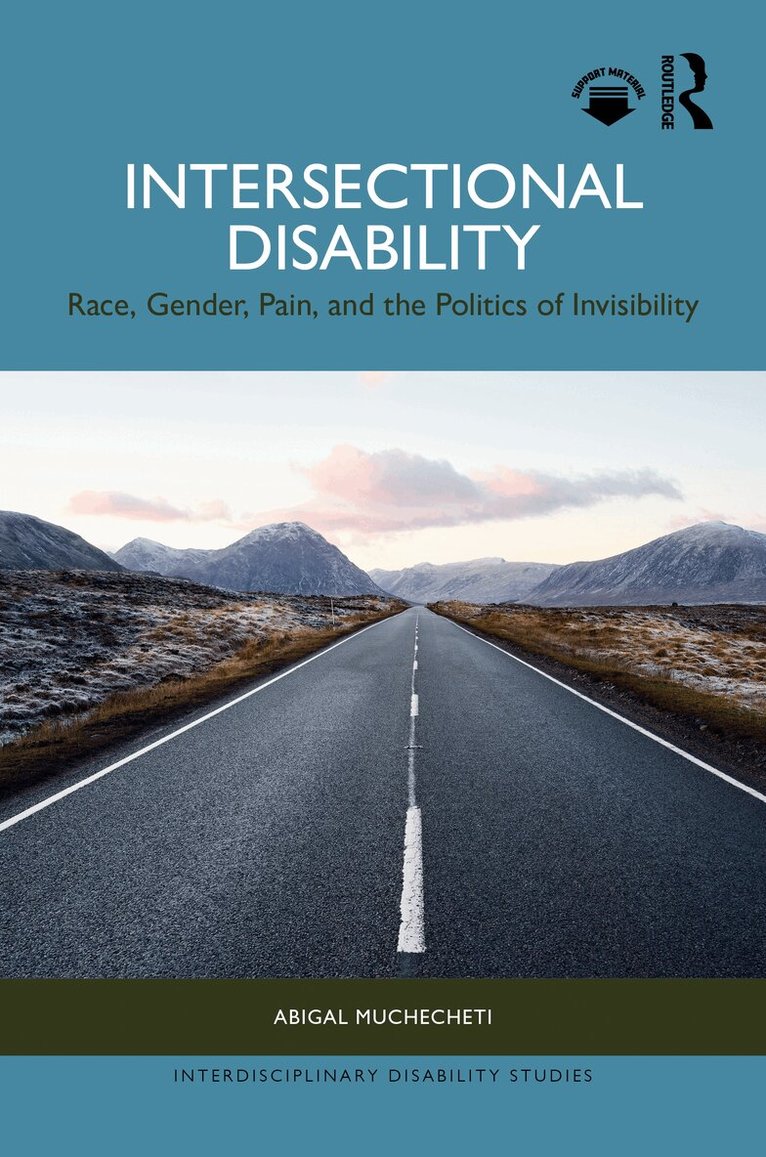
Intersectional Disability argues that disability cannot be adequately theorised without explicit attention to race, gender, pain, epistemic injustice, and structural unbelievability. While disability studies, intersectionality, and Critical Race Theory have transformed understandings of inequality, disability continues to be treated as a largely race-neutral and gender-neutral category. This book addresses that theoretical gap by advancing Intersectional Disability Theory, a new framework that reconceptualises disability as a relational and political category shaped by whiteness, gendered expectations of endurance, the medical politics of credibility, and institutional structures that normalise able-bodiedness.Bringing Black feminist theory, Critical Race Theory, and critical disability studies into sustained dialogue, the book examines the co-construction of disability and race across healthcare, welfare, higher education, Equality, Diversity and Inclusion (EDI), and the built environment. It demonstrates how structural power shapes recognition, care, credibility, and institutional legitimacy, determining whose pain is believed, whose impairment is recognised, and who remains invisible.Featuring chapter overviews, key concept definitions, case studies, reflective questions, discussion exercises, and annotated further reading, Intersectional Disability offers both a major theoretical contribution and an essential teaching resource for students and scholars across disability studies, Black feminist studies, Critical Race Theory, sociology, social policy, and the medical humanities.