• Fri frakt över 249 kr
  • •
  • Snabba leveranser
  • •
  • Billiga böcker
Kundservice

Du är på sajten för privatpersoner.

Företag, bibliotek eller offentlig verksamhet?

Du handlar på classic.bokus.com, där alla dina funktioner finns intakta.
Till classic.bokus.com
Bokus logotyp. Gå till startsidan.
  • Erbjudanden
  • Nyheter
  • Student
  • Topplistor
  • Barn & ungdom
  • Bokus Play
  • E-böcker
  • Pocketböcker
  • Spel & pussel

10% rabatt på allt med kod: NYSTART10 →

Sidfot

Mina sidor

    Hjälp

    • Kundservice
    • Vanliga frågor och svar
    • Frakt och leverans
    • Retur vid ångerrätt
    • Reklamera vara
    • Betalning
    • Köpvillkor
    • Allmänna villkor
    • Information om webbplatsens tillgänglighet

    Om Bokus

    • Om oss
    • Pressrum
    • För studenter
    • För företag
    • För bibliotek och offentlig verksamhet
    • För leverantörer
    • Hållbarhet

    Populärt

    • Aktuella erbjudanden
    • Presentkort
    • Studentlitteratur
    • Nya böcker
    • Topplistor
    • Signerade böcker
    • Engelska böcker

    Inspiration

    • Boktips
    • BookTok
    • Populära bokserier
    • Barnbokskaraktärer
    • Populära författare
    Logotyp för Bokus
    Följ oss på Facebook (extern länk)Följ oss på Instagram (extern länk)Följ oss på YouTube (extern länk)Följ oss på TikTok (extern länk)
    bokus @ CookiesAnpassa cookiesIntegritetspolicyKöpvillkor
    Till Citymail hemsida (extern länk)Till Budbee hemsida (extern länk)Till Postnord hemsida (extern länk)Till Schenker hemsida (extern länk)Till Early Bird hemsida (extern länk)Till Walleys hemsida (extern länk)
    1. Juridik
    2. Särskilda rättsområden
    3. Socialrätt och hälso- och sjukvårdsrätt
    4. Hälso- och sjukvårdsrätt

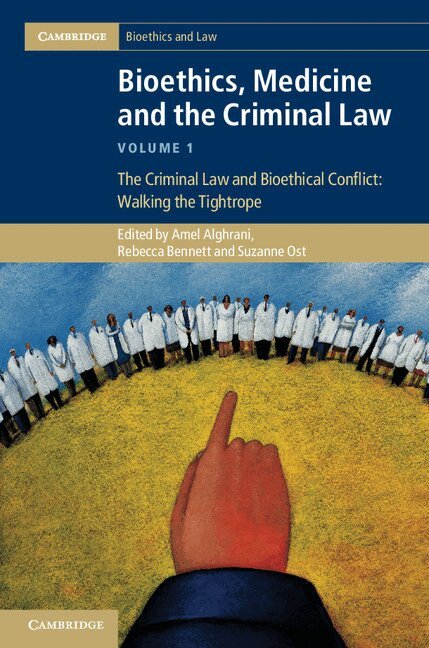
    Bioethics, Medicine and the Criminal Law

    AvAmel Alghrani,Rebecca Bennett

    Inbunden, Engelska, 2012

    Del i serien Cambridge Bioethics and Law

    1 351 kr

    Beställningsvara. Skickas inom 10-15 vardagar. Fri frakt över 249 kr.

    Beskrivning

    Who should define what constitutes ethical and lawful medical practice? Judges? Doctors? Scientists? Or someone else entirely? This volume analyses how effectively criminal law operates as a forum for resolving ethical conflict in the delivery of health care. It addresses key questions such as: how does criminal law regulate controversial bioethical areas? What effect, positive or negative, does the use of criminal law have when regulating bioethical conflict? And can the law accommodate moral controversy? By exploring criminal law in theory and in practice and examining the broad field of bioethics as opposed to the narrower terrain of medical ethics, it offers balanced arguments that will help readers form reasoned views on the ethical legitimacy of the invocation and use of criminal law to regulate medical and scientific practice and bioethical issues.

    Produktinformation

    • Utgivningsdatum:2012-11-01
    • Mått:154 x 234 x 21 mm
    • Vikt:580 g
    • Format:Inbunden
    • Språk:Engelska
    • Serie:Cambridge Bioethics and Law
    • Antal sidor:305
    • Förlag:Cambridge University Press
    • ISBN:9781107025127

    Utforska kategorier

    • Hälso- och sjukvårdsrätt inom Juridik

    Mer om författaren

    Amel Alghrani is a Research Fellow at Manchester University. Rebecca Bennett is a Senior Lecturer in Bioethics at Manchester University. Suzanne Ost is a Professor of Law at Lancaster University.

    Recensioner i media

    '… this book is a major success. It is original, thought provoking, and covers a wide range of contemporary issues which everyone interested in bioethics, medicine, and the law will take pleasure in reading. While this book is aimed largely at an academic audience, it will definitely garner interest from practitioners, both medical and legal, scientists and students on undergraduate and postgraduate courses across the country.' Rob Heywood, Medical Law Review

    Innehållsförteckning

    • 1. Introduction – when criminal law encounters bioethics: a case of tensions and incompatibilities or an apt forum for resolving ethical conflict? Amel Alghrani, Rebecca Bennett and Suzanne Ost; Part I. Death, Dying, and the Criminal Law: 2. Euthanasia and assisted suicide should, when properly performed by a doctor in an appropriate case, be decriminalised John Griffiths; 3. Five flawed arguments for decriminalising euthanasia John Keown; 4. Euthanasia excused: between prohibition and permission Richard Huxtable; Part II. Freedom and Autonomy: When Consent Is Not Enough: 5. Body integrity identity disorder – a problem of perception? Robert Smith; 6. Risky sex and 'manly diversions': the contours of consent in criminal law – transmission and rough horseplay cases David Gurnham; 7. 'Consensual' sexual activity between doctors and patients: a matter for the criminal law? Suzanne Ost and Hazel Biggs; Part III. Criminalising Biomedical Science: 8. 'Scientists in the dock': regulating science Amel Alghrani and Sarah Chan; 9. Bioethical conflict and developing biotechnologies: is protecting individual and public health from the risks of xenotransplantation a matter for the (criminal) law? Sara Fovargue; 10. The criminal law and enhancement – none of the law's business? Nishat Hyder and John Harris; 11. Dignity as a socially constructed value Stephen Smith; Part IV. Bioethics and Criminal Law in the Dock: 12. Can English law accommodate moral controversy in medicine? The case of abortion Margaret Brazier; 13. The case for decriminalising abortion in Northern Ireland Marie Fox; 14. The impact of the loss of deference towards the medical profession José Miola; 15. Criminalising medical negligence David Archard; 16. All to the good? Criminality, politics, and public health John Coggon; 17. Moral controversy, human rights and the common law judge Brenda Hale.