Rebecca Bennett - Böcker
Visar alla böcker från författaren Rebecca Bennett. Handla med fri frakt och snabb leverans.
8 produkter
8 produkter
1 199 kr
Skickas inom 3-6 vardagar
ISSUES IN BIOMEDICAL ETHICS General Editors: John Harris, University of Manchester; S(ren Holm, University of Copenhagen. Consulting Editor: Ranaan Gillon, Director, Imperial College Health Service, London. North American Consulting Editor: Bonnie Steinbock, Professor of Philosophy, SUNY, Albany. The late twentieth century has witnessed dramatic technological developments in biomedical science and the delivery of health care, and these developments have brought with them important social changes. All too often ethical analysis has lagged behind these changes. The purpose of this series is to provide lively, up-to-date, and authoritative studies for the increasingly large and diverse readership concerned with issues in biomedical ethics--not just health care trainees and professionals, but also social scientists, philosophers, lawyers, social workers, and legislators. The series will feature both single-author and multi-author books, short and accessible enough to be widely read, each of them focused on an issue of outstanding current importance and interest. Philosophers, doctors, and lawyers from several countries already feature among the contributors to the series. It promises to become the leading channel for the best original work in this burgeoning field. this book: Testing and screening for HIV and AIDS give rise to ethical, legal, and social issues of the most controversial and delicate kind. An international team of eighteen doctors, philosophers, and lawyers present a fresh and thorough discussion of these issues; they aim to show the way to practical advances but also to give an accessible guide to the debates for readers new to them. The contributors pay particular attention to the sensitive nature of the information yielded by a test for HIV antibody. They consider such questions as these: Are we under an obligation to disclose our HIV status if known? Can there be a moral justfication for the breaching of confidentiality in certain circumstances? Should health care professionals be forced to undergo HIV testing? Is there a right to remain in ignorance of one's HIV status? Consideration of such questions illuminates not only public policy and medical practice in connection with HIV and AIDS, but also broader issues about professional ethics and individual rights in other medical and social contexts. The breadth and depth of the research represented and the lucidity of the arguments put forward make this a key resource for academic researchers and healthcare professionals alike.
860 kr
Skickas inom 5-8 vardagar
The series:General Editors: John Harris, University of Manchester; Soren Holm, University of Manchester.Consulting Editor: Ranaan Gillon, Director, Imperial College Health Service, London.North American Consulting Editor: Bonnie Steinbock, Professor of Philosophy, SUNY, Albany.The late twentieth century has witnessed dramatic technological developments in biomedical science and the delivery of health care, and these developments have brought with them important social changes. All too often ethical analysis has lagged behind these changes. The purpose of this series is to provide lively, up-to-date, and authoritative studies for the increasingly large and diverse readership concerned with issues in biomedical ethics--not just health care trainees and professionals, but also social scientists, philosophers, lawyers, social workers, and legislators. The series will feature both single-author and multi-author books, short and accessible enough to be widely read, each of them focused on an issue of outstanding current importance and interest. Philosophers, doctors, and lawyers from several countries already feature among the contributors to the series. It promises to become the leading channel for the best original work in this burgeoning field. This book:Testing and screening for HIV and AIDS give rise to ethical, legal, and social issues of the most controversial and delicate kind. An international team of eighteen doctors, philosophers, and lawyers present a fresh and thorough discussion of these issues; they aim to show the way to practical advances but also to give an accessible guide to the debates for readers new to them. The contributors pay particular attention to the sensitive nature of the information yielded by a test for HIV antibody. They consider such questions as these: Are we under an obligation to disclose our HIV status if known? Can there be a moral justification for the breaching of confidentiality in certain circumstances? Should health care professionals be forced to undergo HIV testing? Is there a right to remain in ignorance of one's HIV status? Consideration of such questions illuminates not only public policy and medical practice in connection with HIV and AIDS, but also broader issues about professional ethics and individual rights in other medical and social contexts. The breadth and depth of the research represented and the lucidity of the arguments put forward make this a key resource for academic researchers and healthcare professionals alike.
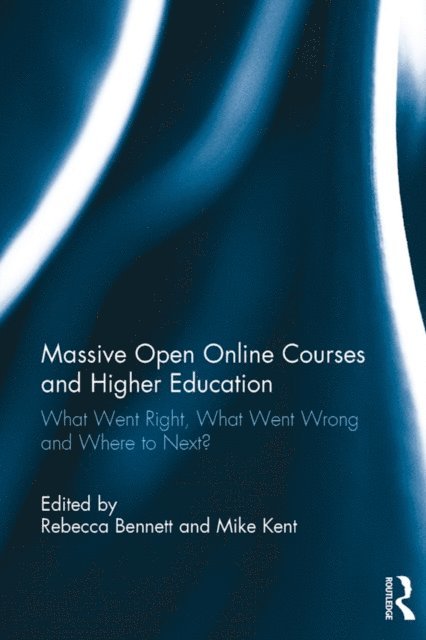
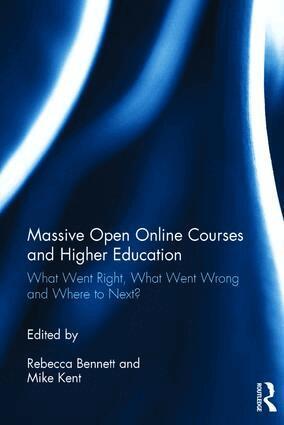
Massive Open Online Courses and Higher Education
What Went Right, What Went Wrong and Where to Next?
Häftad, Engelska, 2019
599 kr
Skickas inom 10-15 vardagar
Since the first MOOC was launched at the University of Manitoba in 2008, this new form of the massification of higher education has been a rollercoaster ride for the university sector. The New York Times famously declared 2012 to be the year of the MOOC. However, by 2014, the number of academic leaders who believed the model was unsustainable doubled to more than 50%. While the MOOC hype has somewhat subsided, the attitudes and anxieties of this peak time can still be seen influencing universities and their administrations. This is the first volume that addresses Massive Open Online Courses from a post-MOOC perspective. We move beyond the initial hype and revolutionary promises of the peak-MOOC period and take a sober look at what endures in an area that is still rapidly growing, albeit without the headlines. This book explores the future of the MOOC in higher education by examining what went right, what went wrong and where to next for the massification of higher education and online learning and teaching. The chapters in this collection address these questions from a wide variety of different backgrounds, methodologies and regional perspectives. They explore learner experiences, the move towards course for credit, innovative design, transformations and implications of the MOOC in turn.This book is valuable reading for students and academics interested in education, eLearning, globalisation and information services.
1 266 kr
Skickas inom 7-10 vardagar
Who should define what constitutes ethical and lawful medical practice? Judges? Doctors? Scientists? Or someone else entirely? This volume analyses how effectively criminal law operates as a forum for resolving ethical conflict in the delivery of health care. It addresses key questions such as: how does criminal law regulate controversial bioethical areas? What effect, positive or negative, does the use of criminal law have when regulating bioethical conflict? And can the law accommodate moral controversy? By exploring criminal law in theory and in practice and examining the broad field of bioethics as opposed to the narrower terrain of medical ethics, it offers balanced arguments that will help readers form reasoned views on the ethical legitimacy of the invocation and use of criminal law to regulate medical and scientific practice and bioethical issues.
875 kr
Skickas inom 10-15 vardagar
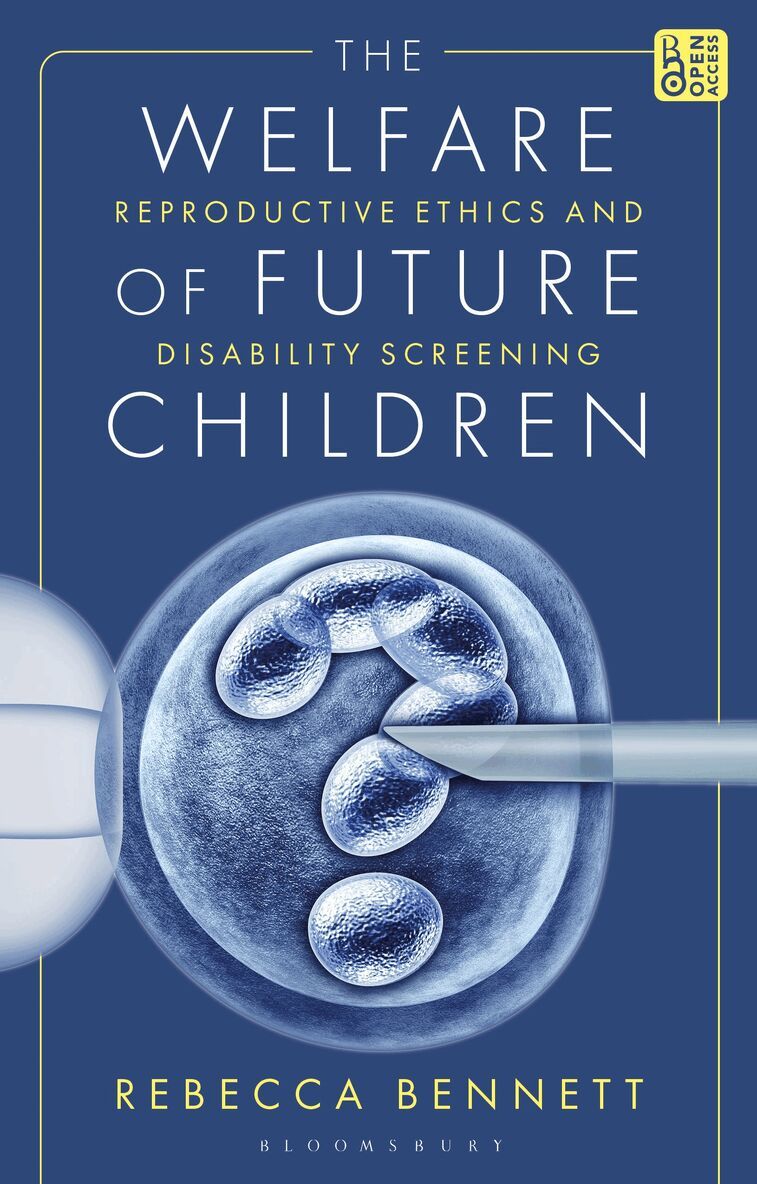
This open access practical guide to reproductive ethics navigates the complex subject of the policy around IVF treatment and disability screening based on the concerns around the welfare of future children. It focuses on 3 questions in order to examine these often complex philosophical issues:· Should we allow prospective parents using IVF to implant an embryo with a condition considered to be a disability?· Is routine screening for Down syndrome in pregnancy ethically acceptable, even if there is evidence that individuals may feel pressure to accept this screening?· Are we justified in attempting to evaluate the potential parenting ability of those trying to access fertility treatment (e.g. disabled people or individuals with past criminal convictions) and prevent access in some cases?Rebecca Bennett walks the reader through different answers to these questions, exploring issues such as whether it is ever morally wrong to reproduce, whether we have a moral obligation to try and bring the ‘best’ children we can into existence and how we can assess the quality of future lives.There is, of course, no consensus about what the ‘right’ answers are to these questions, however answers are needed.This area of policy and regulation is one that, Bennett argues, is heavily influenced by intuition, social norms and bias. The Welfare of Future Children invites us to question these norms and to come to a position on these issues that emphasises reason, transparency and accountability.The ebook editions of this book are available open access under a CC BY-NC-ND 4.0 licence on bloomsburycollections.com. Open access was funded by the University of Manchester, UK.
270 kr
Skickas inom 7-10 vardagar
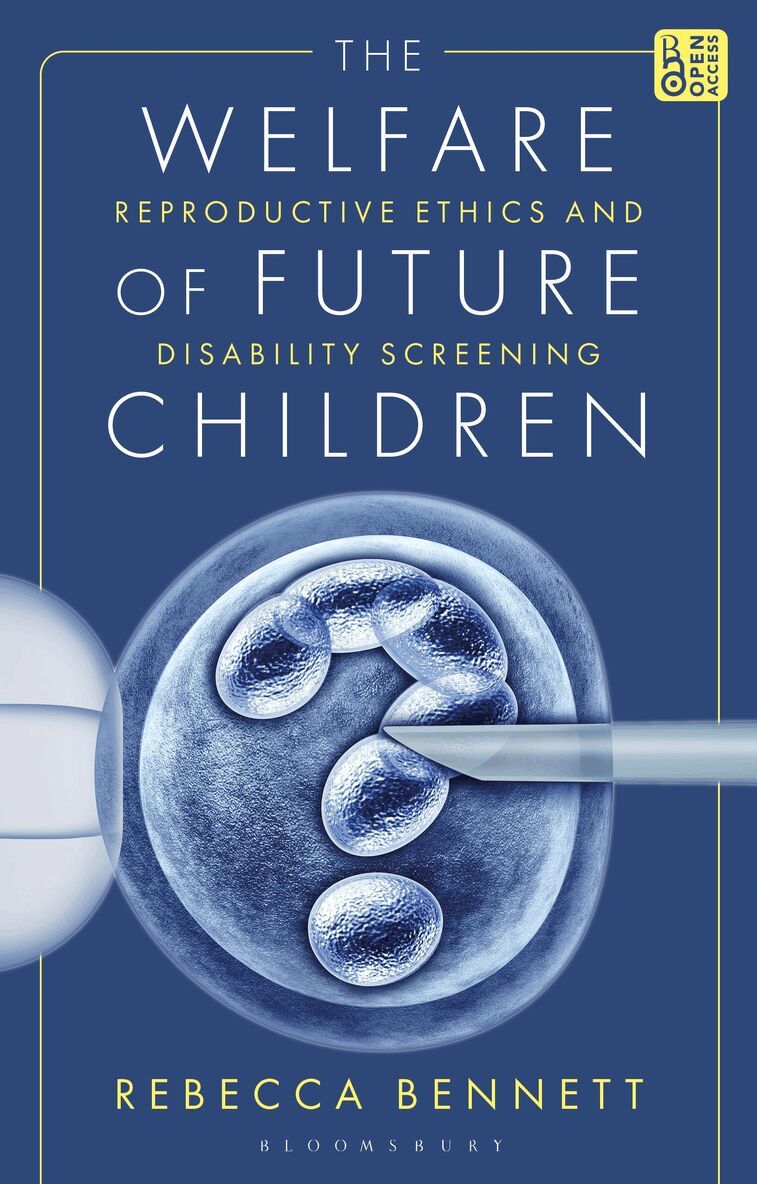
This open access practical guide to reproductive ethics navigates the complex subject of the policy around IVF treatment and disability screening based on the concerns around the welfare of future children. It focuses on 3 questions in order to examine these often complex philosophical issues:· Should we allow prospective parents using IVF to implant an embryo with a condition considered to be a disability?· Is routine screening for Down syndrome in pregnancy ethically acceptable, even if there is evidence that individuals may feel pressure to accept this screening?· Are we justified in attempting to evaluate the potential parenting ability of those trying to access fertility treatment (e.g. disabled people or individuals with past criminal convictions) and prevent access in some cases?Rebecca Bennett walks the reader through different answers to these questions, exploring issues such as whether it is ever morally wrong to reproduce, whether we have a moral obligation to try and bring the ‘best’ children we can into existence and how we can assess the quality of future lives.There is, of course, no consensus about what the ‘right’ answers are to these questions, however answers are needed.This area of policy and regulation is one that, Bennett argues, is heavily influenced by intuition, social norms and bias. The Welfare of Future Children invites us to question these norms and to come to a position on these issues that emphasises reason, transparency and accountability.The ebook editions of this book are available open access under a CC BY-NC-ND 4.0 licence on bloomsburycollections.com. Open access was funded by the University of Manchester, UK.
1 142 kr
Skickas inom 10-15 vardagar
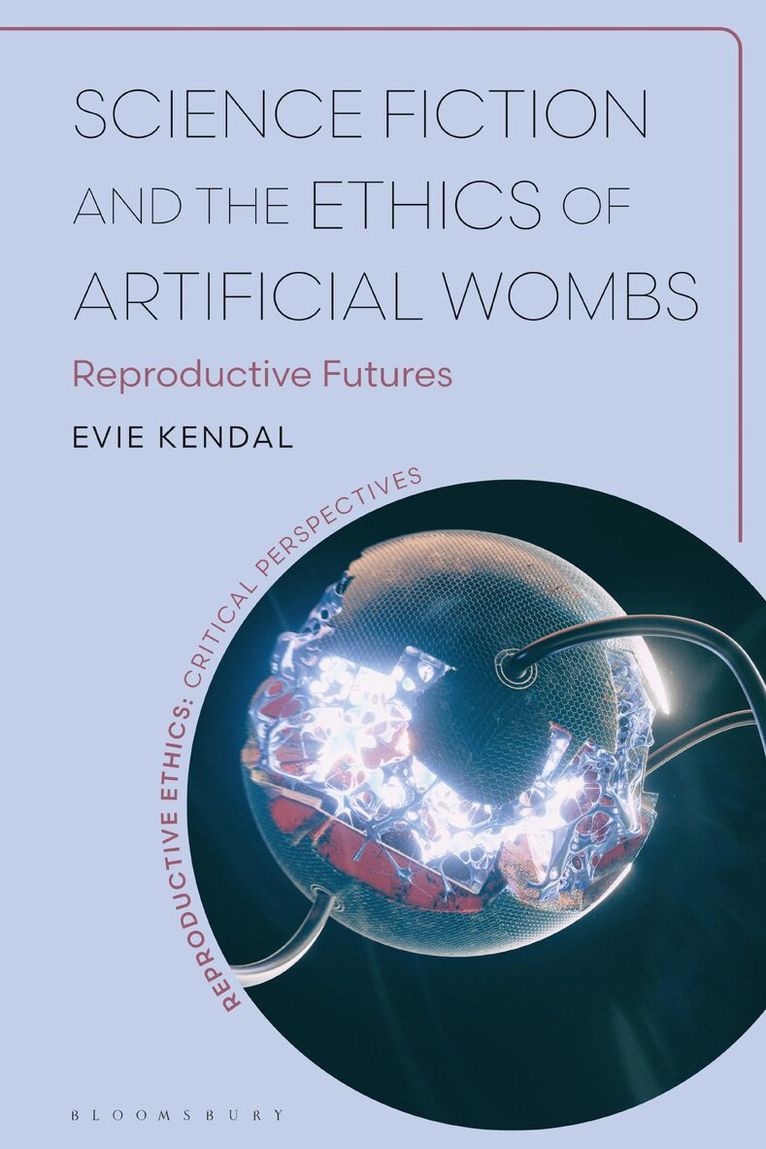
Ectogenesis, or artificial wombs, is not yet a reality. But is it the future? In this revolutionary book, Evie Kendal explores the potential that ectogenesis has to promote sexual equality in human reproduction, and the role science fiction plays in imagining possible futures where this technology is realised. Fictional representations of ectogenesis are typically used in bioethics to support techno-conservative views of reproduction, conflating the potential issues associated with this technology with other controversial practices, such as human cloning and genetic engineering. Arguing against this dominant trend from a liberal feminist perspective, and placing ectogestation within the rich history of debate in the area, this interdisciplinary volume examines the numerous benefits that growing a foetus in an artificial environment could bring in saving women from the sole burden of reproduction. Further considering the complex dynamic between ectogenesis and science fiction, Kendal not only applies bioethical reasoning to ectogenesis but to its representation in literature and film, and the subsequent use of such media in the bioethical discourse. As a result, she highlights several problems with the current methods of engagement with science fiction in bioethics. Proposing alternatives, Kendal argues that new methods should capitalise on science fiction’s ability to both communicate biotechnical change and explore how to infiltrate emerging technologies into society.With extended case studies, including Dawn by Octavia E. Butler, Science Fiction and the Ethics of Artificial Wombs brings together bioethics, philosophy, feminist thought, and literary theory to tackle urgent questions about how we think about and imagine this new way of creating human life.
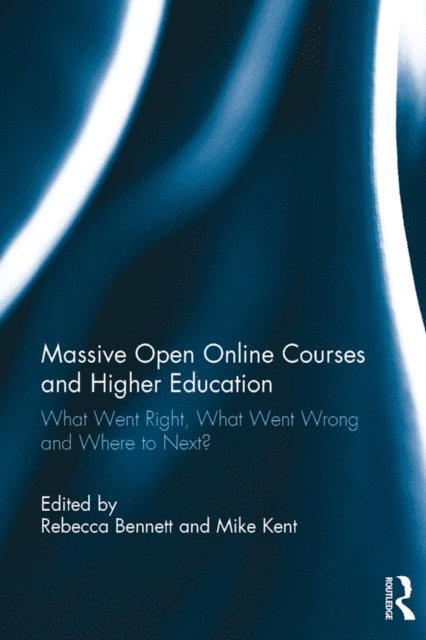
Massive Open Online Courses and Higher Education
What Went Right, What Went Wrong and Where to Next?
Inbunden, Engelska, 2017
2 029 kr
Skickas inom 10-15 vardagar
Since the first MOOC was launched at the University of Manitoba in 2008, this new form of the massification of higher education has been a rollercoaster ride for the university sector. The New York Times famously declared 2012 to be the year of the MOOC. However, by 2014, the number of academic leaders who believed the model was unsustainable doubled to more than 50%. While the MOOC hype has somewhat subsided, the attitudes and anxieties of this peak time can still be seen influencing universities and their administrations. This is the first volume that addresses Massive Open Online Courses from a post-MOOC perspective. We move beyond the initial hype and revolutionary promises of the peak-MOOC period and take a sober look at what endures in an area that is still rapidly growing, albeit without the headlines. This book explores the future of the MOOC in higher education by examining what went right, what went wrong and where to next for the massification of higher education and online learning and teaching. The chapters in this collection address these questions from a wide variety of different backgrounds, methodologies and regional perspectives. They explore learner experiences, the move towards course for credit, innovative design, transformations and implications of the MOOC in turn.This book is valuable reading for students and academics interested in education, eLearning, globalisation and information services.