• Fri frakt över 249 kr
  • •
  • Snabba leveranser
  • •
  • Billiga böcker
Kundservice

Du är på sajten för privatpersoner.

Företag, bibliotek eller offentlig verksamhet?

Du handlar på classic.bokus.com, där alla dina funktioner finns intakta.
Till classic.bokus.com
Bokus logotyp. Gå till startsidan.
  • Erbjudanden
  • Nyheter
  • Student
  • Topplistor
  • Barn & ungdom
  • Bokus Play
  • E-böcker
  • Pocketböcker
  • Spel & pussel

Må bättre, för mindre! Upp till 50% rabatt på hälsoböcker

Sidfot

Mina sidor

    Hjälp

    • Kundservice
    • Vanliga frågor och svar
    • Frakt och leverans
    • Retur vid ångerrätt
    • Reklamera vara
    • Betalning
    • Köpvillkor
    • Allmänna villkor
    • Information om webbplatsens tillgänglighet

    Om Bokus

    • Om oss
    • Pressrum
    • För studenter
    • För företag
    • För bibliotek och offentlig verksamhet
    • För leverantörer
    • Hållbarhet

    Populärt

    • Aktuella erbjudanden
    • Presentkort
    • Studentlitteratur
    • Nya böcker
    • Topplistor
    • Signerade böcker
    • Engelska böcker

    Inspiration

    • Boktips
    • BookTok
    • Populära bokserier
    • Barnbokskaraktärer
    • Populära författare
    Logotyp för Bokus
    Följ oss på Facebook (extern länk)Följ oss på Instagram (extern länk)Följ oss på YouTube (extern länk)Följ oss på TikTok (extern länk)
    bokus @ CookiesAnpassa cookiesIntegritetspolicyKöpvillkor
    Till Citymail hemsida (extern länk)Till Budbee hemsida (extern länk)Till Postnord hemsida (extern länk)Till Schenker hemsida (extern länk)Till Early Bird hemsida (extern länk)Till Walleys hemsida (extern länk)
    1. Naturvetenskap och teknik
    2. Matematik och naturvetenskap
    3. Naturvetenskap:allmänt
    4. Naturvetenskapens filosofi

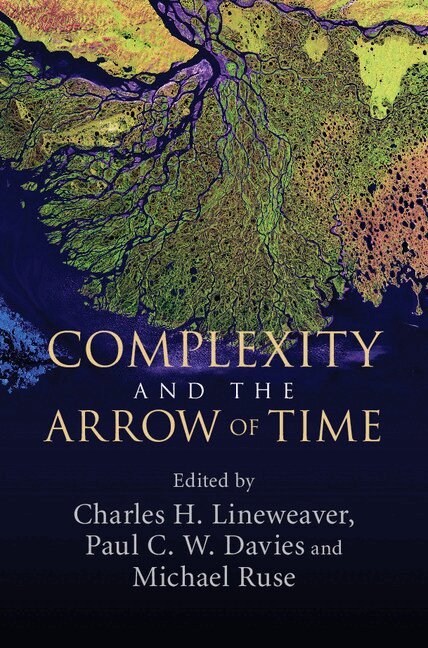
    Complexity and the Arrow of Time

    AvCharles H. Lineweaver,Paul C. W. Davies

    Inbunden, Engelska, 2013

    430 kr

    Beställningsvara. Skickas inom 10-15 vardagar. Fri frakt över 249 kr.

    Beskrivning

    There is a widespread assumption that the universe in general, and life in particular, is 'getting more complex with time'. This book brings together a wide range of experts in science, philosophy and theology and unveils their joint effort in exploring this idea. They confront essential problems behind the theory of complexity and the role of life within it: what is complexity? When does it increase, and why? Is the universe evolving towards states of ever greater complexity and diversity? If so, what is the source of this universal enrichment? This book addresses those difficult questions, and offers a unique cross-disciplinary perspective on some of the most profound issues at the heart of science and philosophy. Readers will gain insights in complexity that reach deep into key areas of physics, biology, complexity science, philosophy and religion.

    Produktinformation

    • Utgivningsdatum:2013-08-08
    • Mått:158 x 234 x 20 mm
    • Vikt:740 g
    • Format:Inbunden
    • Språk:Engelska
    • Antal sidor:368
    • Förlag:Cambridge University Press
    • ISBN:9781107027251

    Utforska kategorier

    • Naturvetenskapens filosofi inom Naturvetenskap och teknik
    • Naturvetenskapens historia inom Naturvetenskap och teknik

    Recensioner i media

    'The emergence of complex systems after the Big Bang, from a Universe that started out in a very simple state, is one of the great puzzles of science. This book provides the best single-volume insight into the nature of this puzzle, and hints at its possible resolution. It may be the answer to life, the Universe, and everything.' John Gribbin, University of Sussex

    Innehållsförteckning

    • 1. What is complexity? Is it increasing? Charles H. Lineweaver, Paul C. W. Davies and Michael Ruse; 2. Directionality principles from cancer to cosmology Paul C. W. Davies; 3. A simple treatment of complexity: cosmological entropic boundary conditions on increasing complexity Charles H. Lineweaver; 4. Using complexity science to search for unity in the natural sciences Eric J. Chaisson; 5. On the spontaneous generation of complexity in the universe Seth Lloyd; 6. Emergent spatiotemporal complexity in field theory Marcelo Gleiser; 7. Life: the final frontier for complexity? Simon Conway Morris; 8. Evolution beyond Newton, Darwin, and entailing law: the origin of complexity in the evolving biosphere Stuart A. Kauffman; 9. Emergent order in processes: the interplay of complexity, robustness, correlation, and hierarchy in the biosphere D. Eric Smith; 10. The inferential evolution of biological complexity: forgetting nature by learning to nurture David C. Krakauer; 11. Information width: a way for the second law to increase complexity David Wolpert; 12. Wrestling with biological complexity: from Darwin to Dawkins Michael Ruse; 13. The role of generative entrenchment and robustness in the evolution of complexity William C. Wimsatt; 14. On the plurality of complexity-producing mechanisms Philip Clayton; Index.