• Fri frakt över 249 kr
  • •
  • Snabba leveranser
  • •
  • Billiga böcker
Kundservice

Du är på sajten för privatpersoner.

Företag, bibliotek eller offentlig verksamhet?

Du handlar på classic.bokus.com, där alla dina funktioner finns intakta.
Till classic.bokus.com
Bokus logotyp. Gå till startsidan.
  • Erbjudanden
  • Nyheter
  • Student
  • Topplistor
  • Barn & ungdom
  • Bokus Play
  • E-böcker
  • Pocketböcker
  • Spel & pussel

10% rabatt på allt med kod NYSTART10 →

Sidfot

Mina sidor

    Hjälp

    • Kundservice
    • Vanliga frågor och svar
    • Frakt och leverans
    • Retur vid ångerrätt
    • Reklamera vara
    • Betalning
    • Köpvillkor
    • Allmänna villkor
    • Information om webbplatsens tillgänglighet

    Om Bokus

    • Om oss
    • Pressrum
    • För studenter
    • För företag
    • För bibliotek och offentlig verksamhet
    • För leverantörer
    • Hållbarhet

    Populärt

    • Aktuella erbjudanden
    • Presentkort
    • Studentlitteratur
    • Nya böcker
    • Topplistor
    • Signerade böcker
    • Engelska böcker

    Inspiration

    • Boktips
    • BookTok
    • Populära bokserier
    • Barnbokskaraktärer
    • Populära författare
    Logotyp för Bokus
    Följ oss på Facebook (extern länk)Följ oss på Instagram (extern länk)Följ oss på YouTube (extern länk)Följ oss på TikTok (extern länk)
    bokus @ CookiesAnpassa cookiesIntegritetspolicyKöpvillkor
    Till Citymail hemsida (extern länk)Till Budbee hemsida (extern länk)Till Postnord hemsida (extern länk)Till Schenker hemsida (extern länk)Till Early Bird hemsida (extern länk)Till Walleys hemsida (extern länk)
    1. Psykologi och pedagogik
    2. Psykologi
    3. Kognitiv psykologi

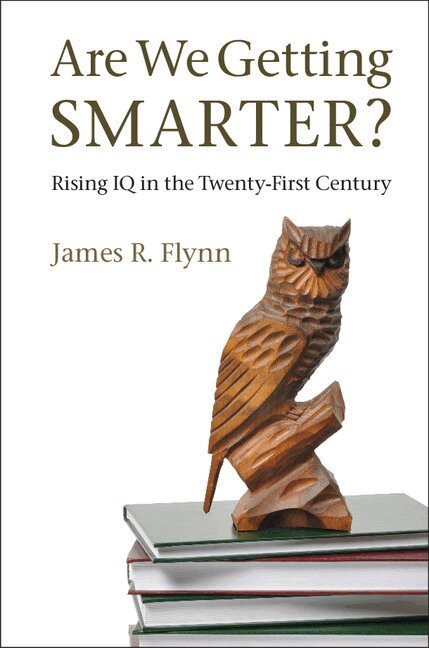
    Are We Getting Smarter?

    Rising IQ in the Twenty-First Century

    AvJames R. Flynn

    Inbunden, Engelska, 2012

    646 kr

    Beställningsvara. Skickas inom 10-15 vardagar. Fri frakt över 249 kr.

    Fler format och utgåvor

    Häftad

    281 kr

    Beskrivning

    The 'Flynn effect' is a surprising finding, identified by James R. Flynn, that IQ test scores have significantly increased from one generation to the next over the past century. Flynn now brings us an exciting new book which aims to make sense of this rise in IQ scores and considers what this tells us about our intelligence, our minds and society. Are We Getting Smarter? features fascinating new material on a variety of topics including the effects of intelligence in the developing world; the impact of rising IQ scores on the death penalty, cognitive ability in old age and the language abilities of youth culture; as well as controversial topics of race and gender. He ends with the message that assessing IQ goes astray if society is ignored. As IQ scores continue to rise into the twenty-first century, particularly in the developing world, the 'Flynn effect' marches on.

    Produktinformation

    • Utgivningsdatum:2012-09-06
    • Mått:157 x 236 x 20 mm
    • Vikt:670 g
    • Format:Inbunden
    • Språk:Engelska
    • Antal sidor:321
    • Förlag:Cambridge University Press
    • ISBN:9781107028098

    Utforska kategorier

    • Kognitiv psykologi inom Psykologi och pedagogik

    Mer om författaren

    James R. Flynn is Professor Emeritus at the University of Otago, New Zealand, and a recipient of the University's Gold Medal for Distinguished Career Research. He is renowned for the 'Flynn effect', the documentation of massive IQ gains from one generation to another. Professor Flynn is the author of 12 books including Where Have All the Liberals Gone? (Cambridge University Press, 2008) and What Is Intelligence? (Cambridge University Press, 2007), which caused many to rethink the prevailing theory of intelligence.

    Recensioner i media

    'Flynn has made this field his own … This book's strengths are the authority of the author, the engaging writing style, the importance of the topics dealt with, and the up-to-date nature of the content.' Ian J. Deary, University of Edinburgh

    Innehållsförteckning

    • 1. Opening windows; 2. IQ and intelligence; 3. Developing nations; 4. Death, memory, and politics; 5. Youth and age; 6. Race and gender; 7. The sociological imagination; 8. Progress and puzzles; Appendix I. IQ trends; Appendix II. Capital cases and comparing the WAIS-III IQs of various nations; Appendix III. Adult/child IQ trends and bright taxes/bonuses; Appendix IV. Gender and Raven's; Appendix V. Wonderful paper on causes of Raven's gains.