• Fri frakt över 249 kr
  • •
  • Snabba leveranser
  • •
  • Billiga böcker
Kundservice

Du är på sajten för privatpersoner.

Företag, bibliotek eller offentlig verksamhet?

Du handlar på classic.bokus.com, där alla dina funktioner finns intakta.
Till classic.bokus.com
Bokus logotyp. Gå till startsidan.
  • Erbjudanden
  • Nyheter
  • Student
  • Topplistor
  • Barn & ungdom
  • Bokus Play
  • E-böcker
  • Pocketböcker
  • Spel & pussel

10% rabatt på allt med kod: NYSTART10 →

Sidfot

Mina sidor

    Hjälp

    • Kundservice
    • Vanliga frågor och svar
    • Frakt och leverans
    • Retur vid ångerrätt
    • Reklamera vara
    • Betalning
    • Köpvillkor
    • Allmänna villkor
    • Information om webbplatsens tillgänglighet

    Om Bokus

    • Om oss
    • Pressrum
    • För studenter
    • För företag
    • För bibliotek och offentlig verksamhet
    • För leverantörer
    • Hållbarhet

    Populärt

    • Aktuella erbjudanden
    • Presentkort
    • Studentlitteratur
    • Nya böcker
    • Topplistor
    • Signerade böcker
    • Engelska böcker

    Inspiration

    • Boktips
    • BookTok
    • Populära bokserier
    • Barnbokskaraktärer
    • Populära författare
    Logotyp för Bokus
    Följ oss på Facebook (extern länk)Följ oss på Instagram (extern länk)Följ oss på YouTube (extern länk)Följ oss på TikTok (extern länk)
    bokus @ CookiesAnpassa cookiesIntegritetspolicyKöpvillkor
    Till Citymail hemsida (extern länk)Till Budbee hemsida (extern länk)Till Postnord hemsida (extern länk)Till Schenker hemsida (extern länk)Till Early Bird hemsida (extern länk)Till Walleys hemsida (extern länk)
    1. Ekonomi och Ledarskap
    2. Företagsekonomi
    3. E-handel

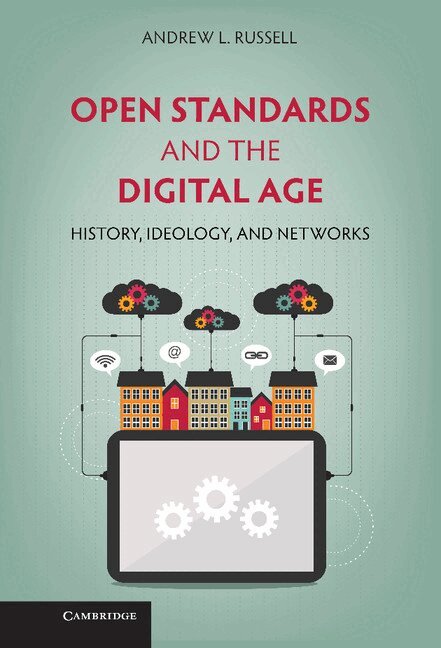
    Open Standards and the Digital Age

    History, Ideology, and Networks

    AvAndrew L. Russell

    Inbunden, Engelska, 2014

    Del i serien Cambridge Studies in the Emergence of Global Enterprise

    1 126 kr

    Beställningsvara. Skickas inom 10-15 vardagar. Fri frakt över 249 kr.

    Fler format och utgåvor

    Häftad

    377 kr

    E-bok

    455 kr

    E-bok

    455 kr

    Beskrivning

    How did openness become a foundational value for the networks of the twenty-first century? Open Standards and the Digital Age answers this question through an interdisciplinary history of information networks that pays close attention to the politics of standardization. For much of the twentieth century, information networks such as the monopoly Bell System and the American military's Arpanet were closed systems subject to centralized control. In the 1970s and 1980s however, engineers in the United States and Europe experimented with design strategies to create new digital networks. In the process, they embraced discourses of 'openness' to describe their ideological commitments to entrepreneurship, technological innovation, and participatory democracy. The rhetoric of openness has flourished - for example, in movements for open government, open source software, and open access publishing - but such rhetoric also obscures the ways the Internet and other 'open' systems still depend heavily on hierarchical forms of control.

    Produktinformation

    • Utgivningsdatum:2014-04-28
    • Mått:157 x 231 x 25 mm
    • Vikt:650 g
    • Format:Inbunden
    • Språk:Engelska
    • Serie:Cambridge Studies in the Emergence of Global Enterprise
    • Antal sidor:326
    • Förlag:Cambridge University Press
    • ISBN:9781107039193

    Utforska kategorier

    • E-handel inom Ekonomi och Ledarskap
    • Entreprenörskap inom Ekonomi och Ledarskap

    Mer om författaren

    Andrew L. Russell is an Assistant Professor of History and the Director of the Program in Science and Technology Studies in the College of Arts and Letters at the Stevens Institute of Technology in Hoboken, New Jersey. Before arriving at Stevens, he was a Postdoctoral Fellow in Duke University's John Hope Franklin Humanities Institute. Russell earned his PhD from The Johns Hopkins University (2007), MA from the University of Colorado, Boulder (2003), and BA from Vassar College, New York (1996). He has published in journals such as IEEE Annals of Computing, Enterprise and Society, and Information and Culture, and has been awarded fellowships from the Charles Babbage Institute, the Association for Computing Machinery, the Institute for Electrical and Electronics Engineers, and the American Society for Information Science and Technology.

    Recensioner i media

    'This book contributes significantly to our understanding of the current state of affairs in information technology and governance, while also making original contributions to our understanding of the evolution of business institutions across the long twentieth century. Drawing on substantial original research, Andrew L. Russell argues that processes for setting industry standards have embodied broadly felt (and often competing) values regarding American governance. … In the process, we come to see how the current enthusiasm for open systems and standards fits in a larger story of American governance. The current situation is neither a radical break nor an idealized state, as much contemporary literature insists and celebrates. Rather, it is a refinement in the face of shifting economic conditions that reflects and draws on a persistent commitment to economic liberalism. This is an important point that will garner considerable attention from historians and contemporary business analysts.' Steven W. Usselman, Chair of the School of History, Technology and Society, Georgia Institute of Technology

    Innehållsförteckning

    • 1. Introduction; 2. Ideological origins of open standards I: telegraph and engineering standards, 1860s–1900s; 3. Ideological origins of open standards II: American standards, 1910s–30s; 4. Standardization and the monopoly Bell System, 1880s–1930s; 5. Critiques of centralized control, 1930s–70s; 6. International standards for the convergence of computers and communications, 1960s–70s; 7. Open systems and the limits of democratic design, 1970s–80s; 8. The Internet and the advantages of autocratic design, 1970s–90s; 9. Conclusions: open standards and an open world.