Andrew L. Russell – författare
Visar alla böcker från författaren Andrew L. Russell. Handla med fri frakt och snabb leverans.
6 produkter
6 produkter
1 106 kr
Skickas inom 7-10 vardagar
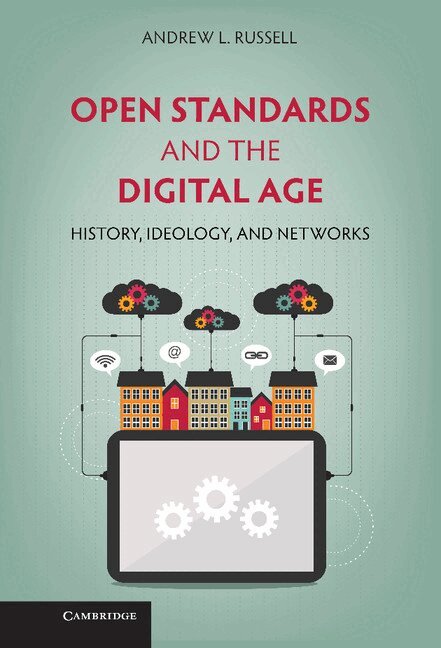
How did openness become a foundational value for the networks of the twenty-first century? Open Standards and the Digital Age answers this question through an interdisciplinary history of information networks that pays close attention to the politics of standardization. For much of the twentieth century, information networks such as the monopoly Bell System and the American military's Arpanet were closed systems subject to centralized control. In the 1970s and 1980s however, engineers in the United States and Europe experimented with design strategies to create new digital networks. In the process, they embraced discourses of 'openness' to describe their ideological commitments to entrepreneurship, technological innovation, and participatory democracy. The rhetoric of openness has flourished - for example, in movements for open government, open source software, and open access publishing - but such rhetoric also obscures the ways the Internet and other 'open' systems still depend heavily on hierarchical forms of control.
357 kr
Skickas inom 7-10 vardagar
How did openness become a foundational value for the networks of the twenty-first century? Open Standards and the Digital Age answers this question through an interdisciplinary history of information networks that pays close attention to the politics of standardization. For much of the twentieth century, information networks such as the monopoly Bell System and the American military's Arpanet were closed systems subject to centralized control. In the 1970s and 1980s however, engineers in the United States and Europe experimented with design strategies to create new digital networks. In the process, they embraced discourses of 'openness' to describe their ideological commitments to entrepreneurship, technological innovation, and participatory democracy. The rhetoric of openness has flourished - for example, in movements for open government, open source software, and open access publishing - but such rhetoric also obscures the ways the Internet and other 'open' systems still depend heavily on hierarchical forms of control.
Circuits, Packets, and Protocols
Entrepreneurs and Computer Communications, 1968-1988
Inbunden, Engelska, 2022
903 kr
Skickas inom 7-10 vardagar
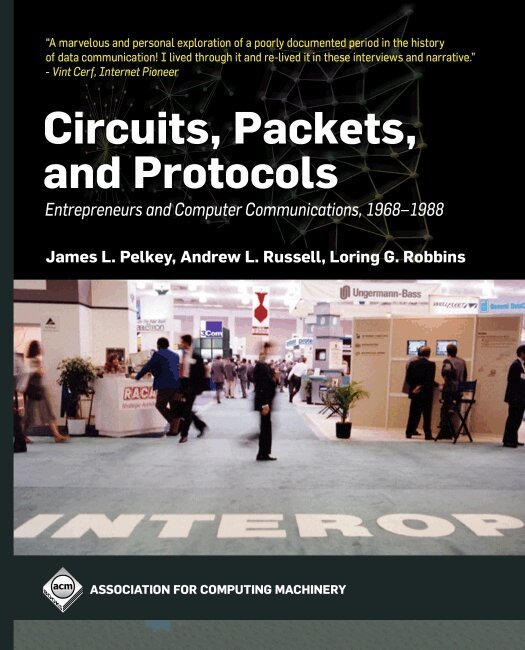
As recently as 1968, computer scientists were uncertain how best to interconnect even two computers. The notion that within a few decades the challenge would be how to interconnect millions of computers around the globe was too far-fetched to contemplate. Yet, by 1988, that is precisely what was happening. The products and devices developed in the intervening years—such as modems, multiplexers, local area networks, and routers—became the linchpins of the global digital society. How did such revolutionary innovation occur? This book tells the story of the entrepreneurs who were able to harness and join two factors: the energy of computer science researchers supported by governments and universities, and the tremendous commercial demand for Internetworking computers. The centerpiece of this history comes from unpublished interviews from the late 1980s with over 80 computing industry pioneers, including Paul Baran, J.C.R. Licklider, Vint Cerf, Robert Kahn, Larry Roberts, and Robert Metcalfe. These individuals give us unique insights into the creation of multi-billion dollar markets for computer-communications equipment, and they reveal how entrepreneurs struggled with failure, uncertainty, and the limits of knowledge.
Circuits, Packets, and Protocols
Entrepreneurs and Computer Communications, 1968-1988
Häftad, Engelska, 2022
666 kr
Skickas inom 7-10 vardagar
Circuits, Packets, and Protocols tells the story of the engineers, entrepreneurs, investors, and visionaries who laid the groundwork and built the foundations of the Internet.In the late 1960s, two American corporate behemoths were poised to dominate the rapidly converging industries of computing and communications—the computer giant, IBM, and the regulated telecommunications monopoly, AT&T. But in 1968, a key ruling by the Federal Communications Commission gave small businesses a doorway into an emerging market for communication devices that could transmit computer data over telephone lines. In the two decades that followed, an industry of networking technology emerged that would impact human history in profound and unfathomable ways. Circuits, Packets, and Protocols is a groundbreaking study of the men and women in the engineering labs, board rooms, and regulatory agencies whose decisions determined the evolution of our modern digital communication networks.Unlike histories that glorify the dominant players with the benefit of hindsight, this is a history of a pivotal era as it happened. Drawing on more than 80 interviews recorded in 1988, the book features insights from now-famous individuals such as Paul Baran, JCR Licklider, Vint Cerf, Louis Pouzin, and Robert Metcalfe. Inspired by innovations from government-sponsored Cold War defense projects and the birth of the modern venture capital industry, these trailblazers and many others built the technologies and companies that became essential building blocks in the development of today's Internet. Many of the companies and products failed, even while they helped propel the industry forward at breakneck speed. Equal parts academic history and thrilling startup drama, Circuits, Packets, and Protocols gives the reader a vivid picture of what it was like to take part in one of the most exciting periods of technological advance in our time.
534 kr
Skickas inom 7-10 vardagar
745 kr
Skickas inom 7-10 vardagar