• Fri frakt över 249 kr
  • •
  • Snabba leveranser
  • •
  • Billiga böcker
Kundservice

Du är på sajten för privatpersoner.

Företag, bibliotek eller offentlig verksamhet?

Du handlar på classic.bokus.com, där alla dina funktioner finns intakta.
Till classic.bokus.com
Bokus logotyp. Gå till startsidan.
  • Erbjudanden
  • Nyheter
  • Student
  • Topplistor
  • Barn & ungdom
  • Bokus Play
  • E-böcker
  • Pocketböcker
  • Spel & pussel

10% rabatt på allt med kod: NYSTART10 →

Sidfot

Mina sidor

    Hjälp

    • Kundservice
    • Vanliga frågor och svar
    • Frakt och leverans
    • Retur vid ångerrätt
    • Reklamera vara
    • Betalning
    • Köpvillkor
    • Allmänna villkor
    • Information om webbplatsens tillgänglighet

    Om Bokus

    • Om oss
    • Pressrum
    • För studenter
    • För företag
    • För bibliotek och offentlig verksamhet
    • För leverantörer
    • Hållbarhet

    Populärt

    • Aktuella erbjudanden
    • Presentkort
    • Studentlitteratur
    • Nya böcker
    • Topplistor
    • Signerade böcker
    • Engelska böcker

    Inspiration

    • Boktips
    • BookTok
    • Populära bokserier
    • Barnbokskaraktärer
    • Populära författare
    Logotyp för Bokus
    Följ oss på Facebook (extern länk)Följ oss på Instagram (extern länk)Följ oss på YouTube (extern länk)Följ oss på TikTok (extern länk)
    bokus @ CookiesAnpassa cookiesIntegritetspolicyKöpvillkor
    Till Citymail hemsida (extern länk)Till Budbee hemsida (extern länk)Till Postnord hemsida (extern länk)Till Schenker hemsida (extern länk)Till Early Bird hemsida (extern länk)Till Walleys hemsida (extern länk)
    1. Samhälle och politik
    2. Samhälle och kultur
    3. Kultur och medier
    4. Kulturvetenskap

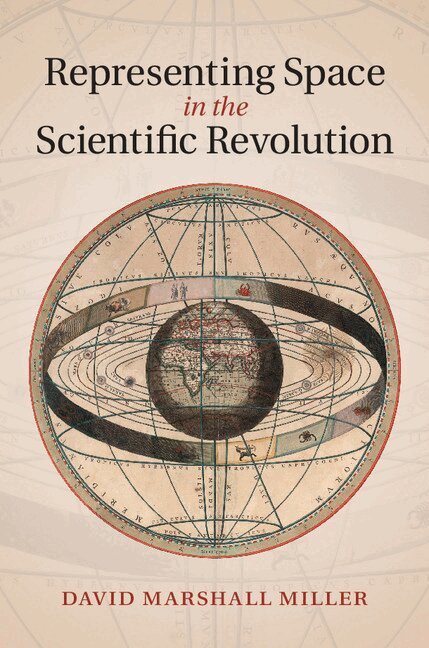
    Representing Space in the Scientific Revolution

    AvDavid Marshall Miller

    Inbunden, Engelska, 2014

    1 250 kr

    Beställningsvara. Skickas inom 10-15 vardagar. Fri frakt över 249 kr.

    Fler format och utgåvor

    Häftad

    477 kr

    Beskrivning

    The novel understanding of the physical world that characterized the Scientific Revolution depended on a fundamental shift in the way its protagonists understood and described space. At the beginning of the seventeenth century, spatial phenomena were described in relation to a presupposed central point; by its end, space had become a centerless void in which phenomena could only be described by reference to arbitrary orientations. David Marshall Miller examines both the historical and philosophical aspects of this far-reaching development, including the rejection of the idea of heavenly spheres, the advent of rectilinear inertia, and the theoretical contributions of Copernicus, Gilbert, Kepler, Galileo, Descartes, and Newton. His rich study shows clearly how the centered Aristotelian cosmos became the oriented Newtonian universe, and will be of great interest to students and scholars of the history and philosophy of science.

    Produktinformation

    • Utgivningsdatum:2014-08-07
    • Mått:160 x 234 x 17 mm
    • Vikt:500 g
    • Format:Inbunden
    • Språk:Engelska
    • Antal sidor:246
    • Förlag:Cambridge University Press
    • ISBN:9781107046733

    Utforska kategorier

    • Kulturvetenskap inom Samhälle och politik
    • Historia inom Historia och arkeologi
    • Naturvetenskapens filosofi inom Naturvetenskap och teknik

    Mer om författaren

    David Marshall Miller is Assistant Professor of Philosophy at Iowa State University. He has published articles in journals including Philosophy of Science and History of Science.

    Recensioner i media

    'In this exciting new study, Miller argues that the Scientific Revolution depended crucially on the adoption of an oriented representation of space, privileging parallel lines instead of centers. From this novel perspective he throws fresh light on the disparate contributions of Averroës, Gilbert, Kepler, Galileo, Descartes, Fermat, Roberval, Hooke and Newton. Highly recommended for all those with an interest in the birth of modern cosmology.' Richard T. W. Arthur, McMaster University, Ontario

    Innehållsförteckning

    • List of figures; Preface; Note on texts; 1. Introduction: centers and orientations; 2. Pluribus ergo existentibus centris: explanations, descriptions, and Copernicus; 3. Non est motus omnino: Gilbert, verticity, and the Law of the Whole; 4. Respicere sinus: Kepler, oriented Space, and the ellipse; 5. Mille movimenti circolari: from Impetus to conserved curvilinear motion in Galileo; 6. Directions sont entre elles paralleles: Descartes and his critics on oriented space and the parallelogram rule; 7. Incline it to verge: Newton's spatial synthesis; 8. Conclusion: methodological morals; References; Index.