Häftad, Engelska, 2015
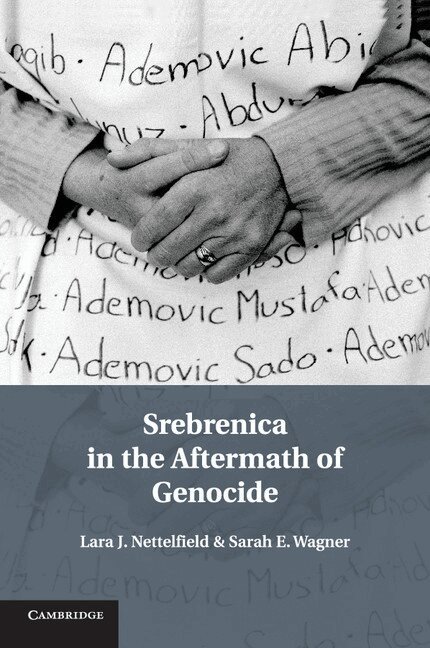
Srebrenica in the Aftermath of Genocide
Av Lara J. Nettelfield, Sarah E. Wagner
600 kr
Beställningsvara. Skickas inom 5-8 vardagar. Fri frakt över 249 kr.
Beskrivning
Produktinformation
- Utgivningsdatum: 2015-06-18
- Mått: 152 x 228 x 24 mm
- Vikt: 640 g
- Format: Häftad
- Språk: Engelska
- Antal sidor: 442
- Förlag: Cambridge University Press
- ISBN: 9781107546141
- Utmärkelser: Joseph Rothschild Prize in Nationalism and Ethnic Studies, Association for the Study of Nationalities 2015
Utforska kategorier
Mer om författaren
Lara J. Nettelfield is a Lecturer in International Relations at Royal Holloway, University of London, and author of Courting Democracy in Bosnia and Herzegovina: The Hague Tribunal's Impact in a Postwar State (Cambridge University Press, 2010), winner of the 2011 Marshall Shulman Book Prize of the Association for Slavic, East European, and Eurasian Studies. Prior to joining Royal Holloway, she taught at the University of Exeter, Columbia University and the Institut Barcelona d'Estudis Internacionals. She received PhD, MPhil and MA degrees in political science from Columbia University, a certificate from Columbia's Harriman Institute, and an AB from the University of California, Berkeley. Sarah E. Wagner is an Assistant Professor of Anthropology at George Washington University and author of To Know Where He Lies: DNA Technology and the Search for Srebrenica's Missing (2008). Prior to joining George Washington, she taught at the University of North Carolina, Greensboro and Harvard University. She received a PhD in social anthropology from Harvard University, a MALD from the Fletcher School at Tufts University, and an AB from Dartmouth College.
Recensioner i media
'Extending the purview of their single-authored books on Bosnia and Herzegovina, Nettelfield and Wagner have produced an authoritative account of genocide's aftermath in the Drina Valley. The book easily surpasses most of what passes for scholarship on 'post-conflict justice'. Closely observed, deeply researched, and empathetically written, their longitudinal analysis of local dynamics of contention in Srebrenica and environs complicates - in an admirable way - all kinds of simplistic assumptions about the nature and promise of international humanitarianism. By taking ethnography seriously, the authors have made an important contribution to both the study of genocide and of war.' Jens Meierhenrich, London School of Economics and Political Science
Betyg & recensioner
0 recensioner
Inga recensioner tillgängliga.