• Fri frakt över 249 kr
  • •
  • Snabba leveranser
  • •
  • Billiga böcker
Kundservice

Du är på sajten för privatpersoner.

Företag, bibliotek eller offentlig verksamhet?

Du handlar på classic.bokus.com, där alla dina funktioner finns intakta.
Till classic.bokus.com
Bokus logotyp. Gå till startsidan.
  • Erbjudanden
  • Nyheter
  • Student
  • Topplistor
  • Barn & ungdom
  • Bokus Play
  • E-böcker
  • Pocketböcker
  • Spel & pussel

10% rabatt på allt med kod: NYSTART10 →

Sidfot

Mina sidor

    Hjälp

    • Kundservice
    • Vanliga frågor och svar
    • Frakt och leverans
    • Retur vid ångerrätt
    • Reklamera vara
    • Betalning
    • Köpvillkor
    • Allmänna villkor
    • Information om webbplatsens tillgänglighet

    Om Bokus

    • Om oss
    • Pressrum
    • För studenter
    • För företag
    • För bibliotek och offentlig verksamhet
    • För leverantörer
    • Hållbarhet

    Populärt

    • Aktuella erbjudanden
    • Presentkort
    • Studentlitteratur
    • Nya böcker
    • Topplistor
    • Signerade böcker
    • Engelska böcker

    Inspiration

    • Boktips
    • BookTok
    • Populära bokserier
    • Barnbokskaraktärer
    • Populära författare
    Logotyp för Bokus
    Följ oss på Facebook (extern länk)Följ oss på Instagram (extern länk)Följ oss på YouTube (extern länk)Följ oss på TikTok (extern länk)
    bokus @ CookiesAnpassa cookiesIntegritetspolicyKöpvillkor
    Till Citymail hemsida (extern länk)Till Budbee hemsida (extern länk)Till Postnord hemsida (extern länk)Till Schenker hemsida (extern länk)Till Early Bird hemsida (extern länk)Till Walleys hemsida (extern länk)
    1. Psykologi och pedagogik
    2. Psykologi
    3. Barnpsykologi och utvecklingspsykologi

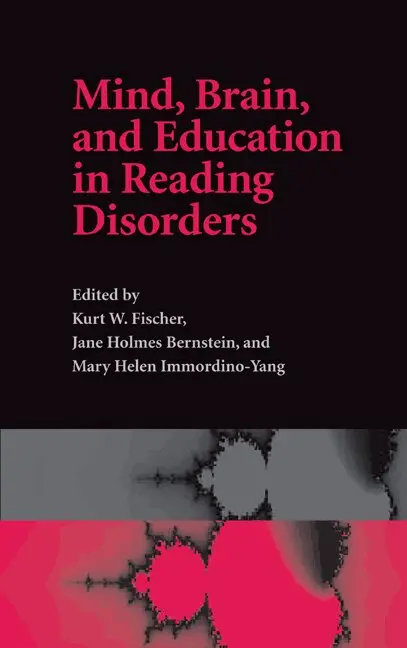
    Mind, Brain, and Education in Reading Disorders

    AvKurt W. Fischer,Jane Holmes Bernstein

    Häftad, Engelska, 2012

    Del 11 i serien Cambridge Studies in Cognitive and Perceptual Development

    511 kr

    Beställningsvara. Skickas inom 10-15 vardagar. Fri frakt över 249 kr.

    Beskrivning

    One of the key topics for establishing meaningful links between brain sciences and education is the development of reading. How does biology constrain learning to read? How does experience shape the development of reading skills? How does research on biology and behaviour connect to the ways that schools, teachers and parents help children learn to read, particularly in the face of disabilities that interfere with learning? This book addresses these questions and illuminates why reading disorders have been hard to identify, how recent research has established a firm base of knowledge about the cognitive neuroscience of reading problems and the learning tools for overcoming them, and finally, what the future holds for relating mind, brain and education to understanding reading difficulties. Connecting knowledge from neuroscience, genetics, cognitive science, child development, neuropsychology and education, this book will be of interest to both academic researchers and graduate students.

    Produktinformation

    • Utgivningsdatum:2012-03-29
    • Mått:151 x 228 x 16 mm
    • Vikt:550 g
    • Format:Häftad
    • Språk:Engelska
    • Serie:Cambridge Studies in Cognitive and Perceptual Development
    • Antal sidor:352
    • Förlag:Cambridge University Press
    • ISBN:9781107603226

    Utforska kategorier

    • Barnpsykologi och utvecklingspsykologi inom Psykologi och pedagogik

    Mer om författaren

    Kurt W. Fischer is Charles Warland Bigelow Professor of Education and Human Development and Director of the Mind, Brian and Education Program in the Graduate School of Education at Harvard University. He is founding president of the International Mind, Brain and Education Society and founding editor of the new journal Mind, Brain and Education. Jane Holmes Bernstein is a developmental neuropsychologist who divides her time between teaching, writing and research responsibilities at the Children's Hospital Boston and the establishment of a National Child Development Program in Trinidad and Tobago. Mary Helen Immordino-Yang studies the neuroscience of emotion and its relation to cognitive, linguistic and social development at the Brain and Creativity Institute, University of Southern California. She recently received her doctorate from the Graduate School of Education at Harvard University.

    Innehållsförteckning

    • Part I. What Is Reading, and What Are Reading Disorders? Looking to Neuroscience, Evolution and Genetics: 1. Towards a grounded synthesis of mind, brain and education for reading disorders: an introduction to the field and this book Kurt W. Fischer, Mary Helen Immordino-Yang and Deborah Waber; 2. An evolutionary perspective on reading and reading disorders Mary Helen Immordino-Yang and Terrence W. Deacon; Essay: brain volume and the acquisition of adaptive capacities Verne S. Caviness; 3. The genetics of dyslexia: what is the phenotype? Albert M. Galaburda and Gordon F. Sherman; Part II. Reading and the Growing Brain: Methodology and History: 4. A brief history of time, phonology, and other explanations of developmental dyslexia Maryanne Wolf and Jane Ashby; 5. Approaches to behavioural and neurological research on learning disabilities: in search of a deeper synthesis Robbie Case; 6. Growth cycles of mind and brain: analyzing developmental pathways of learning disorders Kurt W. Fischer, L. Todd Rose and Samuel P. Rose; Essay: cycles and gradients in development of the cortex Robert W. Thatcher; 7. Brain bases of reading disabilities Francine Benes and Juliana Paré-Blagoev; 8. The neural correlates of reading disorder: functional magnetic resonance imaging Juliana Paré-Blagoev; 9. Patterns of cortical connection in children with learning problems Frank H. Duffy; Essay: the role of experience in brain development: adverse effects of childhood maltreatment Martin H. Teicher; Part III. Watching Children Read: 10. Finding common ground to promote dialogue and collaboration: using case material to jointly observe children's behaviour Jane Holmes Bernstein; 11. Analyzing the reading abilities of four boys: educational implications Susan Brady; 12. First impressions: what four readers can teach us Benita A. Blachman; 13. Analysis of reading disorders from a neuropsychological perspective H. Gerry Taylor; 14. An education/psychological perspective on the behaviors of three children with reading disabilities Joseph K. Torgesen; Part IV. Reading Skills in the Long Term: 15. The importance of comprehension in reading problems and instruction Joseph C. Campione; Essay: bringing reading research to the trenches Sandra Priest Rose; 16. What successful adults with dyslexia teach educators about children Rosalie Fink; 17. Is a synthesis possible? Making doubly sure in research and application David Rose.