• Fri frakt över 249 kr
  • •
  • Snabba leveranser
  • •
  • Billiga böcker
Kundservice

Du är på sajten för privatpersoner.

Företag, bibliotek eller offentlig verksamhet?

Du handlar på classic.bokus.com, där alla dina funktioner finns intakta.
Till classic.bokus.com
Bokus logotyp. Gå till startsidan.
  • Erbjudanden
  • Nyheter
  • Student
  • Topplistor
  • Barn & ungdom
  • Bokus Play
  • E-böcker
  • Pocketböcker
  • Spel & pussel

10% rabatt på allt med kod: NYSTART10 →

Sidfot

Mina sidor

    Hjälp

    • Kundservice
    • Vanliga frågor och svar
    • Frakt och leverans
    • Retur vid ångerrätt
    • Reklamera vara
    • Betalning
    • Köpvillkor
    • Allmänna villkor
    • Information om webbplatsens tillgänglighet

    Om Bokus

    • Om oss
    • Pressrum
    • För studenter
    • För företag
    • För bibliotek och offentlig verksamhet
    • För leverantörer
    • Hållbarhet

    Populärt

    • Aktuella erbjudanden
    • Presentkort
    • Studentlitteratur
    • Nya böcker
    • Topplistor
    • Signerade böcker
    • Engelska böcker

    Inspiration

    • Boktips
    • BookTok
    • Populära bokserier
    • Barnbokskaraktärer
    • Populära författare
    Logotyp för Bokus
    Följ oss på Facebook (extern länk)Följ oss på Instagram (extern länk)Följ oss på YouTube (extern länk)Följ oss på TikTok (extern länk)
    bokus @ CookiesAnpassa cookiesIntegritetspolicyKöpvillkor
    Till Citymail hemsida (extern länk)Till Budbee hemsida (extern länk)Till Postnord hemsida (extern länk)Till Schenker hemsida (extern länk)Till Early Bird hemsida (extern länk)Till Walleys hemsida (extern länk)
    1. Samhälle och politik
    2. Sociologi och antropologi
    3. Antropologi

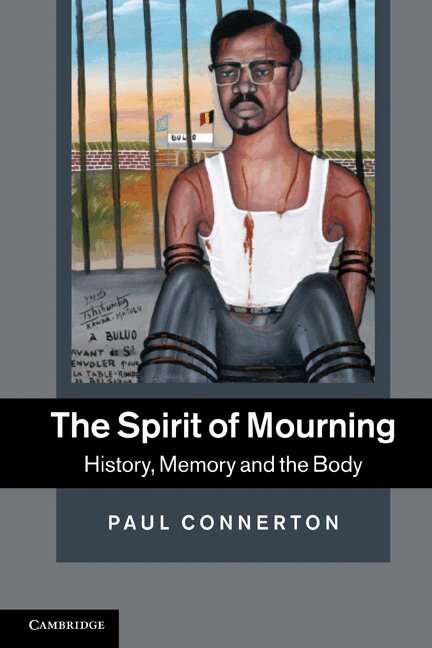
    The Spirit of Mourning

    History, Memory and the Body

    AvPaul Connerton

    Häftad, Engelska, 2011

    289 kr

    Beställningsvara. Skickas inom 10-15 vardagar. Fri frakt över 249 kr.

    Fler format och utgåvor

    Inbunden

    789 kr

    Beskrivning

    How is the memory of traumatic events, such as genocide and torture, inscribed within human bodies? In this book, Paul Connerton discusses social and cultural memory by looking at the role of mourning in the production of histories and the reticence of silence across many different cultures. In particular he looks at how memory is conveyed in gesture, bodily posture, speech and the senses - and how bodily memory, in turn, becomes manifested in cultural objects such as tattoos, letters, buildings and public spaces. It is argued that memory is more cultural and collective than it is individual. This book will appeal to researchers and students in anthropology, linguistic anthropology, sociology, social psychology and philosophy.

    Produktinformation

    • Utgivningsdatum:2011-09-29
    • Mått:153 x 228 x 10 mm
    • Vikt:310 g
    • Format:Häftad
    • Språk:Engelska
    • Antal sidor:190
    • Förlag:Cambridge University Press
    • ISBN:9781107648838

    Utforska kategorier

    • Antropologi inom Samhälle och politik

    Mer om författaren

    Paul Connerton is a Research Associate in the Department of Social Anthropology at the University of Cambridge and an Honorary Fellow in the Institute of Germanic and Romance Studies at the University of London. His recent publications include How Modernity Forgets (Cambridge University Press, 2009).

    Recensioner i media

    'The many admirers of Paul Connerton's work will be delighted with this new volume. From tattooing and quilt-making to Dogon architecture, Great Plains sign language, and Quaker meeting practices, from the Oresteia to Kant, and Quintilian to Bachelard, Connerton knows everything. He also knows how to deploy his knowledge in the service of a formidable analytic intelligence. Profound, moving, and inexhaustibly learned, his gently persistent but firmly structured investigation of history and silence, culture and forgetting, is as eloquent as it is original.' Nicholas Boyle, Schröder Professor of German, University of Cambridge, and President, Magdalene College, Cambridge

    Innehållsförteckning

    • 1. The birth of histories from the spirit of mourning; 2. Seven types of forgetting; 3. Silences; 4. Spatial orientation; 5. Tradition as conversation and tradition as bodily re-enactment; 6. Tattoos, masks, skin; 7. Emphatic, mimetic and cosmic projection.