Paul Connerton - Böcker
Visar alla böcker från författaren Paul Connerton. Handla med fri frakt och snabb leverans.
6 produkter
6 produkter
259 kr
Skickas inom 7-10 vardagar
In treating memory as a cultural rather than an individual faculty, this book provides an account of how bodily practices are transmitted in, and as, traditions. Most studies of memory as a cultural faculty focus on written, or inscribed transmissions of memories. Paul Connerton, on the other hand, concentrates on bodily (or incorporated) practices, and so questions the currently dominant idea that literary texts may be taken as a metaphor for social practices generally. The author argues that images of the past and recollected knowledge of the past are conveyed and sustained by ritual performances and that performative memory is bodily. Bodily social memory is an essential aspect of social memory, but it is an aspect which has until now been badly neglected. An innovative study, this work should be of interest to researchers into social, political and anthropological thought as well as to graduate and undergraduate students.
428 kr
Skickas inom 7-10 vardagar
First published in 1980, this essay on the Frankfurt School deals with one of the most important threads in the story of cultural migration from Europe which began in the 1930s. For long best known in the English-speaking world through the influence of Herbert Marcuse, the school played a unique role in the history of the intellectual emigration, since its core members, Max Horkheimer and Theodor Adorno, returned to Germany after the Second World War to reconstitute the Institute for Social Research, while the tradition has subsequently been renewed by a post-war generation centred around the social theorist Jurgen Habermas. The purpose of this book is to convey an overall sense of the continuities and discontinuities in the concerns of these representative figures over two generations. It seeks to do this by showing the way in which the experience of fascism shaped their interpretation of modern society as a whole, and by setting their work within the context of certain cultural conventions of German intellectual history.
271 kr
Skickas inom 7-10 vardagar
Why are we sometimes unable to remember events, places and objects? This concise overview explores the concept of 'forgetting', and how modern society affects our ability to remember things. It takes ideas from Francis Yates classic work, The Art of Memory, which viewed memory as being dependent on stability, and argues that today's world is full of change, making 'forgetting' characteristic of contemporary society. We live our lives at great speed; cities have become so enormous that they are unmemorable; consumerism has become disconnected from the labour process; urban architecture has a short life-span; and social relationships are less clearly defined - all of which has eroded the foundations on which we build and share our memories. Providing a profound insight into the effects of modern society, this book is a must-read for anthropologists, sociologists, psychologists and philosophers, as well as anyone interested in social theory and the contemporary western world.
1 074 kr
Skickas inom 7-10 vardagar
Why are we sometimes unable to remember events, places and objects? This concise overview explores the concept of 'forgetting', and how modern society affects our ability to remember things. It takes ideas from Francis Yates classic work, The Art of Memory, which viewed memory as being dependent on stability, and argues that today's world is full of change, making 'forgetting' characteristic of contemporary society. We live our lives at great speed; cities have become so enormous that they are unmemorable; consumerism has become disconnected from the labour process; urban architecture has a short life-span; and social relationships are less clearly defined - all of which has eroded the foundations on which we build and share our memories. Providing a profound insight into the effects of modern society, this book is a must-read for anthropologists, sociologists, psychologists and philosophers, as well as anyone interested in social theory and the contemporary western world.
775 kr
Skickas inom 7-10 vardagar
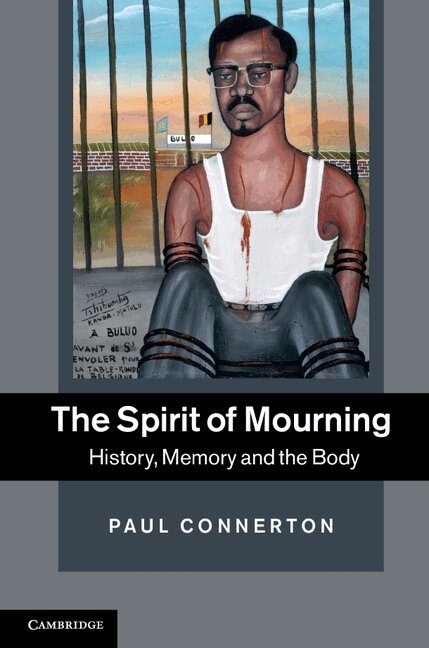
How is the memory of traumatic events, such as genocide and torture, inscribed within human bodies? In this book, Paul Connerton discusses social and cultural memory by looking at the role of mourning in the production of histories and the reticence of silence across many different cultures. In particular he looks at how memory is conveyed in gesture, bodily posture, speech and the senses - and how bodily memory, in turn, becomes manifested in cultural objects such as tattoos, letters, buildings and public spaces. It is argued that memory is more cultural and collective than it is individual. This book will appeal to researchers and students in anthropology, linguistic anthropology, sociology, social psychology and philosophy.
264 kr
Skickas inom 7-10 vardagar
How is the memory of traumatic events, such as genocide and torture, inscribed within human bodies? In this book, Paul Connerton discusses social and cultural memory by looking at the role of mourning in the production of histories and the reticence of silence across many different cultures. In particular he looks at how memory is conveyed in gesture, bodily posture, speech and the senses - and how bodily memory, in turn, becomes manifested in cultural objects such as tattoos, letters, buildings and public spaces. It is argued that memory is more cultural and collective than it is individual. This book will appeal to researchers and students in anthropology, linguistic anthropology, sociology, social psychology and philosophy.