• Fri frakt över 249 kr
  • •
  • Snabba leveranser
  • •
  • Billiga böcker
Kundservice

Du är på sajten för privatpersoner.

Företag, bibliotek eller offentlig verksamhet?

Du handlar på classic.bokus.com, där alla dina funktioner finns intakta.
Till classic.bokus.com
Bokus logotyp. Gå till startsidan.
  • Erbjudanden
  • Nyheter
  • Student
  • Topplistor
  • Barn & ungdom
  • Bokus Play
  • E-böcker
  • Pocketböcker
  • Spel & pussel

10% studentrabatt med kod TERM26

Sidfot

Mina sidor

    Hjälp

    • Kundservice
    • Vanliga frågor och svar
    • Frakt och leverans
    • Retur vid ångerrätt
    • Reklamera vara
    • Betalning
    • Köpvillkor
    • Allmänna villkor
    • Information om webbplatsens tillgänglighet

    Om Bokus

    • Om oss
    • Pressrum
    • För studenter
    • För företag
    • För bibliotek och offentlig verksamhet
    • För leverantörer
    • Hållbarhet

    Populärt

    • Aktuella erbjudanden
    • Presentkort
    • Studentlitteratur
    • Nya böcker
    • Topplistor
    • Signerade böcker
    • Engelska böcker

    Inspiration

    • Boktips
    • BookTok
    • Populära bokserier
    • Barnbokskaraktärer
    • Populära författare
    Logotyp för Bokus
    Följ oss på Facebook (extern länk)Följ oss på Instagram (extern länk)Följ oss på YouTube (extern länk)Följ oss på TikTok (extern länk)
    bokus @ CookiesAnpassa cookiesIntegritetspolicyKöpvillkor
    Till Citymail hemsida (extern länk)Till Budbee hemsida (extern länk)Till Postnord hemsida (extern länk)Till Schenker hemsida (extern länk)Till Early Bird hemsida (extern länk)Till Walleys hemsida (extern länk)
    1. Skönlitteratur
    2. Litteraturvetenskap
    3. Litteraturteori

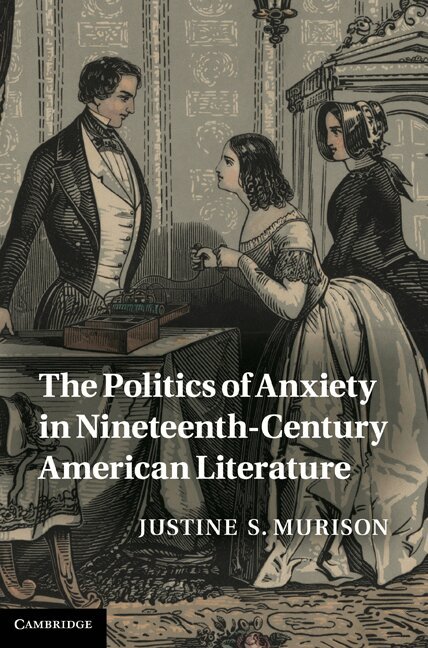
    The Politics of Anxiety in Nineteenth-Century American Literature

    AvJustine S. Murison

    Häftad, Engelska, 2013

    Del 162 i serien Cambridge Studies in American Literature and Culture

    533 kr

    Beställningsvara. Skickas inom 10-15 vardagar. Fri frakt över 249 kr.

    Fler format och utgåvor

    Inbunden

    1 396 kr

    Beskrivning

    For much of the nineteenth century, the nervous system was a medical mystery, inspiring scientific studies and exciting great public interest. Because of this widespread fascination, the nerves came to explain the means by which mind and body related to each other. By the 1830s, the nervous system helped Americans express the consequences on the body, and for society, of major historical changes. Literary writers, including Nathaniel Hawthorne and Harriet Beecher Stowe, used the nerves as a metaphor to re-imagine the role of the self amidst political, social and religious tumults, including debates about slavery and the revivals of the Second Great Awakening. Representing the 'romance' of the nervous system and its cultural impact thoughtfully and, at times, critically, the fictional experiments of this century helped construct and explore a neurological vision of the body and mind. Murison explains the impact of neurological medicine on nineteenth-century literature and culture.

    Produktinformation

    • Utgivningsdatum:2013-12-19
    • Mått:152 x 229 x 12 mm
    • Vikt:310 g
    • Format:Häftad
    • Språk:Engelska
    • Serie:Cambridge Studies in American Literature and Culture
    • Antal sidor:230
    • Förlag:Cambridge University Press
    • ISBN:9781107694149

    Utforska kategorier

    • Litteraturteori inom Skönlitteratur

    Mer om författaren

    Justine Murison is Assistant Professor of English at the University of Illinois, Urbana-Champaign.

    Recensioner i media

    "In this fascinating study, Justine Murison investigates the various discourses surrounding the workings of and roles played by the nervous system in nineteenth-century literature and culture. In the course of tracing circuits of exchange between body and mind, individual and surrounding environment, she calls attention to a variety of applications for new, oftentimes contested, understandings of physiological integrity and vulnerability in the era’s cultural, national, and political movements....Murison’s attention to “the role of embodiment in constructing social, historical, and most of all, fictional narratives” (p. 12) reflects the fact that her project is part of a very big, field-changing, post–“neuroscientific turn” (p. 175) methodological approach, and it’s exciting work to watch unfold." -Maura D’Amore, THE NEW ENGLAND QUARTERLY

    Innehållsförteckning

    • Introduction; 1. A bond-slave to the mind: sympathy and hypochondria in Robert Montgomery Bird's Sheppard Lee; 2. Frogs, dogs, and mobs: reflex and democracy in Edgar Allan Poe's satires; 3. Invasions of privacy: clairvoyance and Utopian failure in Antebellum romance; 4. 'All that is enthusiastic': revival and reform in Harriet Beecher Stowe's Dred; 5. Cui bono?: Spiritualism and empiricism from the Civil War to American nervousness; Epilogue: the confidences of anxiety.