• Fri frakt över 249 kr
  • •
  • Snabba leveranser
  • •
  • Billiga böcker
Kundservice

Du är på sajten för privatpersoner.

Företag, bibliotek eller offentlig verksamhet?

Du handlar på classic.bokus.com, där alla dina funktioner finns intakta.
Till classic.bokus.com
Bokus logotyp. Gå till startsidan.
  • Erbjudanden
  • Student
  • Topplistor
  • Barn & ungdom
  • Bokus Play
  • E-böcker
  • Ljudböcker
  • Pocketböcker
  • Spel & pussel

Upp till 25% på utvalda nyheter →

Sidfot

Mina sidor

    Hjälp

    • Kundservice
    • Vanliga frågor och svar
    • Frakt och leverans
    • Retur vid ångerrätt
    • Reklamera vara
    • Betalning
    • Köpvillkor
    • Allmänna villkor
    • Information om webbplatsens tillgänglighet

    Om Bokus

    • Om oss
    • Pressrum
    • För studenter
    • För företag
    • För bibliotek och offentlig verksamhet
    • För leverantörer
    • Hållbarhet

    Populärt

    • Aktuella erbjudanden
    • Presentkort
    • Studentlitteratur
    • Nya böcker
    • Topplistor
    • Signerade böcker
    • Engelska böcker

    Inspiration

    • Boktips
    • BookTok
    • Populära bokserier
    • Barnbokskaraktärer
    • Populära författare
    Logotyp för Bokus
    Följ oss på Facebook (extern länk)Följ oss på Instagram (extern länk)Följ oss på YouTube (extern länk)Följ oss på TikTok (extern länk)
    bokus @ CookiesAnpassa cookiesIntegritetspolicyKöpvillkor
    Till Citymail hemsida (extern länk)Till Budbee hemsida (extern länk)Till Postnord hemsida (extern länk)Till Schenker hemsida (extern länk)Till Early Bird hemsida (extern länk)Till Walleys hemsida (extern länk)
    1. Historia och arkeologi
    2. Historia
    3. Europas historia

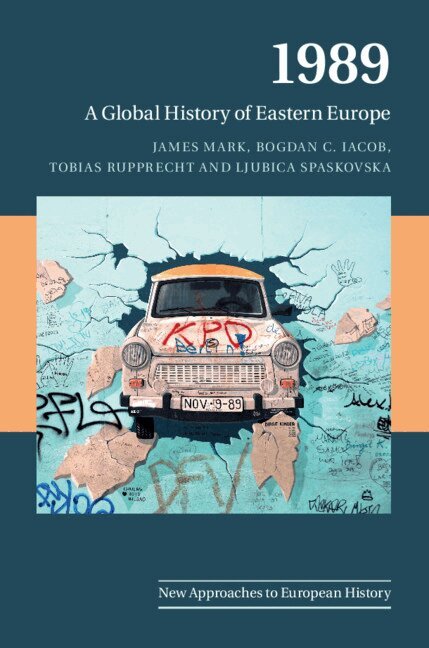
    1989

    A Global History of Eastern Europe

    AvJames Mark,Bogdan C. Iacob

    Inbunden, Engelska, 2019

    Del 59 i serien New Approaches to European History

    1 409 kr

    Skickas . Fri frakt över 249 kr.

    Fler format och utgåvor

    Häftad

    364 kr

    Beskrivning

    The collapse of the Berlin Wall has come to represent the entry of an isolated region onto the global stage. On the contrary, this study argues that communist states had in fact long been shapers of an interconnecting world, with '1989' instead marking a choice by local elites about the form that globalisation should take. Published to coincide with the thirtieth anniversary of the 1989 revolutions, this work draws on material from local archives to international institutions to explore the place of Eastern Europe in the emergence, since the 1970s, of a new world order that combined neoliberal economics and liberal democracy with increasingly bordered civilisational, racial and religious identities. An original and wide-ranging history, it explores the importance of the region's links to the West, East Asia, Africa, and Latin America in this global transformation, reclaiming the era's other visions such as socialist democracy or authoritarian modernisation which had been lost in triumphalist histories of market liberalism.

    Produktinformation

    • Utgivningsdatum:2019-08-29
    • Mått:156 x 235 x 25 mm
    • Vikt:650 g
    • Format:Inbunden
    • Språk:Engelska
    • Serie:New Approaches to European History
    • Antal sidor:380
    • Förlag:Cambridge University Press
    • ISBN:9781108427005

    Utforska kategorier

    • Europas historia inom Historia och arkeologi

    Mer om författaren

    James Mark is Professor of History at the University of Exeter. He is the author of The Unfinished Revolution: Making Sense of the Communist Past in Central-Eastern Europe (2010), which was nominated for the Longman History Today Book Prize 2011 and selected as one of the 'best books of 2011' by Foreign Affairs. He is co-author of Europe's 1968: Voices of Revolt (2013) and co-editor of Secret Agents and the Memory of Everyday Collaboration in Communist Eastern Europe (2017) and Alternative Encounters: Eastern Europe and the Postcolonial World (forthcoming). Bogdan Christian Iacob is Associate Researcher in the Department of History at the University of Exeter. He is the author of Remembrance History and Justice: Coming to Terms with Traumatic Pasts in Democratic Societies (2015), The End and the Beginning: The Revolutions of 1989 and the Resurgence of History (2012), the editor of the special issue 'State Socialist Experts in Transnational Perspective. East European Circulation of Knowledge during the Cold War' published in the journal East Central Europe and co-editor of Ideological Storms: Intellectuals, Dictators, and the Totalitarian Temptation (forthcoming) with Vladimir Tismaneanu. Tobias Rupprecht is Lecturer in Latin American and Caribbean History at the University of Exeter. He is the author of Soviet Internationalism after Stalin: Interaction and Exchange between the USSR and Latin America during the Cold War (Cambridge, 2015). Ljubica Spaskovska is Lecturer in European History at the University of Exeter and a member of the Balkans Program Committee of the Association for the Study of Nationalities (ASN) World Convention at Columbia University, New York. She is the author of The Last Yugoslav Generation: The Rethinking of Youth Politics and Cultures in Late Socialism (2017).

    Recensioner i media

    'This is a provocative volume that challenges the liberal Western account of the negotiated transition from Communism in 1989 by stressing the agency of East European reformers and intellectuals. It recontextualises the story as part of the global deradicalisation of socialism and interprets the region as an example of 'in-betweenness', at once part and opposite of the West.' Konrad H. Jarausch, University of North Carolina, Chapel Hill

    Innehållsförteckning

    • Acknowledgements; Introduction; 0.1 Going global; 0.2 The long transition and the making of transitional elites in global perspective; 0.3 A global history of the other '1989s'; 0.4 The end of the '1989' era?; 1. Globalisation; 1.1 From socialist internationalism to capitalist globalisation; 1.2 Debt and ideological re-orientation; 1.3 The choice of 'neoliberal' globalisation; 1.4 Authoritarian transformations?; 1.5 Transformation from within; 1.6 Conclusion; 2. Democratisation; 2.1 Reforming elites; 2.2 Opposition from the local to the global and back; 2.3 Alternatives to '1989': authoritarianism and violence; 2.4 Disciplining transition and democratic peace; 3. Europeanisation; 3.1 The early Cold War: a divided Europe; 3.2 Helsinki – re-bordering Europe?; 3.3 An anti-colonial Europe: critiquing Helsinki; 3.4 A prehistory of Fortress Europe: civilisational bordering in late socialism; 3.5 Eastern Europe, a buffer against Islam?; 3.6 After 1989: 'Fortress Europe'?; 3.7 Conclusion; 4. Self-determination; 4.1 The rise of anti-colonial self-determination; 4.2 The Soviet withdrawal; 4.3 Peace or violence; 4.4 Reverberations of Eastern European self-determination; 4.5 Conclusion; 5. Reverberations; 5.1 1989 as a new global script; 5.2 Instrumentalising 1989: the West and new forms of political conditionality; 5.3 'Taming' the left; 5.4 Interventionism and the '1989' myth; 5.5 Eastern Europeans and the export of the revolutionary idea; 5.6 From Cuba to China: rejecting '1989'; 5.7 Conclusion; 6. A world without '1989'; 6.1 Towards the West? Ambiguous convergence; 6.2 Who is the true Europe? The turn to divergence; 6.3 Beyond the EU: post-socialist global trajectories; 6.4 Conclusion.