• Fri frakt över 249 kr
  • •
  • Snabba leveranser
  • •
  • Billiga böcker
Kundservice

Du är på sajten för privatpersoner.

Företag, bibliotek eller offentlig verksamhet?

Du handlar på classic.bokus.com, där alla dina funktioner finns intakta.
Till classic.bokus.com
Bokus logotyp. Gå till startsidan.
  • Erbjudanden
  • Nyheter
  • Student
  • Topplistor
  • Barn & ungdom
  • Bokus Play
  • E-böcker
  • Pocketböcker
  • Spel & pussel

10% rabatt på allt med kod: NYSTART10 →

Sidfot

Mina sidor

    Hjälp

    • Kundservice
    • Vanliga frågor och svar
    • Frakt och leverans
    • Retur vid ångerrätt
    • Reklamera vara
    • Betalning
    • Köpvillkor
    • Allmänna villkor
    • Information om webbplatsens tillgänglighet

    Om Bokus

    • Om oss
    • Pressrum
    • För studenter
    • För företag
    • För bibliotek och offentlig verksamhet
    • För leverantörer
    • Hållbarhet

    Populärt

    • Aktuella erbjudanden
    • Presentkort
    • Studentlitteratur
    • Nya böcker
    • Topplistor
    • Signerade böcker
    • Engelska böcker

    Inspiration

    • Boktips
    • BookTok
    • Populära bokserier
    • Barnbokskaraktärer
    • Populära författare
    Logotyp för Bokus
    Följ oss på Facebook (extern länk)Följ oss på Instagram (extern länk)Följ oss på YouTube (extern länk)Följ oss på TikTok (extern länk)
    bokus @ CookiesAnpassa cookiesIntegritetspolicyKöpvillkor
    Till Citymail hemsida (extern länk)Till Budbee hemsida (extern länk)Till Postnord hemsida (extern länk)Till Schenker hemsida (extern länk)Till Early Bird hemsida (extern länk)Till Walleys hemsida (extern länk)
    1. Juridik
    2. Särskilda rättsområden
    3. Straffrätt: process och brott

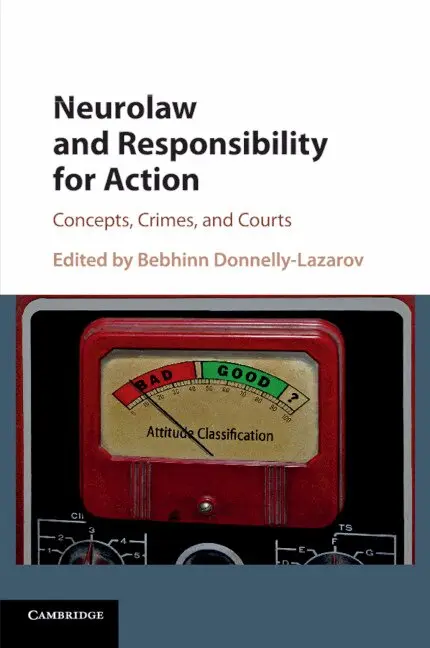
    Neurolaw and Responsibility for Action

    Concepts, Crimes, and Courts

    AvBebhinn Donnelly-Lazarov

    Häftad, Engelska, 2020

    426 kr

    Beställningsvara. Skickas inom 10-15 vardagar. Fri frakt över 249 kr.

    Beskrivning

    Law regulates human behaviour, a phenomenon about which neuroscience has much to say. Neuroscience can tell us whether a defendant suffers from a brain abnormality, or injury and it can correlate these neural deficits with criminal offending. Using fMRI and other technologies it might indicate whether a witness is telling lies or the truth. It can further propose neuro-interventions to 'change' the brains of offenders and so to reduce their propensity to offend. And, it can make suggestions about whether a defendant knows or merely suspects a prohibited state of affairs; so, drawing distinctions among the mental states that are central to legal responsibility. Each of these matters has philosophical import; is a neurological 'deficit' inculpatory or exculpatory; what is the proper role for law if the mind is no more than the brain; is lying really a brain state and can neuroscience really 'read' the brain? In this edited collection, leading contributors to the field provide new insights on these matters, bringing to light the great challenges that arise when disciplinary boundaries merge.

    Produktinformation

    • Utgivningsdatum:2020-01-02
    • Mått:150 x 230 x 17 mm
    • Vikt:450 g
    • Format:Häftad
    • Språk:Engelska
    • Antal sidor:314
    • Förlag:Cambridge University Press
    • ISBN:9781108450928

    Utforska kategorier

    • Straffrätt: process och brott inom Juridik

    Mer om författaren

    Bebhinn Donnelly-Lazarov is Professor at the Centre for Legal Philosophy, School of Law, University of Surrey. She is the author of A Philosophy of Criminal Attempts (Cambridge, 2015) and A Natural Law Approach to Normativity (2007). Her recent and ongoing work aims to show that a proper grasp of mind and action is indispensable to a proper understanding of criminal responsibility.

    Innehållsförteckning

    • Introduction; Part I. Conceptual Disputes: Brains as the Locus of Responsibility?: 1. Neuroscience and the explanation of human action Dennis Patterson; 2. 'Nothing but a pack of neurons:' the moral responsibility of the human machine Michael S. Moore; 3. Non-eliminative reductionism: not the theory of mind some responsibility theorists want, but the one they need Katrina Sifferd; 4. Intention as non-observational knowledge: rescuing responsibility from the brain Bebhinn Donnelly-Lazarov; 5. Efficient causation and neuroscientific explanations of criminal action Nick J. Davis; Part II. Epistemic Disputes: What does Neuroscience Tell Law about Responsibility?: 6. Lying, deception, and fMRI: a critical update Michael S. Pardo; 7. Brain-based lie detection and the mereological fallacy: reasons for optimism John Danaher; 8. Is brain reading mind reading? Pim Haselager and Giulio Mecacci; Part III. Implications for Courts and Defendants: 9. Unlucky, bad, and the space in between: why criminologists should think more about responsibility Peter Raynor; 10. Neuroscience and the criminal jurisdiction: a new approach to reliability and admissibility in the courts of England and Wales Joanna Glynn; 11. Should individuals with psychopathy be compensated for their fearlessness? (Or how neuroscience matters for equality) Marion Godman; 12. The treatment of psychopathy: conceptual and ethical issues Elizabeth Shaw.