• Fri frakt över 249 kr
  • •
  • Snabba leveranser
  • •
  • Billiga böcker
Kundservice

Du är på sajten för privatpersoner.

Företag, bibliotek eller offentlig verksamhet?

Du handlar på classic.bokus.com, där alla dina funktioner finns intakta.
Till classic.bokus.com
Bokus logotyp. Gå till startsidan.
  • Erbjudanden
  • Student
  • Topplistor
  • Barn & ungdom
  • Bokus Play
  • E-böcker
  • Ljudböcker
  • Pocketböcker
  • Spel och pussel

Pocketfynda! Hundratals böcker för 49 kr/st →

Sidfot

Mina sidor

    Hjälp

    • Kundservice
    • Vanliga frågor och svar
    • Frakt och leverans
    • Retur vid ångerrätt
    • Reklamera vara
    • Betalning
    • Köpvillkor
    • Allmänna villkor
    • Information om webbplatsens tillgänglighet

    Om Bokus

    • Om oss
    • Pressrum
    • För studenter
    • För företag
    • För bibliotek och offentlig verksamhet
    • För leverantörer
    • Hållbarhet

    Populärt

    • Aktuella erbjudanden
    • Presentkort
    • Studentlitteratur
    • Nya böcker
    • Topplistor
    • Signerade böcker
    • Engelska böcker

    Inspiration

    • Boktips
    • BookTok
    • Barnbokskaraktärer
    • Populära författare
    Logotyp för Bokus
    Följ oss på Facebook (extern länk)Följ oss på Instagram (extern länk)Följ oss på YouTube (extern länk)Följ oss på TikTok (extern länk)
    bokus @ CookiesAnpassa cookiesIntegritetspolicyKöpvillkor
    Till Citymail hemsida (extern länk)Till Budbee hemsida (extern länk)Till Postnord hemsida (extern länk)Till Schenker hemsida (extern länk)Till Early Bird hemsida (extern länk)Till Walleys hemsida (extern länk)
    1. Historia och arkeologi
    2. Historia
    3. Asiens historia

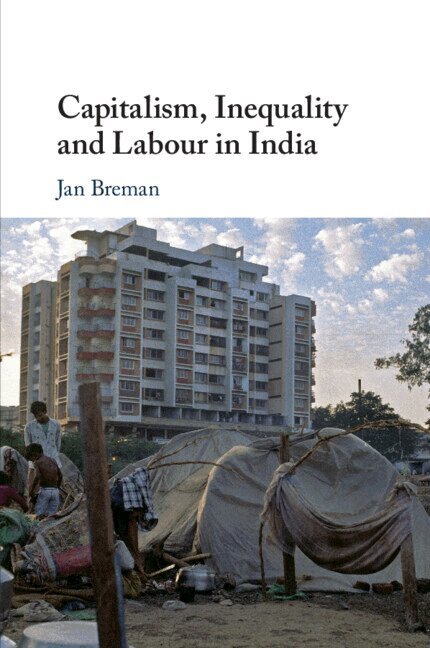
    Capitalism, Inequality and Labour in India

    AvJan Breman

    Häftad, Engelska, 2022

    380 kr

    Beställningsvara. Skickas inom 7-10 vardagar. Fri frakt över 249 kr.

    Fler format och utgåvor

    Inbunden

    1 319 kr

    E-bok

    439 kr

    E-bok

    439 kr

    Beskrivning

    Jan Breman takes dispossession as his central theme in this ambitious analysis of labour bondage in India's changing political economy from 1962 to 2017. When, in a remote past, tribal and low-caste communities were attached to landowning households, their lack of freedom was framed as subsistence-oriented dependency. Breman argues that with colonial rule came the intrusion of capitalism into India's agrarian economy, leading to a decline in the idea of patronage in the relationship between bonded labour and landowner. Instead, servitude was reshaped as indebtedness. As labour became transformed into a commodity, peasant workers were increasingly pushed out of agriculture and the village but remained adrift in the wider economy. This footloose workforce is subjected to exploitation when their labour power is required and is left in a state of exclusion when it is surplus to demand. The outcome is progressive inequality that is thoroughly capitalist in nature.

    Produktinformation

    • Utgivningsdatum:2022-10-20
    • Mått:151 x 228 x 16 mm
    • Vikt:450 g
    • Format:Häftad
    • Språk:Engelska
    • Antal sidor:302
    • Förlag:Cambridge University Press
    • ISBN:9781108712279

    Utforska kategorier

    • Asiens historia inom Historia och arkeologi

    Mer om författaren

    Jan Breman is Honorary Fellow of the Institute of Social History, Amsterdam, and Emeritus Professor at the Universiteit van Amsterdam. He is the author of many publications, including Footloose Labour: Working in India's Informal Economy (1996), for which he was awarded the Edgar Graham Book prize by School of Oriental and African Studies, University of London.

    Recensioner i media

    'From Jan Breman's lifetime of research with labour in Gujarat have come original concepts of patronage and exploitation, circular migration, footloose labour, neo-bondage, exclusion and expulsion from social rights and habitat - all now essential to our understanding of India's labour-force. In this tour-de-force, Breman synthesises the history of coercive debt, bondage and servitude, tracing its persistence from colonial roots to the present where tied and contingent labour underpins capitalism with Indian characteristics. Shabash.' Barbara Harriss-White, Emeritus Professor, University of Oxford

    Innehållsförteckning

    • Part I. Labour as Codified in Annals of the State: 1. The country liberated; 2. An end to servitude?; Part II. Constrained in Decrepitude: 3. The commodification of agricultural labour; 4. The class struggle launched and suppressed; 5. The Gandhian road to inclusion; Part III. The Political Economy of Boundless Dispossession: 6. The Agrarian Question posed as the social question; 7. Labour migration: going off and coming back; 8. Indebtedness as labour attachment; Part IV. Conclusion: 9. Capitalism, labour bondage and the social question.