Inbunden, Engelska, 2020
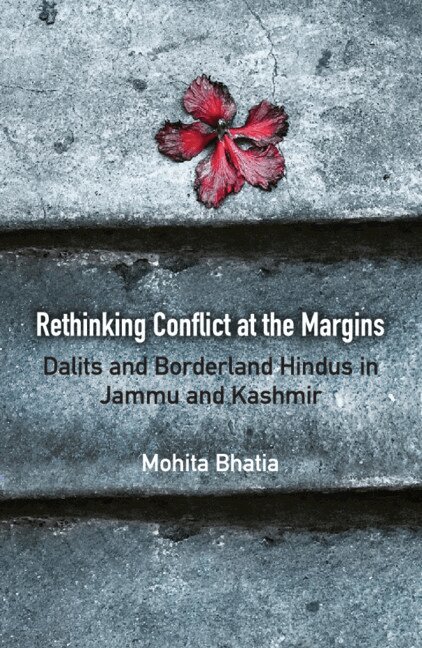
Rethinking Conflict at the Margins
Dalits and Borderland Hindus in Jammu and Kashmir
1342 kr
Beställningsvara. Skickas inom 5-8 vardagar. Fri frakt över 249 kr.
Beskrivning
Produktinformation
- Utgivningsdatum: 2020-10-29
- Mått: 157 x 235 x 18 mm
- Vikt: 410 g
- Format: Inbunden
- Språk: Engelska
- Antal sidor: 222
- Förlag: Cambridge University Press
- ISBN: 9781108836029
Utforska kategorier
Mer om författaren
The author is a sociologist and socio-political analyst. She has been a Gates Cambridge Scholar at the University of Cambridge and a Fulbright post-doctoral fellow at Stanford University. She also taught at the Centre for the Study of Discrimination and Exclusion as Assistant Professor (2013-2016). She is also a co-editor of forthcoming books – Religion and Politics in Jammu and Kashmir being published by Routledge and Life in the Margins: Borderlands in Jammu and Kashmir being published by Orient Blackswan. She hails from the region of Jammu and Kashmir, giving her a unique lived perspective of that region.
Recensioner i media
'This is an extremely interesting and lucid book about marginalised communities in Jammu. It draws our attention to why the axes of everyday life rests on syncretistic models, where people are predisposed to co-existence and integration. The real fulcrum of the author's analyses rests on her preoccupation with scheduled castes and how they are implicated in traditional structures of hierarchy as wage labourers or artisans. She looks at the vitality of local communities to suggest that we cannot stereotype this hierarchy, as labelling must also take into account the volatility of class relations and upward mobility. Her analyses of border peoples, and what she calls 'divided villages' rests on an emotive call to Peace with Pakistan, rather than a call to War. Her analyses of contemporary events and the politicisation of minorities is very sharply placed, as political forces work against plural ideologies and people's inherent need to live with one another. Not reducing it to compartmentalization, the author shows us that tenacity is the main spring of this heterogeneity, and the goal of justice, human rights and freedom.' Susan Visvanathan, Jawaharlal Nehru University
Betyg & recensioner
0 recensioner
Inga recensioner tillgängliga.