• Fri frakt över 249 kr
  • •
  • Snabba leveranser
  • •
  • Billiga böcker
Kundservice

Du är på sajten för privatpersoner.

Företag, bibliotek eller offentlig verksamhet?

Du handlar på classic.bokus.com, där alla dina funktioner finns intakta.
Till classic.bokus.com
Bokus logotyp. Gå till startsidan.
  • Erbjudanden
  • Student
  • Topplistor
  • Barn & ungdom
  • Bokus Play
  • E-böcker
  • Ljudböcker
  • Pocketböcker
  • Spel och pussel

5% studentrabatt – använd koden KURSBOK27 →

Sidfot

Mina sidor

    Hjälp

    • Kundservice
    • Vanliga frågor och svar
    • Frakt och leverans
    • Retur vid ångerrätt
    • Reklamera vara
    • Betalning
    • Köpvillkor
    • Allmänna villkor
    • Information om webbplatsens tillgänglighet

    Om Bokus

    • Om oss
    • Pressrum
    • För studenter
    • För företag
    • För bibliotek och offentlig verksamhet
    • För leverantörer
    • Hållbarhet

    Populärt

    • Aktuella erbjudanden
    • Presentkort
    • Studentlitteratur
    • Nya böcker
    • Topplistor
    • Signerade böcker
    • Engelska böcker

    Inspiration

    • Boktips
    • BookTok
    • Barnbokskaraktärer
    • Populära författare
    Logotyp för Bokus
    Följ oss på Facebook (extern länk)Följ oss på Instagram (extern länk)Följ oss på YouTube (extern länk)Följ oss på TikTok (extern länk)
    bokus @ CookiesAnpassa cookiesIntegritetspolicyKöpvillkor
    Till Citymail hemsida (extern länk)Till Budbee hemsida (extern länk)Till Postnord hemsida (extern länk)Till Schenker hemsida (extern länk)Till Early Bird hemsida (extern länk)Till Walleys hemsida (extern länk)
    1. Filosofi och religion
    2. Filosofi
    3. Filosofiska discipliner

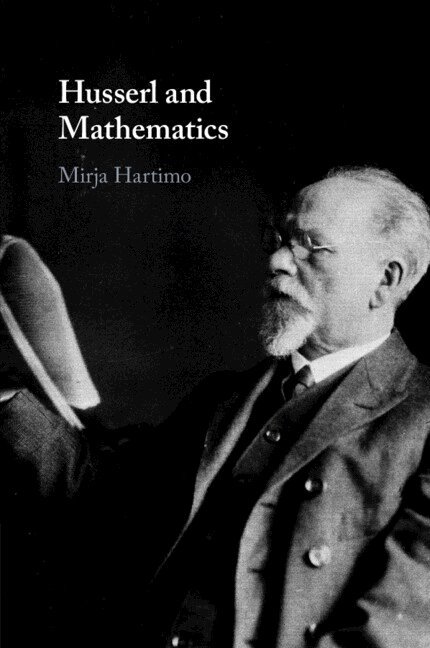
    Husserl and Mathematics

    AvMirja Hartimo

    Häftad, Engelska, 2023

    329 kr

    Beställningsvara. Skickas inom 7-10 vardagar. Fri frakt över 249 kr.

    Fler format och utgåvor

    Inbunden

    1 107 kr

    E-bok

    380 kr

    E-bok

    379 kr

    Beskrivning

    Husserl and Mathematics explains the development of Husserl's phenomenological method in the context of his engagement in modern mathematics and its foundations. Drawing on his correspondence and other written sources, Mirja Hartimo details Husserl's knowledge of a wide range of perspectives on the foundations of mathematics, including those of Hilbert, Brouwer and Weyl, as well as his awareness of the new developments in the subject during the 1930s. Hartimo examines how Husserl's philosophical views responded to these changes, and offers a pluralistic and open-ended picture of Husserl's phenomenology of mathematics. Her study shows Husserl's phenomenology to be a method capable of both shedding light on and internally criticizing scientific practices and concepts.

    Produktinformation

    • Utgivningsdatum:2023-08-24
    • Mått:152 x 228 x 13 mm
    • Vikt:350 g
    • Format:Häftad
    • Språk:Engelska
    • Antal sidor:232
    • Förlag:Cambridge University Press
    • ISBN:9781108965019

    Utforska kategorier

    • Filosofiska discipliner inom Filosofi och religion
    • Matematikens historia inom Naturvetenskap och teknik

    Mer om författaren

    Mirja Hartimo is Senior Researcher at the University of Jyväskylä, Finland. She is co-editor of Phenomenology and the Transcendental (with Sara Heinämaa, and Timo Miettinen, 2014), and has published numerous journal articles and book chapters on Husserl, phenomenology, and the history and philosophy of mathematics.

    Recensioner i media

    'Edmund Husserl belongs to a lineage of philosophers for whom logic and mathematics were a primary source of philosophical reflection. In a jargon-free presentation, Hartimo skillfully guides us in the discovery of Husserl's attitude towards the mathematical practice of his time and insightfully analyzes the unfolding of his philosophical views on logic and mathematics as an attempt to make sense of this practice. This excellent book will benefit the general reader as well as the specialist.' Paolo Mancosu, University of California at Berkeley

    Innehållsförteckning

    • 1. From the Division of Labor to Besinnung; 2. The Chimera of Logicism: Husserl's Criticism of Frege; 3. Clarifying the Goal of Modern Mathematics: Definiteness; 4. Normativity of the Euclidean Ideal; 5. Husserl's Formal and Transcendental Logic (1929); 6. Gödel, Skolem, and the Crisis of the 1930s; 7. Husserl's Combination View of Mathematics; 8. Kant and Husserl's Critical View of Logic; Epilogue: A Look Ahead.