• Fri frakt över 249 kr
  • •
  • Snabba leveranser
  • •
  • Billiga böcker
Kundservice

Du är på sajten för privatpersoner.

Företag, bibliotek eller offentlig verksamhet?

Du handlar på classic.bokus.com, där alla dina funktioner finns intakta.
Till classic.bokus.com
Bokus logotyp. Gå till startsidan.
  • Erbjudanden
  • Nyheter
  • Student
  • Topplistor
  • Barn & ungdom
  • Bokus Play
  • E-böcker
  • Pocketböcker
  • Spel & pussel

10% rabatt på allt med kod NYSTART10 →

Sidfot

Mina sidor

    Hjälp

    • Kundservice
    • Vanliga frågor och svar
    • Frakt och leverans
    • Retur vid ångerrätt
    • Reklamera vara
    • Betalning
    • Köpvillkor
    • Allmänna villkor
    • Information om webbplatsens tillgänglighet

    Om Bokus

    • Om oss
    • Pressrum
    • För studenter
    • För företag
    • För bibliotek och offentlig verksamhet
    • För leverantörer
    • Hållbarhet

    Populärt

    • Aktuella erbjudanden
    • Presentkort
    • Studentlitteratur
    • Nya böcker
    • Topplistor
    • Signerade böcker
    • Engelska böcker

    Inspiration

    • Boktips
    • BookTok
    • Populära bokserier
    • Barnbokskaraktärer
    • Populära författare
    Logotyp för Bokus
    Följ oss på Facebook (extern länk)Följ oss på Instagram (extern länk)Följ oss på YouTube (extern länk)Följ oss på TikTok (extern länk)
    bokus @ CookiesAnpassa cookiesIntegritetspolicyKöpvillkor
    Till Citymail hemsida (extern länk)Till Budbee hemsida (extern länk)Till Postnord hemsida (extern länk)Till Schenker hemsida (extern länk)Till Early Bird hemsida (extern länk)Till Walleys hemsida (extern länk)
    1. Naturvetenskap och teknik
    2. Teknik och industri
    3. Teknik: allmänt

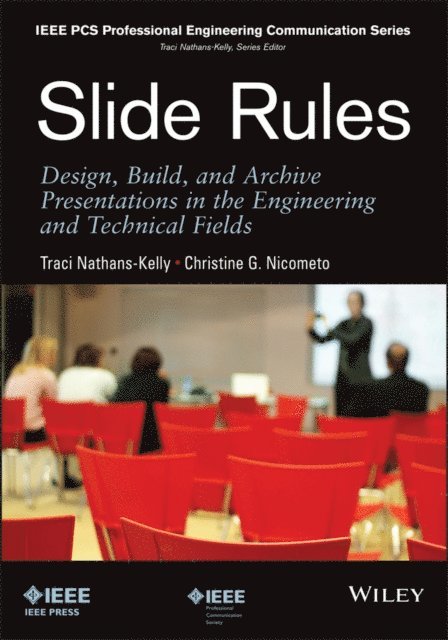
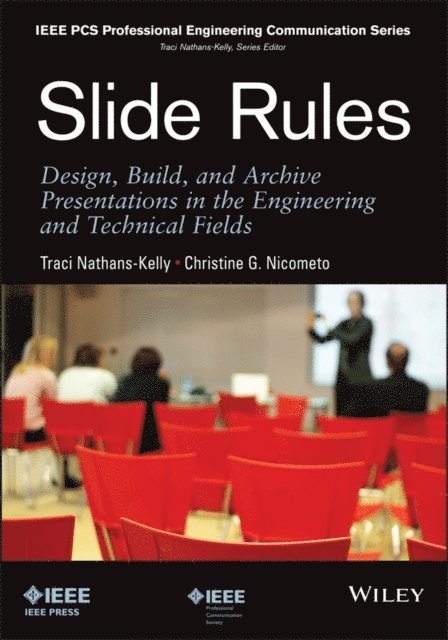
    Slide Rules

    Design, Build, and Archive Presentations in the Engineering and Technical Fields

    AvTraci Nathans-Kelly,Christine G. Nicometo

    Häftad, Engelska, 2014

    Del 3 i serien IEEE PCS Professional Engineering Communication Series

    582 kr

    Beställningsvara. Skickas inom 5-8 vardagar. Fri frakt över 249 kr.

    Beskrivning

    A complete road map to creating successful technical presentationsPlanning a technical presentation can be tricky. Does the audience know your subject area? Will you need to translate concepts into terms they understand? What sort of visuals should you use? Will this set of bullets truly convey the information? What will your slides communicate to future users? Questions like these and countless others can overwhelm even the most savvy technical professionals.This full-color, highly visual work addresses the unique needs of technical communicators looking to break free of the bulleted slide paradigm. For those seeking to improve their presentations, the authors provide guidance on how to plan, organize, develop, and archive technical presentations. Drawing upon the latest research in cognitive science as well as years of experience teaching seasoned technical professionals, the authors cover a myriad of issues involved in the design of presentations, clearly explaining how to create slide decks that communicate critical technical information. Key features include: Innovative methods for archiving and documenting work through slides in the technical workplaceGuidance on how to tailor presentations to diverse audiences, technical and nontechnical alikeA plethora of color slides and visual examples illustrating various strategies and best practicesLinks to additional resources as well as slide examples to inspire on-the-job changes in presentation practicesSlide Rules is a first-rate guide for practicing engineers, scientists, and technical specialists as well as anyone wishing to develop useful, engaging, and informative technical presentations in order to become an expert communicator. Find the authors at techartsconsulting.com or on Facebook at: SlideRulesTAC

    Produktinformation

    • Utgivningsdatum:2014-04-25
    • Mått:178 x 254 x 13 mm
    • Vikt:386 g
    • Format:Häftad
    • Språk:Engelska
    • Serie:IEEE PCS Professional Engineering Communication Series
    • Antal sidor:240
    • Förlag:John Wiley & Sons Inc
    • ISBN:9781118002964

    Utforska kategorier

    • Teknik: allmänt inom Naturvetenskap och teknik
    • Affärsförhandlingar inom Ekonomi och Ledarskap

    Mer om författaren

    TRACI NATHANS-KELLY, PhD, teaches engineering communication at Cornell University and the University of Wisconsin-Madison.CHRISTINE G. NICOMETO, MS, teaches technical communication in the University of Wisconsin-Madison’s College of Engineering.Both authors work with practicing engineers from such organizations as 3M, Federal Express, GE Healthcare Systems, General Motors, Google, Harley-Davidson, IBM, John Deere, Kraft, Lockheed Martin, Micron Technology, NASA, Qualcomm, Rockwell Automation, The Boeing Company, Toyota, U.S. Department of Defense, and UTC Aerospace.

    Recensioner i media

    “Slide Rulesis useful to anyone creating slides (including Prezi) and to instructors who want to teach their students best practices. While the evidence–assertion method works best for presenting scientific information, this book covers a broad enough territory that even marketing and sales presenters could learn important skills.”  (Technical Communication, 1 February 2015)

    Innehållsförteckning

    • A Note from the Series Editor xiAcknowledgments xiiiForeword xvIntroduction 1Understand our path to these techniques 1Witness the change 2Feel confident about these techniques 3References 31 Heed the Pleas for Better Presentations 5Know the enemy 6Be an agent of change 8Call a meeting instead of summoning a slide deck 8Destroy the decks of drudgery 8Learn communication lessons from past tragedies 9Confront conventional poor practices 10Consider slides as a two-part deliverable 11Implement your own continuous improvement 12References 12Slide Rule #1 Revisit Presentation Assumptions2 Apply Cognitive Science and Tell a Story 17Change presentation practices using grounded research 17Stay open to change 18Revisit how a slide works 19Design slides for audience’s cognitive load 20Lessen cognitive load with storytelling 24Apply science and storytelling 27References 273 Understand Audience Needs 29Scope content toward identified purpose 29Learn about your audience first 30Determine the presentation’s purpose 32Examine the goals for a talk 33Elevate the moment 33Assess the audience 34Prepare for a familiar audience 34Prepare for an unfamiliar audience 35Coping when your talk gets hijacked 37Ditch the “dumb it down” attitude 38Think of audience needs, not yours 42Think about logistics 45References 484 Challenge Your Organization’s Culture of Text-Heavy Slides 49Understand the patterns’ origin 50Stop assuming they want to read 50Work toward fewer bullets, less text 51Avoid using slides as teleprompters 53Build information deliberately 54Move beyond “How many slides should I use?” 54Encourage better presentation practices 56Create, compile, organize, and stabilize team presentations 58Work towards a change 60References 60Slide Rule #2 Write Sentence Headers5 Clarify Topics with Full-Sentence Headers 65Write full sentences for headers, avoiding fragments 65Consider the case against fragmented headers 66Deploy best practices for sentence headers 70Expect immediate results 71Write targeted headers 73State a fact or explain a concept 74Showcase an analysis 80Transition to new information 84Influence outcomes with headers 88Frequently asked questions about sentence headers 88References 91Slide Rule #3 Use Targeted Visuals6 Build Information Incrementally 95Build something better than bullets 95Devise methods that build information 97Design with words to make bullet lovers happy 98Solidify complex topics with refrains 99Use refrain slides for meeting agendas 100Create visuals for directed comprehension 103Build out to drill down 1077 Generate Quality Graphs 109Portray complexity simply 110Determine the right visual 111Design reasonable pie charts 112Design impactful bar charts and histograms 117Design scatter XY charts and scatter plots 121Craft line charts 127Map out area graphs 128Think through flow or process charts 130Address assorted other visual outputs 132Graph ethically 133Create accessible graphics 136Frequently asked questions about graphs 138References 139Further reading 1408 Picture the Possibilities 141Center yourself 143Manage image interpretation 143Model accurately 143Be ethical with visuals 149Frequently asked questions about using pictures 150References 1519 Temper the Templates 153See the possibilities in a template, branded or otherwise 153Discover and assess a branded template 154Work with company templates 156Devise solutions for problematic templates 156Fix the template 162Provide template guidance 164Refine quad slides 165Establish brand when there is no template 166Slide Rule #4 Archive Details for Future Use10 Make Slide Decks with Archival and Legacy Value 175Understand that slides have two lives 175Start new best practices 177Document ideas efficiently 178Use the Notes or Presenter Notes feature 179Get others to see your notes 180Use hidden slides 181Keep hidden slides ready 183Make retrieval easy for everyone else 184Embrace full documentation as part of workflow 187References 18811 Include More Than One Language 189Know when English is not enough 189Start with audience analysis 192Anticipate formatting for translations 192Deploy plain language 192Write in one language and talk in another 195Design split slides 195Capture translation in notes 197Translate toward clarity 197Find resources 198References 198Slide Rule #5 Keep Looking Forward12 Enact Organizational Change 203Listen to the studies 203Anticipate the stages of acceptance 204Tally the results 207Look for the opportunities 208References 20813 Thinking Through the Next Big Thing 209See ahead 209Play with Prezi 210Use caution 211Amaze with Autodesk 211Apply apps 213Remain diligent in your best practices 214Index 215About the Authors 219