• Fri frakt över 249 kr
  • •
  • Snabba leveranser
  • •
  • Billiga böcker
Kundservice

Du är på sajten för privatpersoner.

Företag, bibliotek eller offentlig verksamhet?

Du handlar på classic.bokus.com, där alla dina funktioner finns intakta.
Till classic.bokus.com
Bokus logotyp. Gå till startsidan.
  • Erbjudanden
  • Nyheter
  • Student
  • Topplistor
  • Barn & ungdom
  • Bokus Play
  • E-böcker
  • Pocketböcker
  • Spel & pussel

10% rabatt på allt med kod: NYSTART10 →

Sidfot

Mina sidor

    Hjälp

    • Kundservice
    • Vanliga frågor och svar
    • Frakt och leverans
    • Retur vid ångerrätt
    • Reklamera vara
    • Betalning
    • Köpvillkor
    • Allmänna villkor
    • Information om webbplatsens tillgänglighet

    Om Bokus

    • Om oss
    • Pressrum
    • För studenter
    • För företag
    • För bibliotek och offentlig verksamhet
    • För leverantörer
    • Hållbarhet

    Populärt

    • Aktuella erbjudanden
    • Presentkort
    • Studentlitteratur
    • Nya böcker
    • Topplistor
    • Signerade böcker
    • Engelska böcker

    Inspiration

    • Boktips
    • BookTok
    • Populära bokserier
    • Barnbokskaraktärer
    • Populära författare
    Logotyp för Bokus
    Följ oss på Facebook (extern länk)Följ oss på Instagram (extern länk)Följ oss på YouTube (extern länk)Följ oss på TikTok (extern länk)
    bokus @ CookiesAnpassa cookiesIntegritetspolicyKöpvillkor
    Till Citymail hemsida (extern länk)Till Budbee hemsida (extern länk)Till Postnord hemsida (extern länk)Till Schenker hemsida (extern länk)Till Early Bird hemsida (extern länk)Till Walleys hemsida (extern länk)
    1. Naturvetenskap och teknik
    2. Teknik och industri
    3. Maskinteknik och material

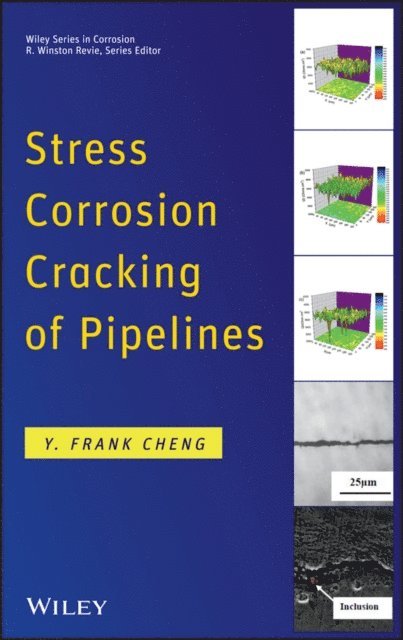
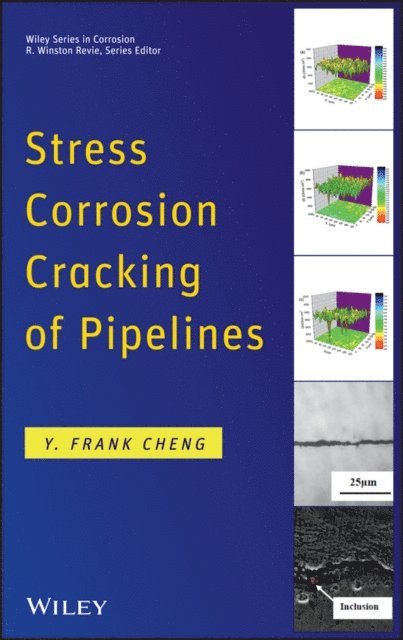
    Stress Corrosion Cracking of Pipelines

    AvY. Frank Cheng

    Inbunden, Engelska, 2013

    Del i serien Wiley Series in Corrosion

    1 621 kr

    Beställningsvara. Skickas inom 5-8 vardagar. Fri frakt över 249 kr.

    Fler format och utgåvor

    E-bok

    1 877 kr

    E-bok

    1 861 kr

    Beskrivning

    Explains why pipeline stress corrosion cracking happens and how it can be preventedPipelines sit at the heart of the global economy. When they are in good working order, they deliver fuel to meet the ever-growing demand for energy around the world. When they fail due to stress corrosion cracking, they can wreak environmental havoc.This book skillfully explains the fundamental science and engineering of pipeline stress corrosion cracking based on the latest research findings and actual case histories. The author explains how and why pipelines fall prey to stress corrosion cracking and then offers tested and proven strategies for preventing, detecting, and monitoring it in order to prevent pipeline failure.Stress Corrosion Cracking of Pipelines begins with a brief introduction and then explores general principals of stress corrosion cracking, including two detailed case studies of pipeline failure. Next, the author covers: Near-neutral pH stress corrosion cracking of pipelinesHigh pH stress corrosion cracking of pipelinesStress corrosion cracking of pipelines in acidic soil environmentsStress corrosion cracking at pipeline weldsStress corrosion cracking of high-strength pipeline steelsThe final chapter is dedicated to effective management and mitigation of pipeline stress corrosion cracking. Throughout the book, the author develops a number of theoretical models and concepts based on advanced microscopic electrochemical measurements to help readers better understand the occurrence of stress corrosion cracking.By examining all aspects of pipeline stress corrosion cracking—the causes, mechanisms, and management strategies—this book enables engineers to construct better pipelines and then maintain and monitor them to ensure safe, reliable energy supplies for the world.

    Produktinformation

    • Utgivningsdatum:2013-03-15
    • Mått:152 x 234 x 20 mm
    • Vikt:522 g
    • Format:Inbunden
    • Språk:Engelska
    • Serie:Wiley Series in Corrosion
    • Antal sidor:288
    • Förlag:John Wiley & Sons Inc
    • ISBN:9781118022672

    Utforska kategorier

    • Maskinteknik och material inom Naturvetenskap och teknik

    Mer om författaren

    Y. FRANK CHENG, PhD, is Professor and Canada Research Chair in Pipeline Engineering at the University of Calgary. Dr. Cheng has published over 115 journal articles dedicated to corrosion, pipeline engineering, and materials science. He is a member of the U.S. National Academy of Sciences Committee for Pipeline Transportation of Diluted Bitumen; the Editorial Board of Corrosion Engineering, Science and Technology; and the Board of Directors of the Canadian Fracture Research Corporation. Dr. Cheng is also Theme Editor of Pipeline Engineering for the Encyclopedia of Life Support Systems, developed under the auspices of UNESCO.

    Innehållsförteckning

    • Foreword xiiiPreface xvList of Abbreviations and Symbols xix1 Introduction 11.1 Pipelines as “Energy Highways” 21.2 Pipeline Safety and Integrity Management 31.3 Pipeline Stress Corrosion Cracking 3References 52 Fundamentals of Stress Corrosion Cracking 72.1 Definition of Stress Corrosion Cracking 72.2 Specific Metal–Environment Combinations 92.3 Metallurgical Aspects of SCC 112.3.1 Effect of Strength of Materials on SCC 112.3.2 Effect of Alloying Composition on SCC 112.3.3 Effect of Heat Treatment on SCC 112.3.4 Grain Boundary Precipitation 122.3.5 Grain Boundary Segregation 122.4 Electrochemistry of SCC 132.4.1 SCC Thermodynamics 132.4.2 SCC Kinetics 142.5 SCC Mechanisms 152.5.1 SCC Initiation Mechanisms 152.5.2 Dissolution-Based SCC Propagation 162.5.3 Mechanical Fracture–Based SCC Propagation 182.6 Effects of Hydrogen on SCC and Hydrogen Damage 202.6.1 Sources of Hydrogen 202.6.2 Characteristics of Hydrogen in Metals 212.6.3 The Hydrogen Effect 212.6.4 Mechanisms of Hydrogen Damage 252.7 Role of Microorganisms in SCC 272.7.1 Microbially Influenced Corrosion 272.7.2 Microorganisms Involved in MIC 292.7.3 Role of MIC in SCC Processes 312.8 Corrosion Fatigue 322.8.1 Features of Fatigue Failure 332.8.2 Features of Corrosion Fatigue 342.8.3 Factors Affecting CF and CF Management 352.9 Comparison of SCC, HIC, and CF 35References 373 Understanding Pipeline Stress Corrosion Cracking 433.1 Introduction 433.2 Practical Case History of SCC in Pipelines 443.2.1 Case 1: SCC of Enbridge Glenavon Pipelines (SCC in an Oil Pipeline) 453.2.2 Case 2: SCC of Williams Lake Pipelines (SCC in a Gas Pipeline) 463.3 General Features of Pipeline SCC 463.3.1 High-pH SCC of Pipelines 473.3.2 Nearly Neutral–pH SCC of Pipelines 483.3.3 Cracking Characteristics 483.4 Conditions for Pipeline SCC 503.4.1 Corrosive Environments 503.4.2 Susceptible Line Pipe Steels 533.4.3 Stress 583.5 Role of Pressure Fluctuation in Pipelines: SCC or Corrosion Fatigue? 62References 684 Nearly Neutral–pH Stress Corrosion Cracking of Pipelines 734.1 Introduction 734.2 Primary Characteristics 734.3 Contributing Factors 754.3.1 Coatings 754.3.2 Cathodic Protection 794.3.3 Soil Characteristics 814.3.4 Microorganisms 834.3.5 Temperature 854.3.6 Stress 854.3.7 Steel Metallurgy 884.4 Initiation of Stress Corrosion Cracks from Corrosion Pits 894.5 Stress Corrosion Crack Propagation Mechanism 964.5.1 Role of Hydrogen in Enhanced Corrosion of Steels 964.5.2 Potential-Dependent Nearly Neutral–pH SCC of Pipelines 994.5.3 Pipeline Steels in Nearly Neutral–pH Solutions: Always Active Dissolution? 1014.6 Models for Prediction of Nearly Neutral–pH SCC Propagation 104References 1115 High-pH Stress Corrosion Cracking of Pipelines 1175.1 Introduction 1175.2 Primary Characteristics 1175.3 Contributing Factors 1185.3.1 Coatings 1185.3.2 Cathodic Protection 1195.3.3 Soil Characteristics 1235.3.4 Microorganisms 1255.3.5 Temperature 1255.3.6 Stress 1255.3.7 Metallurgies 1285.4 Mechanisms for Stress Corrosion Crack Initiation 1285.4.1 Electrochemical Corrosion Mechanism of Pipeline Steels in a Thin Layer of Carbonate–Bicarbonate Electrolyte Trapped Under a Disbonded Coating 1285.4.2 Conceptual Model for Initiation of Stress Corrosion Cracks in a High-pH Carbonate–Bicarbonate Electrolyte Under a Disbonded Coating 1335.5 Mechanisms for Stress Corrosion Crack Propagation 1375.5.1 Enhanced Anodic Dissolution at a Crack Tip 1375.5.2 Enhanced Pitting Corrosion at a Crack Tip 1435.5.3 Relevance to Grain Boundary Structure 1445.6 Models for the Prediction of a High-pH Stress Corrosion Crack Growth Rate 144References 1456 Stress Corrosion Cracking of Pipelines in Acidic Soil Environments 1496.1 Introduction 1496.2 Primary Characteristics 1506.3 Electrochemical Corrosion Mechanism of Pipeline Steels in Acidic Soil Solutions 1516.4 Mechanisms for Initiation and Propagation of Stress Corrosion Cracks 1516.5 Effect of Strain Rate on the SCC of Pipelines in Acidic Soils 154References 1577 Stress Corrosion Cracking at Pipeline Welds 1597.1 Introduction 1597.2 Fundamentals of Welding Metallurgy 1607.2.1 Welding Processes 1607.2.2 Welding Solidification and Microstructure 1607.2.3 Parameters Affecting the Welding Process 1627.2.4 Defects at the Weld 1627.3 Pipeline Welding: Metallurgical Aspects 1637.3.1 X70 Steel Weld 1637.3.2 X80 Steel Weld 1637.3.3 X100 Steel Weld 1647.4 Pipeline Welding: Mechanical Aspects 1647.4.1 Residual Stress 1647.4.2 Hardness of the Weld 1667.5 Pipeline Welding: Environmental Aspects 1707.5.1 Introduction of Hydrogen into Welds 1707.5.2 Corrosion at Welds 1727.5.3 Electrochemistry of Localized Corrosion at Pipeline Welds 1737.6 SCC at Pipeline Welds 1787.6.1 Effects of Material Properties and Microstructure 1787.6.2 Effects of the Welding Process 1797.6.3 Hydrogen Sulfide SCC of Pipeline Welds 179References 1808 Stress Corrosion Cracking of High-Strength Pipeline Steels 1858.1 Introduction 1858.2 Development of High-Strength Steel Pipeline Technology 1868.2.1 Evolution of Pipeline Steels 1868.2.2 High-Strength Steels in a Global Pipeline Application 1878.3 Metallurgy of High-Strength Pipeline Steels 1898.3.1 Thermomechanical Controlled Processing 1898.3.2 Alloying Treatment 1898.3.3 Microstructure of High-Strength Steels 1908.3.4 Metallurgical Defects 1928.4 Susceptibility of High-Strength Steels to Hydrogen Damage 1938.4.1 Hydrogen Blistering and HIC of High-Strength Pipeline Steels 1938.4.2 Hydrogen Permeation Behavior of High-Strength Pipeline Steels 1968.5 Metallurgical Microelectrochemistry of High-Strength Pipeline Steels 1998.5.1 Microelectrochemical Activity at Metallurgical Defects 1998.5.2 Preferential Dissolution and Pitting Corrosion Around Inclusions 2038.6 Strain Aging of High-Strength Steels and Its Implication on Pipeline SCC 2078.6.1 Basics of Strain Aging 2088.6.2 Strain Aging of High-Strength Pipeline Steels 2128.6.3 Effect of Strain Aging on SCC of High-Strength Pipeline Steels 2148.7 Strain-Based Design of High-Strength Steel Pipelines 2168.7.1 Strain Due to Pipe–Ground Movement 2178.7.2 Parametric Effects on Cracking of Pipelines Under SBD 2188.8 Mechanoelectrochemical Effect of Corrosion of Pipelines Under Strain 219References 2259 Management of Pipeline Stress Corrosion Cracking 2319.1 SCC in Pipeline Integrity Management 2319.1.1 Elements of Pipeline Integrity Management 2319.1.2 Initial Assessment and Investigation of SCC Susceptibility 2349.1.3 Classification of SCC Severity and Postassessment 2359.1.4 SCC Site Selection 2369.1.5 SCC Risk Assessment 2389.2 Prevention of Pipeline SCC 2409.2.1 Selection and Control of Materials 2419.2.2 Control of Stress 2429.2.3 Control of Environments 2439.3 Monitoring and Detection of Pipeline SCC 2449.3.1 In-Line Inspections 2449.3.2 Intelligent Pigs 2479.3.3 Hydrostatic Inspection 2489.3.4 Pipeline Patrolling 2499.4 Mitigation of Pipeline SCC 249References 251Index 255