Wiley Series in Corrosion - Böcker
Visar alla böcker i serien Wiley Series in Corrosion. Handla med fri frakt och snabb leverans.
12 produkter
12 produkter
2 059 kr
Skickas inom 7-10 vardagar
Reviews the science and engineering of high-temperature corrosion and provides guidelines for selecting the best materials for an array of system processesHigh-temperature corrosion (HTC) is a widespread problem in an array of industries, including power generation, aerospace, automotive, and mineral and chemical processing, to name a few. This book provides engineers, physicists, and chemists with a balanced presentation of all relevant basic science and engineering aspects of high-temperature corrosion. It covers most HTC types, including oxidation, sulfidation, nitridation, molten salts, fuel-ash corrosion, H2S/H2 corrosion, molten fluoride/HF corrosion, and carburization. It also provides corrosion data essential for making the appropriate choices of candidate materials for high-temperature service in process conditions.A form of corrosion that does not require the presence of liquids, high-temperature corrosion occurs due to the interaction at high temperatures of gases, liquids, or solids with materials. HTC is a subject is of increasing importance in many areas of science and engineering, and students, researchers, and engineers need to be aware of the nature of the processes that occur in high-temperature materials and equipment in common use today, especially in the chemical, gas, petroleum, electric power, metal manufacturing, automotive, and nuclear industries. Provides engineers and scientists with the essential data needed to make the most informed decisions on materials selectionIncludes up-to-date information accompanied by more than 1,000 references, 80% of which from within the past fifteen yearsIncludes details on systems of critical engineering importance, especially the corrosion induced by low-energy radionuclidesIncludes practical guidelines for testing and research in HTC, along with both the European and International Standards for high-temperature corrosion engineeringOffering balanced, in-depth coverage of the fundamental science behind and engineering of HTC, High Temperature Corrosion: Fundamentals and Engineering is a valuable resource for academic researchers, students, and professionals in the material sciences, solid state physics, solid state chemistry, electrochemistry, metallurgy, and mechanical, chemical, and structural engineers.
979 kr
Skickas inom 7-10 vardagar
An authoritative account of the history, metallurgy, and corrosion behavior of nickel-based alloys In Corrosion of Nickel-Based Alloys, a distinguished corrosion engineer and scientist delivers a comprehensive source of information on the history, metallurgy, and corrosion behavior of nickel-based alloys. The book combines fundamental knowledge of the metallurgy, chemistry, and electrochemistry relevant to these alloys with practical applications of these alloys in the area of corrosion. Readers will learn to apply contemporary corrosion mechanisms and metallurgy in the selection and evaluation of these alloys. The author discusses corrosion models and their application to the development and assessment of Ni-base alloys. Corrosion of Nickel-Based Alloys also includes: A thorough introduction to nickel alloys used in the nuclear, chemical, oil and gas, marine, biomedical, and aerospace industriesComprehensive explorations of nickel alloys used in waste treatment and pollution control systemsPractical discussions of the corrosion behavior of nickel-base alloys in aqueous and non-aqueous environmentsModeling approaches that augment experimental findingsPerfect for metallurgical, mechanical, chemical, nuclear, petroleum, and petrochemical engineers, Corrosion of Nickel-Based Alloys will also benefit students and engineering consultants interested in corrosion-resistant alloys.
Del 10 - Wiley Series in Corrosion
Green Corrosion Inhibitors
Theory and Practice
Inbunden, Engelska, 2011
1 375 kr
Skickas inom 11-20 vardagar
A book to cover developments in corrosion inhibitors is long overdue. This has been addressed by Dr Sastri in a book which presents fundamental aspects of corrosion inhibition, historical developments and the industrial applications of inhibitors. The book deals with the electrochemical principles and chemical aspects of corrosion inhibition, such as stability of metal complexes, the Hammett equation, hard and soft acid and base principle, quantum chemical aspects and Hansch' s model and also with the various surface analysis techniques, e.g. XPS, Auger, SIMS and Raman spectroscopy, that are used in industry for corrosion inhibition. The applications of corrosion inhibition are wide ranging. Examples given in this book include: oil and gas wells, petrochemical plants, steel reinforced cement, water cooling systems, and many more. The final chapters discuss economic and environmental considerations which are now of prime importance. The book is written for researchers in academia and industry, practicing corrosion engineers and students of materials science, engineering and applied chemistry.
1 186 kr
Skickas inom 11-20 vardagar
Provides corrosion basics in a lucid manner to students and working professionals and over 80 corrosion-failure analysis case studies Correlates Failure Analysis with Corrosion ScienceExclusively provides corrosion-related failure analysis case histories in one place in a convenient formatOne-stop shop for both science and real time occurrence of the phenomenon of corrosionFull coverage of all MOC, Materials of Construction, used for process equipmentsSimple but Lucid presentation of Failure Analysis procedure
Del 13 - Wiley Series in Corrosion
Heterogeneous Electrode Processes and Localized Corrosion
Inbunden, Engelska, 2013
1 505 kr
Skickas inom 7-10 vardagar
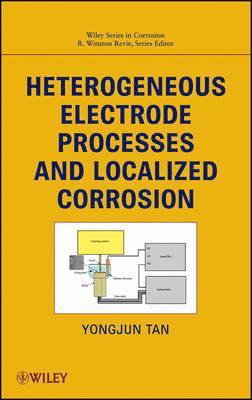
Sheds new light on the significance of electrode inhomogeneity and electrochemical heterogeneityA major contribution to the field of electrochemistry, this book—based on a thorough review of the literature and author Yongjun Tan's twenty years of pioneering research—examines electrochemical heterogeneity and its effects on non-uniform electrode processes. The book focuses on localized corrosion, uneven electrodeposition, and non-uniform electrodissolution. Readers will learn all the core fundamentals, experimental methods, and engineering aspects of localized corrosion and other important heterogeneous electrode processes. In particular, readers will learn core methods to quickly calculate corrosion rates and study electrode inhomogeneity and electrochemical heterogeneity.Heterogeneous Electrode Processes and Localized Corrosion begins with a review of homogeneous electrode models and uniform corrosion measurements and then explores probing electrode inhomogeneity, electrochemical heterogeneity, and localized corrosion. Next, the book examines: Visualizing localized corrosion using electrochemically integrated multi-electrode arraysMeasuring thermodynamic and kinetic parameters of localized corrosion processesCharacterizing inhomogeneity and localized corrosion on coated electrode surfacesDesigning experiments to study localized corrosion and its inhibition in inhomogeneous mediaSensing localized electrodeposition and electrodissolutionExploring versatile heterogeneous electrode processesThroughout the book, there are case studies with maps that illustrate key aspects of heterogeneous electrode processes. In addition, the author provides plenty of examples that enable readers to fully grasp core concepts of electrochemical heterogeneity and its relationship to non-uniform electrode processes.Reviewing the experimental findings presented in this book, electrochemists will gain a better appreciation and understanding of the fundamental significance of electrode inhomogeneity and electrochemical heterogeneity.
Del 7 - Wiley Series in Corrosion
Corrosion Resistance of Aluminum and Magnesium Alloys
Understanding, Performance, and Testing
Inbunden, Engelska, 2010
2 117 kr
Skickas inom 7-10 vardagar
Valuable information on corrosion fundamentals and applications of aluminum and magnesiumAluminum and magnesium alloys are receiving increased attention due to their light weight, abundance, and resistance to corrosion. In particular, when used in automobile manufacturing, these alloys promise reduced car weights, lower fuel consumption, and resulting environmental benefits.Meeting the need for a single source on this subject, Corrosion Resistance of Aluminum and Magnesium Alloys gives scientists, engineers, and students a one-stop reference for understanding both the corrosion fundamentals and applications relevant to these important light metals. Written by a world leader in the field, the text considers corrosion phenomena for the two metals in a systematic and parallel fashion. The coverage includes: The essentials of corrosion for aqueous, high temperature corrosion, and active-passive behavior of aluminum and magnesium alloys The performance and corrosion forms of aluminum alloys The performance and corrosion forms of magnesium alloys Corrosion prevention methods such as coatings for aluminum and magnesium Electrochemical methods of corrosion investigation and their application to aluminum and magnesium alloys Offering case studies and detailed references, Corrosion Resistance of Aluminum and Magnesium Alloys provides an essential, up-to-date resource for graduate-level study, as well as a working reference for professionals using aluminum, magnesium, and their alloys.
1 466 kr
Skickas inom 7-10 vardagar
The comprehensive reference on modern techniques and methods for monitoring and inspecting corrosion Strategic corrosion inspection and monitoring can improve asset management and life cycle assessment and optimize operational budgets. Advances in computer technologies and electronics have led to very efficient tools for monitoring and inspecting corrosion, including impedance spectroscopy, electrical field signatures, acoustic emissions, and radiographs. This up-to-date reference explains both intrusive and non-intrusive methods of measuring corrosion rates. It covers: The impact of corrosion on the economy and the safe operation of systems in diverse operational environmentsThe various forms of corrosion, with a focus on the detectability of corrosion damage in the real worldThe principles of risk-based inspection and various risk assessment methodologies (HAZOP, FMECA, FTA, and ETA), with examples from industryThe monitoring of microbiologically induced corrosion (MIC), cathodic protection (CP) systems, and atmospheric corrosionNon-destructive evaluation (NDE) techniques, including visual, ultrasonic, radiographic, electromagnetic, and thermographic inspectionRoadmaps used by various industries and organizations for carrying out complex inspection and monitoring schedulesComplete with graphics and illustrations, this is the definitive reference for professionals involved in the maintenance of industrial systems and structures, from oil exploration to chemical plants and infrastructures; consultants; property managers; and civil, materials, and construction engineers.
1 339 kr
Skickas inom 7-10 vardagar
A multi-disciplinary, multi-industry overview of microbiologically influenced corrosion, with strategies for diagnosis and control or prevention Microbiologically Influenced Corrosion helps engineers and scientists understand and combat the costly failures that occur due to microbiologically influenced corrosion (MIC). This book combines recent findings from diverse disciplines into one comprehensive reference. Complete with case histories from a variety of environments, it covers: Biofilm formationCausative organisms, relating bacteria and fungi to corrosion mechanisms for groups of metalsDiagnosing and monitoring MICElectrochemical techniques, with an overview of methods for detection of MICThe impact of alloying elements, including antimicrobial metals, and design features on MICMIC of non-metallicsStrategies for control or prevention of MIC, including engineering, chemical, and biological approachesThis is a valuable, all-inclusive reference for corrosion scientists, engineers, and researchers, as well as designers, managers, and operators.
1 505 kr
Skickas inom 7-10 vardagar
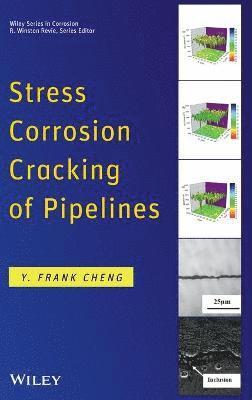
Explains why pipeline stress corrosion cracking happens and how it can be preventedPipelines sit at the heart of the global economy. When they are in good working order, they deliver fuel to meet the ever-growing demand for energy around the world. When they fail due to stress corrosion cracking, they can wreak environmental havoc.This book skillfully explains the fundamental science and engineering of pipeline stress corrosion cracking based on the latest research findings and actual case histories. The author explains how and why pipelines fall prey to stress corrosion cracking and then offers tested and proven strategies for preventing, detecting, and monitoring it in order to prevent pipeline failure.Stress Corrosion Cracking of Pipelines begins with a brief introduction and then explores general principals of stress corrosion cracking, including two detailed case studies of pipeline failure. Next, the author covers: Near-neutral pH stress corrosion cracking of pipelinesHigh pH stress corrosion cracking of pipelinesStress corrosion cracking of pipelines in acidic soil environmentsStress corrosion cracking at pipeline weldsStress corrosion cracking of high-strength pipeline steelsThe final chapter is dedicated to effective management and mitigation of pipeline stress corrosion cracking. Throughout the book, the author develops a number of theoretical models and concepts based on advanced microscopic electrochemical measurements to help readers better understand the occurrence of stress corrosion cracking.By examining all aspects of pipeline stress corrosion cracking—the causes, mechanisms, and management strategies—this book enables engineers to construct better pipelines and then maintain and monitor them to ensure safe, reliable energy supplies for the world.
1 368 kr
Skickas inom 7-10 vardagar
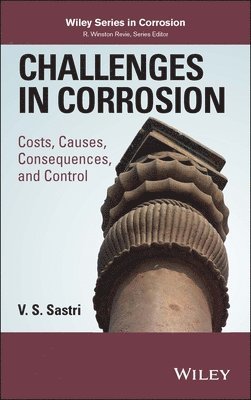
Provides detailed methods to reduce or eliminate damage caused by corrosionExplains the human and environmental costs of corrosionExplains causes of and various types of corrosionSummarizes the costs of corrosion in different industries, including bridges, mining, petroleum refining, chemical, petrochemical, and pharmaceutical, pulp and paper, agricultural, food processing, electronics, home appliances etcDiscusses the technical aspects of the various methods available to detect, prevent, and control corrosion
1 582 kr
Skickas inom 7-10 vardagar
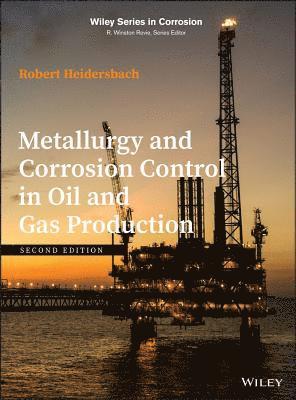
Details the proper methods to assess, prevent, and reduce corrosion in the oil industry using today's most advanced technologies This book discusses upstream operations, with an emphasis on production, and pipelines, which are closely tied to upstream operations. It also examines protective coatings, alloy selection, chemical treatments, and cathodic protection—the main means of corrosion control. The strength and hardness levels of metals is also discussed, as this affects the resistance of metals to hydrogen embrittlement, a major concern for high-strength steels and some other alloys. It is intended for use by personnel with limited backgrounds in chemistry, metallurgy, and corrosion and will give them a general understanding of how and why corrosion occurs and the practical approaches to how the effects of corrosion can be mitigated.Metallurgy and Corrosion Control in Oil and Gas Production, Second Edition updates the original chapters while including a new case studies chapter. Beginning with an introduction to oilfield metallurgy and corrosion control, the book provides in-depth coverage of the field with chapters on: chemistry of corrosion; corrosive environments; materials; forms of corrosion; corrosion control; inspection, monitoring, and testing; and oilfield equipment. Covers all aspects of upstream oil and gas production from downhole drilling to pipelines and tanker terminal operationsOffers an introduction to corrosion for entry-level corrosion control specialistsContains detailed photographs to illustrate descriptions in the textMetallurgy and Corrosion Control in Oil and Gas Production, Second Edition is an excellent book for engineers and related professionals in the oil and gas production industries. It will also be an asset to the entry-level corrosion control professional who may have a theoretical background in metallurgy, chemistry, or a related field, but who needs to understand the practical limitations of large-scale industrial operations associated with oil and gas production.
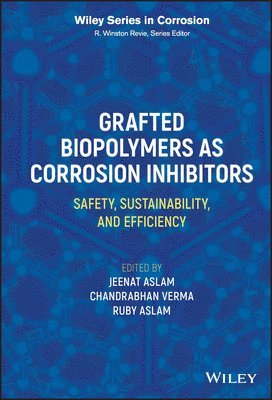
Grafted Biopolymers as Corrosion Inhibitors
Safety, Sustainability, and Efficiency
Inbunden, Engelska, 2023
2 196 kr
Skickas inom 7-10 vardagar
GRAFTED BIOPOLYMERS AS CORROSION INHIBITORS Comprehensive resource explaining the synthesis, characterization, and anticorrosive applications of green and environmentally benign grafted biopolymers and their derivatives Grafted Biopolymers as Corrosion Inhibitors highlight research and technology on sustainable grafted biopolymers as corrosion inhibitors and detail their rapidly emerging features and future research prospects. The many forms of grafted biopolymers and techniques for preventing corrosion are explored in relation to their macromolecular weights, chemical makeup, and distinctive molecular and electronic structures. The book covers state-of-the-art corrosion science and engineering as well as an in-depth, step-by-step exposition of knowledge on numerous corrosion systems and their role in contemporary industry. Each chapter include an introduction, isolation and purification, synthesis methods, worked examples, current applications, and future predictions. Edited and contributed to by well-known researchers, scientists and experts from academia and industry, Grafted Biopolymers as Corrosion Inhibitors includes information on: Basics of corrosion, economic adverse effects and its mitigation, and past and present developments and future directions of corrosion inhibitionCorrosion inhibitor classification and selection criteria, chemical, electrochemical, and surface characterization, and computational techniques for corrosion monitoringSustainable grafted biopolymers, covering synthesis and characterizations, properties and applications, and factors affecting biopolymers graftingGrafted natural exudates gums, pectin, chitosan, starch, cellulose, alginates, dextrin, and biopolymer composites and nanocomposites as sustainable corrosion inhibitorsDelivering the recent advancements in sustainable grafted biopolymer for the anticorrosive applications arena, Grafted Biopolymers as Corrosion Inhibitors is an essential resource for scholars in academia and industry, working corrosion engineers, and materials science, engineering, and chemistry students.