• Fri frakt över 249 kr
  • •
  • Snabba leveranser
  • •
  • Billiga böcker
Kundservice

Du är på sajten för privatpersoner.

Företag, bibliotek eller offentlig verksamhet?

Du handlar på classic.bokus.com, där alla dina funktioner finns intakta.
Till classic.bokus.com
Bokus logotyp. Gå till startsidan.
  • Erbjudanden
  • Nyheter
  • Student
  • Topplistor
  • Barn & ungdom
  • Bokus Play
  • E-böcker
  • Pocketböcker
  • Spel & pussel

10% rabatt på allt med kod: NYSTART10 →

Sidfot

Mina sidor

    Hjälp

    • Kundservice
    • Vanliga frågor och svar
    • Frakt och leverans
    • Retur vid ångerrätt
    • Reklamera vara
    • Betalning
    • Köpvillkor
    • Allmänna villkor
    • Information om webbplatsens tillgänglighet

    Om Bokus

    • Om oss
    • Pressrum
    • För studenter
    • För företag
    • För bibliotek och offentlig verksamhet
    • För leverantörer
    • Hållbarhet

    Populärt

    • Aktuella erbjudanden
    • Presentkort
    • Studentlitteratur
    • Nya böcker
    • Topplistor
    • Signerade böcker
    • Engelska böcker

    Inspiration

    • Boktips
    • BookTok
    • Populära bokserier
    • Barnbokskaraktärer
    • Populära författare
    Logotyp för Bokus
    Följ oss på Facebook (extern länk)Följ oss på Instagram (extern länk)Följ oss på YouTube (extern länk)Följ oss på TikTok (extern länk)
    bokus @ CookiesAnpassa cookiesIntegritetspolicyKöpvillkor
    Till Citymail hemsida (extern länk)Till Budbee hemsida (extern länk)Till Postnord hemsida (extern länk)Till Schenker hemsida (extern länk)Till Early Bird hemsida (extern länk)Till Walleys hemsida (extern länk)
    1. Psykologi och pedagogik
    2. Psykologi
    3. Psykologi: känslor

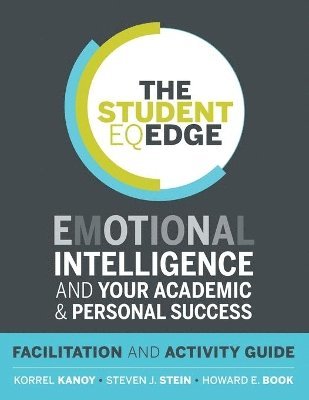
    Student EQ Edge

    Emotional Intelligence and Your Academic and Personal Success: Facilitation and Activity Guide

    AvKorrel Kanoy,Steven J. Stein

    Häftad, Engelska, 2013

    488 kr

    Beställningsvara. Skickas inom 5-8 vardagar. Fri frakt över 249 kr.

    Fler format och utgåvor

    Häftad

    164 kr

    E-bok

    384 kr

    E-bok

    384 kr

    Beskrivning

    THE STUDENT EQEDGE Facilitation and Activity GuideThis Facilitation and Activity Guide is a companion to the book The Student EQ Edge: Emotional Intelligence and Your Academic and Personal Success . It offers faculty and facilitators a hands-on resource for helping students reach their potential by tapping into the power of emotional intelligence. The Facilitation Guide includes exercises and activities which are designed to help students develop confidence, independence, the ability to set and meet goals, impulse control, social responsibility, problem-solving skills, stress tolerance, and much more—all of which help improve academic success. The Guide also contains a wealth of illustrative case studies, questions for student reflection, movie selections and TV shows that illustrate emotional intelligence, and a self-development plan."The single best resource on emotional intelligence in student affairs, The Student EQ Edge: Student Workbook and Facilitation and Activity Guide are well organized, creative, and offer everything an emotional intelligence facilitator would need in a fast-paced student affairs environment. The examples are soundly constructed and resonate with students. These materials are my go-to resources."—Candice Johnston, associate director of student leadership and organizations, Wake Forest University"If I were building a new course to improve student success, it would be founded on emotional intelligence. All the instruction in the world on 'study skills' cannot touch the advantages that come to students who are able to manage their emotional intelligence. And the best news of all is that these skills can be taught. EQ skills make the difference." —Randy L. Swing, executive director, Association for Institutional Research"This Facilitation and Activity Guide is particularly useful, offering options from which the facilitator can draw in preparing assignments or learning community meetings. The focus on learners' needs, and particularly an authentic exploration of self and purpose, is practical yet has the potential to draw students to a deeper understanding of self that will draw them to high performance and contribution to others."—Dennis Roberts, assistant vice president for faculty and student services for the Qatar Foundation

    Produktinformation

    • Utgivningsdatum:2013-03-12
    • Mått:216 x 277 x 15 mm
    • Vikt:726 g
    • Format:Häftad
    • Språk:Engelska
    • Antal sidor:320
    • Förlag:John Wiley & Sons Inc
    • ISBN:9781118094617

    Utforska kategorier

    • Psykologi: känslor inom Psykologi och pedagogik
    • Kognitiv psykologi inom Psykologi och pedagogik

    Mer om författaren

    KORREL KANOY is professor emeritus of psychology at William Peace University and an educational consultant. STEVEN J. STEIN is a clinical psychologist and founder and CEO of Multi-Health Systems Inc. He is coauthor, with Howard Book, of The EQ Edge . HOWARD E. BOOK is an organizational consultant and psychiatrist. He is an associate professor in the departments of psychiatry at the University of Toronto.The book is sponsored by Multi-Health Systems (MHS), which has been publishing psychological assessments for 30 years.

    Innehållsförteckning

    • Preface xiiAbout the Authors xv1 Introduction to the Facilitation and Activity Guide 1Emotional Intelligence Defined and Research Overview 1Planning Your Classes 4Student Reflection 4Student Emotional Intelligence Assessment 5Facilitating Class Discussions 5Agree-Disagree Activities 6Organization of This Guide 7Materials 8A Note About Language 92 Case Studies of Emotionally Intelligent (and Not Emotionally Intelligent!) Behavior 11Case Study #1: Why Can’t I Make an A? 13Case Study #2: 15 Years to Graduate 14Case Study #3: But I’m Good! 15Case Study #4: Starting College 16Case Study #5: Shared Responsibilities 17Case Study #6: A Costly Decision 18Case Study #7: First Job Jitters 19Case Study #8: No Way 21Case Study #9: Twins? 223 Emotional Self-Awareness 25Student Learning Outcomes 26Suggested Readings, Movies, and Television Shows 26Planning Your Class 27Activity 3.1: Feelings Journal 30Worksheet 3.1: Feelings Journal 31Activity 3.2: Hot Buttons 32Worksheet 3.2: Hot Buttons 33Activity 3.3: ABCDE Exercise—The Impact of Thoughts on Emotions and Behaviors 34Worksheet 3.3: ABCDE Exercise—The Impact of Thoughts on Emotions and Behaviors 35Activity 3.4: Hot Buttons on Reality TV 37Worksheet 3.4: Hot Buttons on Reality TV 38Activity 3.5: Positive and Negative Affect 39Worksheet 3.5: Positive and Negative Affect 40Activity 3.6: Self-Development Plan for Emotional Self-Awareness 40Activity 3.7: Case Study—Emotional Self-Awareness 404 Self-Regard 41Student Learning Outcomes 42Suggested Readings, Movies, and Television Shows 42Planning Your Class 43Activity 4.1: Who Am I? 45Worksheet 4.1: Who Am I? 46Activity 4.2: Locus of Control Scale (Rotter, 1966) 47Worksheet 4.2: Locus of Control Scale (Rotter, 1966) 48Activity 4.3: Positive and Negative Self-Talk 51Worksheet 4.3: Positive and Negative Self-Talk 53Activity 4.4: 360° Feedback 54Worksheet 4.4: 360° Feedback 55Activity 4.5: Modern Family 56Worksheet 4.5: Modern Family 57Activity 4.6: Self-Development Plan for Self-Regard 57Activity 4.7: Case Study—Self-Regard 575 Self-Actualization 59Student Learning Outcomes 60Suggested Readings, Movies, and Television Shows 60Planning Your Class 61Activity 5.1: Who Am I? (continued) 63Worksheet 5.1: Who Am I? (continued) 64Activity 5.2: Emotions Meter 65Worksheet 5.2: Emotions Meter 66Activity 5.3: Quotes, Sayings, and Songs—A Window into You! 67Worksheet 5.3: Quotes, Sayings, and Songs—A Window into You! 68Activity 5.4: Defining Your Personal Mission Statement 69Worksheet 5.4: Defining Your Personal Mission Statement 70Activity 5.5: The Amazing Race 71Worksheet 5.5: The Amazing Race 72Activity 5.6: Self-Development Plan for Self-Actualization 72Activity 5.7: Case Study—Self-Actualization 726 Emotional Expression 73Student Learning Outcomes 74Suggested Readings, Movies, and Television Shows 74Planning Your Class 75Activity 6.1: Observing Emotions 78Worksheet 6.1: Observing Emotions 80Activity 6.2: Observing Your Emotions 81Worksheet 6.2: Observing Your Emotions 82Activity 6.3: Follow the Leader 83Worksheet 6.3: Follow the Leader 84Activity 6.4: “I” Messages 87Worksheet 6.4: “I” Messages 88Activity 6.5: TV Emotions 90Worksheet 6.5: TV Emotions 91Activity 6.6: Self-Development Plan for Emotional Expression 92Activity 6.7: Case Study—Emotional Expression 927 Independence 93Student Learning Outcomes 94Suggested Readings, Movies, and Television Shows 94Planning Your Class 95Activity 7.1: Private Eye 98Worksheet 7.1: Private Eye 99Activity 7.2: By Yourself 100Worksheet 7.2: By Yourself 101Activity 7.3: Please Do This for Me! 102Worksheet 7.3: Please Do This for Me! 103Activity 7.4: Reality TV—Too Needy, Too Alone, or Just Right? 104Worksheet 7.4: Reality TV—Too Needy, Too Alone, or Just Right? 105Activity 7.5: On My Own 106Worksheet 7.5: On My Own 107Activity 7.6: Self-Development Plan for Independence 108Activity 7.7: Case Study—Independence 1088 Assertiveness 109Student Learning Outcomes 110Suggested Readings, Movies, and Television Shows 110Planning Your Class 111Activity 8.1: Assertive, Aggressive, or Passive? 114Worksheet 8.1: Assertive, Aggressive, or Passive? 115Activity 8.2: It Seems So Easy When Others Do It 117Worksheet 8.2: It Seems So Easy When Others Do It 119Activity 8.3: Giving Feedback 120Worksheet 8.3: Giving Feedback 121Activity 8.4: Controversial Issues 122Worksheet 8.4: Controversial Issues 123Activity 8.5: Assertiveness Quiz 124Worksheet 8.5: Assertiveness Quiz 125Activity 8.6: Self-Development Plan for Assertiveness 127Activity 8.7: Case Study—Assertiveness 1279 Interpersonal Relationship 129Student Learning Outcomes 130Suggested Readings, Movies, and Television Shows 130Planning Your Class 131Activity 9.1: My Favorite Person 134Worksheet 9.1: My Favorite Person 135Activity 9.2: Sharing Secrets 136Worksheet 9.2: Sharing Secrets 137Activity 9.3: Scaling the Intimacy Wall 138Worksheet 9.3: Scaling the Intimacy Wall 139Activity 9.4: Beginning a Relationship 140Worksheet 9.4: Beginning a Relationship 141Activity 9.5: Getting Closer 142Worksheet 9.5: Getting Closer 143Activity 9.6: Self-Development Plan for Interpersonal Relationships 143Activity 9.7: Case Study—Interpersonal Relationships 14310 Empathy 145Student Learning Outcomes 146Suggested Readings, Movies, and Television Shows 146Planning Your Class 147Activity 10.1: What Is Empathy? 149Worksheet 10.1: What Is Empathy? 150Activity 10.2: The Art of Questions 151Worksheet 10.2: The Art of Questions 152Activity 10.3: Reflective Listening 153Worksheet 10.3: Reflective Listening 154Activity 10.4: Empathy Assessment 155Worksheet 10.4: Empathy Assessment 156Activity 10.5: Listening Even When It’s Hard to Do! 159Worksheet 10.5: Listening Even When It’s Hard to Do! 160Activity 10.6: Self-Development Plan for Empathy 161Activity 10.7: Case Study—Empathy 16111 Social Responsibility 163Student Learning Outcomes 164Suggested Readings, Movies, and Television Shows 164Planning Your Class 165Activity 11.1: Doing What’s Right 168Worksheet 11.1: Doing What’s Right 169Activity 11.2: Cooperation 170Worksheet 11.2: Cooperation 171Activity 11.3: A Company’s Social Responsibility Policy 172Worksheet 11.3: A Company’s Social Responsibility Policy 173Activity 11.4: My Social Responsibility Policy 174Worksheet 11.4: My Social Responsibility Policy 175Activity 11.5: Take Action! 176Worksheet 11.5: Take Action! 177Activity 11.6: Self-Development Plan for Social Responsibility 177Activity 11.7: Case Study—Social Responsibility 17712 Reality Testing 179Student Learning Outcomes 181Suggested Readings, Movies, and Television Shows 181Planning Your Class 182Activity 12.1: My Big Decision 184Worksheet 12.1: My Big Decision 185Activity 12.2: The Mirrors Around You 186Worksheet 12.2: The Mirrors Around You 187Activity 12.3: Failed Reality Testing 189Worksheet 12.3: Failed Reality Testing 190Activity 12.4: Decision-Making Interviews 191Worksheet 12.4: Decision-Making Interviews 192Activity 12.5: Reality-Testing Scenarios 192Worksheet 12.5: Reality-Testing Scenarios 193Activity 12.6: Self-Development Plan for Reality Testing 194Activity 12.7: Case Study—Reality Testing 19413 Problem Solving 195Student Learning Outcomes 196Suggested Readings, Movies, and Television Shows 196Planning Your Class 197Activity 13.1: What Is My Emotion? 199Worksheet 13.1: What Is My Emotion? 200Activity 13.2: Failed Decisions Revisited 201Worksheet 13.2: Failed Decisions Revisited 202Activity 13.3: Solving Your Problems 203Worksheet 13.3: Solving Your Problems 204Activity 13.4: But Can I Really Change My Emotion? 205Worksheet 13.4: But Can I Really Change My Emotion? 206Activity 13.5: One Fine Day 207Worksheet 13.5: One Fine Day 208Activity 13.6: Self-Development Plan for Problem Solving 208Activity 13.7: Case Study—Problem Solving 20814 Impulse Control 209Student Learning Outcomes 210Suggested Readings, Movies, and Television Shows 210Planning Your Class 212Activity 14.1: Marshmallow Cravings 214Worksheet 14.1: Marshmallow Cravings 215Activity 14.2: But I Want 216Worksheet 14.2: But I Want 217Activity 14.3: Survivor 218Worksheet 14.3: Survivor 218Activity 14.4: No Regrets? 219Worksheet 14.4: No Regrets? 220Activity 14.5: Strategies for Success 221Worksheet 14.5: Strategies for Success 222Activity 14.6: Self-Development Plan for Impulse Control 222Activity 14.7: Case Study—Impulse Control 22215 Flexibility 223Student Learning Outcomes 224Suggested Books, Movies, and Television Shows 224Planning Your Class 225Activity 15.1: Reflections About Change 227Worksheet 15.1: Reflections About Change 228Activity 15.2: Flexibility Survey 229Worksheet 15.2: Flexibility Survey 230Activity 15.3: The Price of Inflexibility 231Worksheet 15.3: The Price of Inflexibility 232Activity 15.4: Stretching Yourself 233Worksheet 15.4: Stretching Yourself 234Activity 15.5: Flexibility Forecasting 235Worksheet 15.5: Flexibility Forecasting 236Activity 15.6: Self-Development Plan for Flexibility 237Activity 15.7: Case Study—Flexibility 23716 Stress Tolerance 239A Note About This Chapter 240Student Learning Outcomes 240Suggested Readings, Movies, and Television Shows 241Planning Your Class 242Activity 16.1: Identifying Your Stressors 244Worksheet 16.1: Identifying Your Stressors 245Activity 16.2: Understanding Why You Get Stressed 246Worksheet 16.2: Understanding Why You Get Stressed 247Activity 16.3: Irrational Thinking and Stress 248Worksheet 16.3: Irrational Thinking and Stress 249Activity 16.4: Resources for Coping 250Worksheet 16.4: Resources for Coping 251Activity 16.5: Stress Busters 252Worksheet 16.5: Stress Busters 253Activity 16.6: Self-Development Plan for Stress Tolerance 253Activity 16.7: Case Study—Stress Tolerance 25317 Optimism 255Student Learning Outcomes 256Suggested Readings, Movies, and Television Shows 256Planning Your Class 257Activity 17.1: Optimism Begins with Framing 259Worksheet 17.1: Optimism Begins with Framing 260Activity 17.2: De-motivators—Watch Your Self-Talk 261Worksheet 17.2: De-motivators—Watch Your Self-Talk 262Activity 17.3: Assessing Your Optimism 263Worksheet 17.3: Assessing Your Optimism 264Activity 17.4: Pep Talks and Persistence 265Worksheet 17.4: Pep Talks and Persistence 266Activity 17.5: Perseverance Defined 267Worksheet 17.5: Perseverance Defined 268Activity 17.6: Self-Development Plan for Optimism 269Activity 17.7: Case Study—Optimism 26918 Happiness 271Student Learning Outcomes 272Suggested Readings, Movies, and Television Shows 272Planning Your Class 273Activity 18.1: Taking Stock of Your Happiness Level 275Worksheet 18.1: Taking Stock of Your Happiness Level 276Activity 18.2: Laugh a Little, Laugh a Lot 277Worksheet 18.2: Laugh a Little, Laugh a Lot 278Activity 18.3: Does Money Buy Happiness? 279Worksheet 18.3: Does Money Buy Happiness? 280Activity 18.4: Well-Being Indicators 281Worksheet 18.4: Well-Being Indicators 282Activity 18.5: The Pursuit of Happyness 283Worksheet 18.5: The Pursuit of Happyness 284Activity 18.6: One Commitment—Self-Development Plan for Happiness 284Activity 18.7: Case Study—Happiness 284References 285Appendix A Model Syllabus 287Appendix B Sample Grading Rubric for EI Reflection Questions 291Appendix C Movie Selections for Teaching Emotional Intelligence 293Appendix D Self-Development Plan for Improving Emotional Intelligence 301Appendix E Resources for Teaching Emotional Intelligence 303