• Fri frakt över 249 kr
  • •
  • Snabba leveranser
  • •
  • Billiga böcker
Kundservice

Du är på sajten för privatpersoner.

Företag, bibliotek eller offentlig verksamhet?

Du handlar på classic.bokus.com, där alla dina funktioner finns intakta.
Till classic.bokus.com
Bokus logotyp. Gå till startsidan.
  • Erbjudanden
  • Student
  • Topplistor
  • Barn & ungdom
  • Bokus Play
  • E-böcker
  • Ljudböcker
  • Pocketböcker
  • Spel och pussel

Pocketfynda! Hundratals böcker för 49 kr/st →

Sidfot

Mina sidor

    Hjälp

    • Kundservice
    • Vanliga frågor och svar
    • Frakt och leverans
    • Retur vid ångerrätt
    • Reklamera vara
    • Betalning
    • Köpvillkor
    • Allmänna villkor
    • Information om webbplatsens tillgänglighet

    Om Bokus

    • Om oss
    • Pressrum
    • För studenter
    • För företag
    • För bibliotek och offentlig verksamhet
    • För leverantörer
    • Hållbarhet

    Populärt

    • Aktuella erbjudanden
    • Presentkort
    • Studentlitteratur
    • Nya böcker
    • Topplistor
    • Signerade böcker
    • Engelska böcker

    Inspiration

    • Boktips
    • BookTok
    • Barnbokskaraktärer
    • Populära författare
    Logotyp för Bokus
    Följ oss på Facebook (extern länk)Följ oss på Instagram (extern länk)Följ oss på YouTube (extern länk)Följ oss på TikTok (extern länk)
    bokus @ CookiesAnpassa cookiesIntegritetspolicyKöpvillkor
    Till Citymail hemsida (extern länk)Till Budbee hemsida (extern länk)Till Postnord hemsida (extern länk)Till Schenker hemsida (extern länk)Till Early Bird hemsida (extern länk)Till Walleys hemsida (extern länk)
    1. Naturvetenskap och teknik
    2. Teknik och industri
    3. Maskinteknik och material

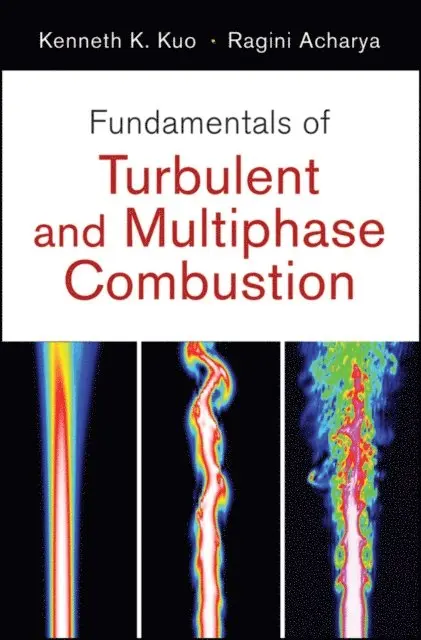
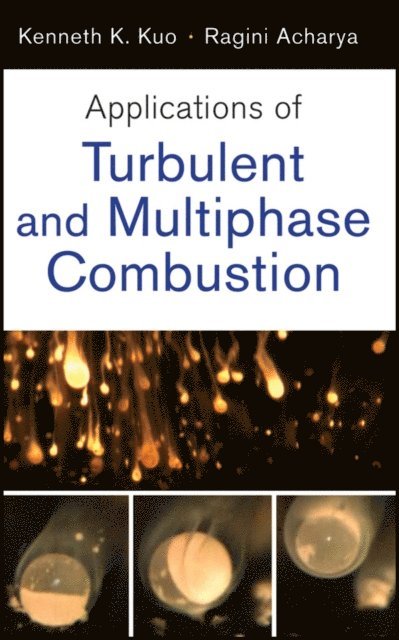
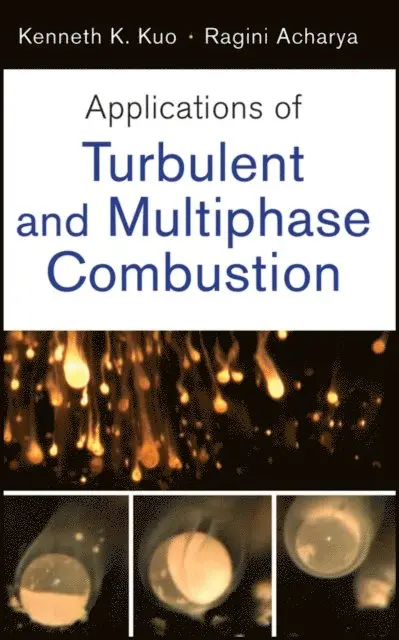
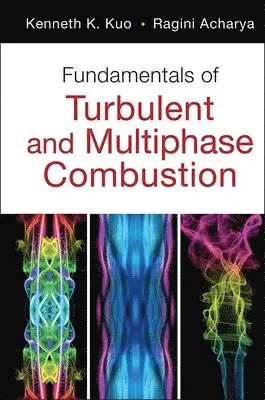
    Applications of Turbulent and Multiphase Combustion

    AvKenneth K. Kuo,Ragini Acharya

    Inbunden, Engelska, 2012

    2 167 kr

    Beställningsvara. Skickas inom 5-8 vardagar. Fri frakt över 249 kr.

    Beskrivning

    A hands-on, integrated approach to solving combustion problems in diverse areasAn understanding of turbulence, combustion, and multiphase reacting flows is essential for engineers and scientists in many industries, including power generation, jet and rocket propulsion, pollution control, fire prevention and safety, and material processing. This book offers a highly practical discussion of burning behavior and chemical processes occurring in diverse materials, arming readers with the tools they need to solve the most complex combustion problems facing the scientific community today. The second of a two-volume work, Applications of Turbulent and Multiphase Combustion expands on topics involving laminar flames from Professor Kuo's bestselling book Principles of Combustion, Second Edition, then builds upon the theory discussed in the companion volume Fundamentals of Turbulent and Multiphase Combustion to address in detail cutting-edge experimental techniques and applications not covered anywhere else.Special features of this book include: Coverage of advanced applications such as solid propellants, burning behavior, and chemical boundary layer flowsA multiphase systems approach discussing basic concepts before moving to higher-level applicationsA large number of practical examples gleaned from the authors' experience along with problems and a solutions manualEngineers and researchers in chemical and mechanical engineering and materials science will find Applications of Turbulent and Multiphase Combustion an indispensable guide for upgrading their skills and keeping up with this rapidly evolving area. It is also an excellent resource for students and professionals in mechanical, chemical, and aerospace engineering.

    Produktinformation

    • Utgivningsdatum:2012-05-15
    • Mått:163 x 243 x 38 mm
    • Vikt:948 g
    • Format:Inbunden
    • Språk:Engelska
    • Antal sidor:608
    • Förlag:John Wiley & Sons Inc
    • ISBN:9781118127568

    Utforska kategorier

    • Maskinteknik och material inom Naturvetenskap och teknik
    • Tillverkningsteknik inom Naturvetenskap och teknik

    Mer om författaren

    Kenneth K. Kuo is Distinguished Professor of Mechanical Engineering and Director of the High Pressure Combustion Laboratory (HPCL) in the Department of Mechanical and Nuclear Engineering of the College of Engineering at The Pennsylvania State University. Professor Kuo established the HPCL and is recognized as one of the leading researchers and experts in propulsion-related combustion.Ragini Acharya is Senior Research Scientist at United Technologies Research Center. She received her PhD from The Pennsylvania State University in 2008. Dr. Acharya's research expertise includes development of multiphysics, multiscale, multiphase models, fire dynamics, numerical methods, and scientific computing. She has authored or coauthored multiple technical articles in these areas.

    Innehållsförteckning

    • Preface xvii1 Solid Propellants and Their Combustion Characteristics 11.1 Background of Solid Propellant Combustion 41.1.1 Definition of Solid Propellants 41.1.2 Desirable Characteristics of Solid Propellants 41.1.3 Calculation of Oxygen Balance 51.1.4 Homogeneous Propellants 61.1.4.1 Decomposition Characteristics of NC 61.1.5 Heterogeneous Propellants (or Composite Propellants) 71.1.6 Major Types of Ingredients in Solid Propellants 81.1.6.1 Description of Oxidizer Ingredients 101.1.6.2 Description of Fuel Binders 121.1.6.3 Curing and Cross-Linking Agents 141.1.6.4 Aging 151.1.7 Applications of Solid Propellants 161.1.7.1 Hazard Classifications of Solid Propellants 161.1.8 Material Characterization of Propellants 161.1.8.1 Propellant Density Calculation 161.1.8.2 Propellant Mass Fraction � 171.1.8.3 Viscoelastic Behavior of Solid Propellants 171.1.9 Thermal Profile in a Burning Solid Propellant 181.1.9.1 Surface and Subsurface Temperature Measurements of Solid Propellants 181.1.9.2 Interfacial Energy Flux Balance at the Solid Propellant Surface 201.1.9.3 Energy Equation for the Gas Phase 211.1.9.4 Burning Rate of Solid Propellants 231.1.9.5 Temperature Sensitivity of Burning Rate 251.1.9.6 Measurement of Propellant Burning Rate by Using a Strand Burner 261.1.9.7 Measurement of Propellant Burning Rate by Using a Small-Scale Motor 371.1.9.8 Burning Rate Temperature Sensitivity of Neat Ingredients 411.2 Solid-Propellant Rocket and Gun Performance Parameters 431.2.1 Performance Parameters of a Solid Rocket Motor 441.2.1.1 Thrust of a Solid Rocket Motor 441.2.1.2 Specific Impulse of a Solid Rocket Motor 481.2.1.3 Density-Specific Impulse 561.2.1.4 Effective Vacuum Exhaust Velocity 581.2.1.5 Characteristic Velocity C ∗  581.2.1.6 Pressure Sensitivity of Burning Rate 591.2.1.7 Thrust Coefficient Efficiency 601.2.1.8 Effect of Pressure Exponent on Stable/Unstable Burning in Solid Rocket Motor 601.2.2 Performance Parameters of Solid-Propellant Gun Systems 611.2.2.1 Energy Balance Equation 641.2.2.2 Efficiencies of Gun Propulsion Systems 671.2.2.3 Heat of Explosion (�Hex o) 691.2.2.4 Relative Quickness, Relative Force, and Deviations in Muzzle Velocity 701.2.2.5 Dynamic Vivacity 712 Thermal Decomposition and Combustion of Nitramines 722.1 Thermophysical Properties of Selected Nitramines 762.2 Polymorphic Forms of Nitramines 782.2.1 Polymorphic Forms of HMX 802.2.2 Polymorphic Forms of RDX 822.3 Thermal Decomposition of RDX 882.3.1 Explanation of Opposite Trends on α- and β-RDX Decomposition with Increasing Pressure 902.3.2 Thermal Decomposition Mechanisms of RDX 922.3.2.1 Homolytic N–N Bond Cleavage 922.3.2.2 Concerted Ring Opening Mechanism of Rdx 942.3.2.3 Successive HONO Elimination Mechanism of RDX 962.3.2.4 Analysis of Three Decomposition Mechanisms 1042.3.3 Formation of Foam Layer Near RDX Burning Surface 1062.4 Gas-Phase Reactions of RDX 1092.4.1 Development of Gas-Phase Reaction Mechanism for RDX Combustion 1112.5 Modeling of RDX Monopropellant Combustion with Surface Reactions 1252.5.1 Processes in Foam-Layer Region 1262.5.2 Reactions Considered in the Foam Layer 1282.5.3 Evaporation and Condensation Consideration for Rdx 1282.5.4 Boundary Conditions 1302.5.5 Numerical Methods Used for RDX Combustion Model with Foam Layer 1312.5.6 Predicted Flame Structure 1323 Burning Behavior of Homogeneous Solid Propellants 1433.1 Common Ingredients in Homogeneous Propellants 1473.2 Combustion Wave Structure of a Double-Base Propellant 1483.3 Burning Rate Behavior of a Double-Base Propellant 1493.4 Burning Rate Behavior of Catalyzed Nitrate-Ester Propellants 1553.5 Thermal Wave Structure and Pyrolysis Law of Homogeneous Propellants 1583.5.1 Dark Zone Residence Time Correlation 1663.6 Modeling and Prediction of Homogeneous Propellant Combustion Behavior 1673.6.1 Multi-Ingredient Model of Miller and Anderson 1713.6.1.1 NC: A Special Case Ingredient 1723.6.1.2 Comparison of Calculated Propellant Burning Rates with the Experimental Data 1753.7 Transient Burning Characterization of Homogeneous Solid Propellant 1873.7.1 What is Dynamic Burning? 1883.7.2 Theoretical Models for Dynamic Burning 1903.7.2.1 dp/dt Approach 1933.7.2.2 Flame Description Approach 1943.7.2.3 Zel’dovich Approach 1943.7.2.4 Characterization of Dynamic Burning of JA2 Propellant Using the Zel’dovich Approach 1963.7.2.5 Experimental Measurement of Dynamic Burning Rate of JA2 Propellant 2013.7.2.6 Novozhilov Stability Parameters 2023.7.2.7 Novozhilov Stability Parameters for JA 2 Propellant 2033.7.2.8 Some Problems Associated with Dynamic Burning Characterization 2053.7.2.9 Factors Influencing Dynamic Burning 207Chapter Problems 2084 Chemically Reacting Boundary-Layer Flows 2094.1 Introduction 2104.1.1 Applications of Reacting Boundary-Layer Flows 2114.1.2 High-Temperature Experimental Facilities Used in Investigation 2114.1.3 Theoretical Approaches and Boundary-Layer Flow Classifications 2124.1.4 Historical Survey 2124.2 Governing Equations for Two-Dimensional Reacting Boundary-Layer Flows 2164.3 Boundary Conditions 2214.4 Chemical Kinetics 2244.4.1 Homogeneous Chemical Reactions 2244.4.2 Heterogeneous Chemical Reactions 2264.5 Laminar Boundary-Layer Flows with Surface Reactions 2294.5.1 Governing Equations and Boundary Conditions 2294.5.2 Transformation to (ξ,η) Coordinates 2294.5.3 Conditions for Decoupling of Governing Equations and Self-Similar Solutions 2324.5.4 Damköhler Number for Surface Reactions 2334.5.5 Surface Combustion of Graphite Near the Stagnation Region 2344.6 Laminar Boundary-Layer Flows With Gas-Phase Reactions 2394.6.1 Governing Equations and Coordinate Transformation 2394.6.2 Damköhler Number for Gas-Phase Reactions 2404.6.3 Extension to Axisymmetric Cases 2424.7 Turbulent Boundary-Layer Flows with Chemical Reactions 2434.7.1 Introduction 2434.7.2 Boundary-Layer Integral Matrix Procedure of Evans 2434.7.2.1 General Conservation Equations 2434.7.2.2 Molecular Transport Properties 2474.7.2.3 Turbulent Transport Properties 2514.7.2.4 Equation of State 2564.7.2.5 Integral Matrix Solution Procedure 2564.7.2.6 Limitations of the BLIMP Analysis 2574.7.3 Marching-Integration Procedure of Patankar and Spalding 2574.7.3.1 Description of the Physical Model 2584.7.3.2 Conservation Equations for the Viscous Region 2584.7.3.3 Modeling of the Gas-Phase Chemical Reactions 2594.7.3.4 Governing Equations for the Inviscid Region 2604.7.3.5 Boundary Conditions 2614.7.3.6 Near-Wall Treatment of ˜k and ˜ε 2624.7.3.7 Coordinate Transformation and Solution Procedure of Patankar and Spalding 2634.7.3.8 Comparison of Theoretical Results with Experimental Data 2664.7.4 Metal Erosion by Hot Reactive Gases 2724.7.5 Thermochemical Erosion of Graphite Nozzles of Solid Rocket Motors 2814.7.5.1 Graphite Nozzle Erosion Minimization Model and Code 2834.7.5.2 Governing Equations 2864.7.5.3 Heterogeneous Reaction Kinetics 2904.7.5.4 Results from the GNEM Code 2934.7.5.5 Nozzle Erosion Rate by Other Metallized Propellant Products 3124.7.6 Turbulent Wall Fires 3164.7.6.1 Development of the Ahmad-Faeth Correlation 3215 Ignition and Combustion of Single Energetic Solid Particles 3305.1 Why Energetic Particles Are Attractive for Combustion Enhancement in Propulsion 3355.2 Metal Combustion Classification 3365.3 Metal Particle Combustion Regimes 3415.4 Ignition of Boron Particles 3445.5 Experimental Studies 3515.5.1 Gasification of Boron Oxides 3525.5.2 Chemical Kinetics Measurement 3535.5.3 Boron Ignition Combustion in a Controlled Hot Gas Environment 3545.6 Theoretical Studies of Boron Ignition and Combustion 3625.6.1 First-Stage Combustion Models 3625.6.2 Second-Stage Combustion Models 3655.6.3 Chemical Kinetic Mechanisms 3655.6.4 Methods for Enhancement of Boron Ignition 3675.6.5 Verification of Diffusion Mechanism of Boron Particle Combustion 3695.6.6 Chemical Identification of the Boron Oxide Layer 3715.7 Theoretical Model Development of Boron Particle Combustion 3725.7.1 First-Stage Combustion Model 3725.7.2 Second-Stage Combustion Model 3775.7.3 Comparison of Predicted and Measured Combustion Times 3815.8 Ignition and Combustion of Boron Particles in Fluorine-Containing Environments 3845.8.1 Multidiffusion Flat-Flame Burner 3855.8.2 Test Conditions 3875.8.3 Experimental Results and Discussions 3885.8.4 Surface Reaction of (BO) n with HF (g)  3935.8.5 Surface Reaction of (BO) n with F (g)  3945.8.6 Governing Equations During the First-Stage Combustion of Boron Particles 3955.8.7 Model for the “Clean” Boron Consumption Process (Second-Stage Combustion) 3965.8.7.1 Chemical Kinetics During Second-Stage Combustion 3975.8.7.2 Consideration of Both Kinetics- and Diffusion-Controlled Second-Stage Combustion 4025.8.7.3 Governing Equations During the Second-Stage Combustion of Boron Particles 4035.8.8 Numerical Solution 4035.8.8.1 Comparison with Experimental Data in Oxygen-Containing (Nonfluorine) Environments 4045.8.8.2 Comparison with Experimental Data and Model Predictions in Fluorine-Containing Environments 4055.9 Combustion of a Single Aluminum Particle 4105.9.1 Background 4135.9.2 Physical Model 4145.9.3 Aluminum-Combustion Mechanism 4175.9.4 Condensation Aspect of Model of Beckstead et al. (2005) 4195.9.5 General Mathematical Model 4225.9.6 Boundary Conditions 4245.9.7 D n Law in Aluminum Combustion 4295.10 Ignition of Aluminum Particle in a Controlled Postflame Zone 4375.11 Physical Concepts of Aluminum Agglomerate Formation 4395.11.1 Evolution Process of Condensed-Phase Combustion Products 4405.12 Combustion Behavior for Fine and Ultrafine Aluminum Particles 4435.12.1 10 μm Aluminum Particle—Early Transitional Structure 4445.12.2 100 nm Aluminum Particle—Late Transitional Structure 4465.13 Potential Use of Energetic Nanosize Powders for Combustion and Rocket Propulsion 447Chapter Problems 452Project No. 1 452Project No. 2 4546 Combustion of Solid Particles in Multiphase Flows 4566.1 Void Fraction and Specific Particle Surface Area 4626.2 Mathematical Formulation 4636.2.1 Formulation of the Heat Equation for a Single Particle 4696.3 Method of Characteristics Formulation 4726.3.1 Linearization of the Characteristic Equations 4766.4 Ignition Cartridge Results 4776.5 Governing Equations for the Mortar Tube 4846.5.1 Initial Conditions 4886.5.1.1 Initial Condition for Velocity 4886.5.1.2 Initial Condition for Porosity 4886.5.1.3 Initial Condition for Temperature and Pressure 4886.5.2 Boundary Conditions 4886.5.2.1 On the Surface of Ignition Cartridge in Vent-Hole Region 4896.5.2.2 In the Fin Region 4896.5.2.3 The z-direction Boundary Conditions 4896.5.3 Numerical Methods for Mortar Region Model 4906.6 Predictions of Mortar Performance and Model Validation 4916.7 Approximate Riemann Solver: Roe-Pike Method 4966.8 Roe’s Method 4996.9 Roe-Pike Method 5016.10 Entropy Condition and Entropy Fix 5026.11 Flux Limiter 5036.12 Higher Order Correction 5046.13 Three-Dimensional Wave Propagation 504Appendix A: Useful Vector and Tensor Operations 507Appendix B: Constants and Conversion Factors Often Used in Combustion 534Appendix C: Naming of Hydrocarbons 538Appendix D: Particle Size–U.S. Sieve Size and Tyler Screen Mesh Equivalents 541Bibliography 544Index 571