• Fri frakt över 249 kr
  • •
  • Snabba leveranser
  • •
  • Billiga böcker
Kundservice

Du är på sajten för privatpersoner.

Företag, bibliotek eller offentlig verksamhet?

Du handlar på classic.bokus.com, där alla dina funktioner finns intakta.
Till classic.bokus.com
Bokus logotyp. Gå till startsidan.
  • Erbjudanden
  • Nyheter
  • Student
  • Topplistor
  • Barn & ungdom
  • Bokus Play
  • E-böcker
  • Pocketböcker
  • Spel & pussel

10% studentrabatt med kod TERM26

Sidfot

Mina sidor

    Hjälp

    • Kundservice
    • Vanliga frågor och svar
    • Frakt och leverans
    • Retur vid ångerrätt
    • Reklamera vara
    • Betalning
    • Köpvillkor
    • Allmänna villkor
    • Information om webbplatsens tillgänglighet

    Om Bokus

    • Om oss
    • Pressrum
    • För studenter
    • För företag
    • För bibliotek och offentlig verksamhet
    • För leverantörer
    • Hållbarhet

    Populärt

    • Aktuella erbjudanden
    • Presentkort
    • Studentlitteratur
    • Nya böcker
    • Topplistor
    • Signerade böcker
    • Engelska böcker

    Inspiration

    • Boktips
    • BookTok
    • Populära bokserier
    • Barnbokskaraktärer
    • Populära författare

    Mina sidor

      Hjälp

      • Kundservice
      • Vanliga frågor och svar
      • Frakt och leverans
      • Retur vid ångerrätt
      • Reklamera vara
      • Betalning
      • Köpvillkor
      • Allmänna villkor
      • Information om webbplatsens tillgänglighet

      Om Bokus

      • Om oss
      • Pressrum
      • För studenter
      • För företag
      • För bibliotek och offentlig verksamhet
      • För leverantörer
      • Hållbarhet

      Populärt

      • Aktuella erbjudanden
      • Presentkort
      • Studentlitteratur
      • Nya böcker
      • Topplistor
      • Signerade böcker
      • Engelska böcker

      Inspiration

      • Boktips
      • BookTok
      • Populära bokserier
      • Barnbokskaraktärer
      • Populära författare
      Logotyp för Bokus
      Följ oss på Facebook (extern länk)Följ oss på Instagram (extern länk)Följ oss på YouTube (extern länk)Följ oss på TikTok (extern länk)
      bokus @ CookiesAnpassa cookiesIntegritetspolicyKöpvillkor
      Till Citymail hemsida (extern länk)Till Budbee hemsida (extern länk)Till Postnord hemsida (extern länk)Till Schenker hemsida (extern länk)Till Early Bird hemsida (extern länk)Till Walleys hemsida (extern länk)
      1. Naturvetenskap och teknik
      2. Teknik och industri
      3. Maskinteknik och material

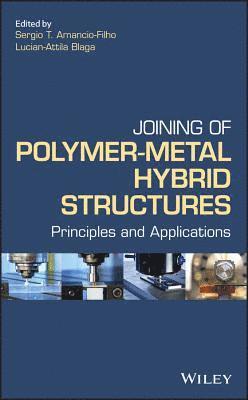
      Joining of Polymer-Metal Hybrid Structures

      Principles and Applications

      AvSergio T. Amancio Filho,Lucian-Attila Blaga

      Inbunden, Engelska, 2018

      2 105 kr

      Beställningsvara. Skickas inom 11-20 vardagar. Fri frakt över 249 kr.

      Beskrivning

      A comprehensive introduction to the concepts of joining technologies for hybrid structuresThis book introduces the concepts of joining technology for polymer-metal hybrid structures by addressing current and new joining methods. This is achieved by using a balanced approach focusing on the scientific features (structural, physical, chemical, and metallurgical/polymer science phenomena) and engineering properties (mechanical performance, design, applications, etc.) of the currently available and new joining processes. It covers such topics as mechanical fastening, adhesive bonding, advanced joining methods, and statistical analysis in joining technology.Joining of Polymer-Metal Hybrid Structures: Principles and Applications is structured by joining principles, in adhesion-based, mechanical fastened, and direct-assembly methods. The book discusses such recent technologies as friction riveting, friction spot joining and ultrasonic joining. This is used for applications where the original base material characteristics must remain unchanged. Additional sections cover the main principles of statistical analysis in joining technology (illustrated with examples from the field of polymer-metal joining). Joining methods discussed include mechanical fastening (bolting, screwing, riveting, hinges, and fits of polymers and composites), adhesive bonding, and other advanced joining methods (friction staking, laser welding, induction welding, etc.). Provides a combined engineering and scientific approach used to describe principles, properties, and applications of polymer-metal hybrid joints Describes the current developments in design of experiments and statistical analysis in joining technology with emphasis on joining of polymer-metal hybrid structures Covers recent innovations in joining technology of polymer-metal hybrid joints including friction riveting, friction spot joining, friction staking, and ultrasonic joining Principles illustrated by pictures, 3D-schemes, charts, and drawings using examples from the field of polymer-metal joining Joining of Polymer-Metal Hybrid Structures: Principles and Applications will appeal to chemical, polymer, materials, metallurgical, composites, mechanical, process, product, and welding engineers, scientists and students, technicians, and joining process professionals.

      Produktinformation

      • Utgivningsdatum:2018-03-13
      • Mått:150 x 229 x 31 mm
      • Vikt:794 g
      • Format:Inbunden
      • Språk:Engelska
      • Antal sidor:416
      • Förlag:John Wiley & Sons Inc
      • ISBN:9781118177631

      Utforska kategorier

      • Maskinteknik och material inom Naturvetenskap och teknik

      Mer om författaren

      SERGIO T. AMANCIO-FILHO was the group leader of the Advanced Polymer-Metal Hybrid Structures Group at the Helmholtz-Zentrum Geesthacht, Germany from 2010 to 2017. He is currently Full Professor at Graz University of Technology, Austria. LUCIAN-ATTILA BLAGA is a senior researcher in the Advanced Polymer-Metal Hybrid Structures Group at the Helmholtz-Zentrum Geesthacht, Germany.

      Innehållsförteckning

      • List of Contributors xiiiPreface xviiPart I Joining Processes Based on Adhesion Forces 11 Principles of Adhesive Bonding 3Mariana D. Banea, Lucas F. M. da Silva, and Raul D. S. G. Campilho1.1 Introduction 31.2 General Basics 41.3 Advantages and Disadvantages of Adhesive Bonding 51.4 Effect of Surface Preparation and the Environmental Factors 71.5 Adhesive Properties 101.6 Joint Manufacture 121.6.1 Preparation of the Adherends 131.6.2 Adhesive Application 141.6.3 Joint Assembly 141.6.4 Curing 161.7 Joint Design 161.7.1 Failure Mode 171.7.2 Analysis of Adhesively Bonded Joints 181.7.2.1 Analytical Methods 181.7.2.2 Finite Element Method 191.8 Recent Developments 221.9 Conclusions 23References 242 Adhesive Bonding of Polymer Composites to Lightweight Metals 29Raul D. S. G. Campilho, Lucas F.M. da Silva, and Mariana D. Banea2.1 Introduction 292.2 Characteristics and Applications of Hybrid Bonding 312.3 Experimental Evaluation of Hybrid Structures 352.3.1 Preparation of the Adherends 352.3.2 Application of the Adhesive 362.3.3 Testing of the Specimens 372.3.4 Experimental Works 382.4 Predictive Techniques for Hybrid Structures 412.4.1 Analytical 432.4.2 Numerical 452.4.2.1 Continuum Modeling 452.4.2.2 Damage Mechanics 462.5 Conclusions 54List of Abbreviations 55References 563 Friction Spot Joining (FSpJ) 61Seyed M. Goushegir and Sergio T. Amancio-Filho3.1 Introduction 613.2 Principles of the FSpJ 633.2.1 FSpJ Tool 633.2.2 FSpJ Equipment 633.2.3 FSpJ Process 643.2.4 Bonding Mechanisms 693.2.5 Process Parameters 713.3 Heat Generation During FSpJ Process 743.4 Microstructural Zones in FSpJ 753.5 Mechanical Properties of FSp Joints 773.5.1 Local Mechanical Properties 773.5.1.1 Metal (AA2024) 773.5.1.2 Composite (Short Glass-Fiber-Reinforced PPS) 793.5.2 Quasistatic Global Mechanical Properties 803.5.2.1 Influence of Surface Pretreatment 803.5.2.2 Influence of Joint Geometry 813.5.3 Cyclic Global Mechanical Properties 863.6 Comparison Between the Quasistatic Mechanical Performance of FSp and State-of-the-Art Adhesively Bonded Joints 873.7 Defects in FSpJ 883.8 Advantages, Limitations, and Potential Applications 913.9 Final Remarks 94References 944 Induction Welding of Metal/Composite Hybrid Structures 101Mirja Didi and Peter Mitschang4.1 Introduction 1014.2 Description of the Principles of the Joining Technique 1024.2.1 Process Overview 1024.2.2 Heating Process 1034.2.2.1 Geometry of the Inductor and the Magnetic Field 1054.2.2.2 Skin Effect 1064.2.3 Theory of Adhesion and Influence of the Surface 1094.2.4 Thermal Degradation 1134.2.5 Deconsolidation and Consolidation 1154.2.5.1 Deconsolidation 1154.2.5.2 Consolidation 1164.2.6 Cooling 1164.2.7 Internal Stresses in the Weld Zone 1164.2.8 Process Variants 1174.2.8.1 Three-Phase Discontinuous Welding Process 1174.2.8.2 Spot Welding 1194.3 Mechanical Performance of Induction Welds in Comparison to Adhesive Bonding 1214.4 Advantages and Limitations 1234.5 Applications 1234.6 Available Equipment and Tools 1244.7 Further Reading and Additional Literature 124References 1245 Direct Joining of Metal and Plastic with Laser 127Seiji Katayama and Yousuke Kawahito5.1 Introduction 1275.2 Direct Joining Procedures of Metal and Plastic with Laser (LAMP Joining Procedure) 1285.3 Features and Mechanical Properties of Metal–Plastic Laser Joints (LAMP Joints) 1315.4 Mechanisms of LAMP (Laser-Assisted Metal and Plastic) Direct Joining 1355.5 Reliability Evaluation Tests 1405.6 Evolution of LAMP Joining 1415.7 Conclusions 143References 143Part II Joining Processes Based on Mechanical Interlocking 1456 Principles of Mechanical Fastening in Structural Applications 147Carlos E. Chaves, Diego J. Inforzato, and Fernando F. Fernandez6.1 Introduction 1476.2 General Joint Structural Design 1486.3 Shear Joints 1496.3.1 Failure Modes 1496.3.2 Models for Joint Analysis and Dimensioning 1546.3.3 Secondary Bending 1566.3.4 Multiple-Site Damage in Riveted Joints 1576.3.5 Influence of the Squeezing Force in Riveted Joints 1586.3.6 Welded and Bonded Shear Joints 1596.4 Tension Joints 1606.4.1 Prying Effect 1636.4.2 Fatigue Behavior of Tension Joints 1636.4.3 Methods for Estimation of Contact Area and Member’s Stiffness in Tension Joints 1646.5 Tolerances in Joint Design 1656.6 Materials 1666.6.1 Material Properties 1676.6.2 Corrosion and Protection 1716.6.3 Material Selection 1746.7 Fasteners 1776.7.1 Design Criteria 1826.8 Summary and Final Remarks 183References 1837 Mechanical Fastening of Composite and Composite–Metal Structures 187Pedro P. Camanho and Giuseppe Catalanotti7.1 Introduction 1877.2 Semianalytical Method for the Design of Composite Joints 1897.2.1 Prediction of Net-Tension Failure 1897.3 Numerical Method for the Design of Composite Joints 1937.4 Conclusions 199Acknowledgments 200References 2008 Friction Riveting of Polymer–Metal Multimaterial Structures 203Sergio T. Amancio-Filho and Lucian-Attila Blaga8.1 Introduction 2038.2 FricRiveting: Principles of the Technique 2058.2.1 Joining Equipment and Procedure 2068.3 FricRiveting: Process Parameters and Variables 2068.3.1 Process Parameters 2078.3.2 Process Variables 2088.4 FricRiveting: Process Phases and Heat Generation 2098.5 Thermal History 2118.6 Microstructure 2148.6.1 MTMAZ 1 2208.6.2 MTMAZ 2 2228.7 Physical–Chemical Changes in the Polymeric Material 2258.8 Mechanical Performance 2288.8.1 Joint Local Mechanical Properties 2288.8.2 Joint Global Mechanical Performance 2318.8.2.1 Tensile Strength 2318.8.2.2 Lap Shear Strength 2358.9 Envisaged Applications 2418.10 Conclusions 241Acknowledgments 242References 243List of Awards and Prizes Received by Works on FricRiveting 2479 Staking of Polymer–Metal Hybrid Structures 249André B. Abibe and Sergio T. Amancio-Filho9.1 Introduction 2499.2 Types of Staking Processes 2519.2.1 Cold Staking 2519.2.2 Hot Staking 2529.2.2.1 Thermal Staking 2539.2.2.2 Hot Air Cold Staking (HACS) 2539.2.2.3 Infrared and Laser Staking 2539.2.2.4 Ultrasonic Staking 2549.2.3 Advanced Staking Processes 2549.2.3.1 Injection Clinching Joining (ICJ) 2559.2.3.2 Friction Staking (FricStaking) 2569.2.3.3 Ultrasonic Upsetting 2569.2.3.4 Thermoclinching 2579.3 Characteristics of Staked Joints 2579.3.1 Joint Formation 2579.3.2 Microstructure 2599.3.3 Defects 2619.3.4 Characterization of Local Properties 2629.3.4.1 Local Mechanical Properties 2629.3.4.2 Physicochemical and Structural Properties 2639.4 Design Considerations for Staked Joints 2649.4.1 Through-Hole Design 2659.4.2 Stud Design 2669.4.3 Stake Head/Forming Tool Design 2679.5 Mechanical Behavior of Staked Joints 2699.6 Final Remarks 270List of Abbreviations 271References 271Part III Joining Processes Based on Direct-Assembly Methods 27510 Injection Overmolding of Polymer–Metal Hybrid Structures 277Mica Grujicic10.1 Basics of Polymer–Metal Hybrid Technology 27710.2 Classification of PMH Technologies 28010.2.1 Injection Overmolding PMH Technology 28010.2.2 Metal Overmolding PMH Technology 28110.2.3 Adhesively Bonded Polymer–Metal Hybrid Structures 28210.2.4 Direct-Adhesion Polymer–Metal Hybrid Technology 28210.3 Mechanisms for Polymer/Metal Joining 28510.3.1 Injection Overmolded PMH Structures 28510.3.2 Metal Overmolded PMH Structures 28510.3.3 Adhesively Bonded PMH Structures 28510.3.4 Direct-Adhesion PMH Structures 28610.4 Computational Engineering Analyses of PMH Technologies 28610.4.1 PMH Component Design and Optimization 28710.4.2 Modeling and Simulations of the Injection-Molding Process 28810.4.2.1 Optimal Placement and Number of Injection Points 28910.4.2.2 Mold-Filling Analysis 28910.4.2.3 Flow-Induced Fiber-Orientation Distribution Analysis 29110.4.2.4 Mold-Packing Analysis 29210.4.2.5 In-Mold Stress Analysis 29210.4.2.6 Micromechanics-Based Derivation of the Effective Material Properties 29410.4.3 Ejected-Component Shrinkage and Warping Analysis 29410.4.4 PMH Component Structural Analysis 29510.5 Compatibility with Automotive BIW Manufacturing Process Chain 29810.6 Concluding Remarks 300References 30011 Ultrasonic Joining of Lightweight Alloy/Fiber-Reinforced Polymer Hybrid Structures 307Eduardo E. Feistauer and Sergio T. Amancio-Filho11.1 Introduction 30711.2 MIMStruct Manufacturing Route 30911.3 U-Joining: Principles of the Process 31011.3.1 Process Parameters 31211.3.2 Process Phases 31311.3.3 Process Variants 31511.3.4 Potential Applications 31511.4 Case Study on Ti-6Al-4V/GF-PEI Joints 31511.4.1 Materials 31711.4.1.1 MIMStruct Part 31711.4.1.2 Composite Part 31811.4.1.3 Joining Procedure 31811.4.2 Process Temperature 31911.4.3 Microstructure of the U-Joining Joints 32011.4.4 Local Mechanical Properties of MIMStruct Part 32211.4.5 Global Mechanical Properties of the U-Joining Joints 32311.4.6 Fracture Surface Analysis 32611.4.7 Conclusions 32911.5 Advantages and Limitations 329Acknowledgments 330References 330Part IV Design of Experiments and Statistical Analysis in Joining Process Development 33512 Factorial Design of Experiments for Polymer–Metal Joining 337Lucian-Attila Blaga, Gonçalo P. Cipriano, Arnaldo R. Gonzalez, and Sergio T. Amancio-Filho12.1 Introduction 33712.2 Design of Experiments 33712.2.1 Factorial Design of Experiments 33912.2.1.1 General Description 34012.2.1.2 Analysis of Variance 34012.2.1.3 Interpretation of Results and Design Validation 34112.2.2 Examples of Factorial Design of Experiments in Joining Process Development for Metal–Polymer Hybrid Structures 34212.2.2.1 Case Study 1 – Full-Factorial Design in Friction Riveting 34312.2.2.2 Case Study 2 – Factorial Design of Experiments in Single-Lap Friction Spot Joints 35112.3 Final Remarks 361References 36213 Taguchi Design and Response Surface Methodology for Polymer–Metal Joining 365Lucian-Attila Blaga, Gonçalo P. Cipriano, Arnaldo R. Gonzalez, and Sergio T. Amancio-Filho13.1 Introduction 36513.2 The Taguchi Design of Experiments 36513.2.1 General Description 36513.2.2 Analysis of Variance 36813.3 Example of Taguchi Design of Experiments in Joining of Metal to Composite Structures 36813.3.1 Case Study 1 – Taguchi L9 (34) DoE in Double-Lap Friction Spot Joints 36813.3.1.1 Process Optimization 36913.3.1.2 Influence of the FSpJ Process Parameters on Joint Mechanical Performance by Taguchi Design of Experiments 37013.3.1.3 Conclusions of the Case Study 37613.4 Response Surface Methodology 37613.4.1 Introduction 37613.4.2 The Central Composite Design 37913.4.2.1 General Description 37913.4.3 The Box–Behnken Design 38013.4.3.1 General Description 38113.4.4 Case Study 2 – Central Composite Design in Friction Riveting 38113.4.4.1 Conclusions of the Case Study 38613.5 Other Surface Designs 38613.6 Final Remarks 387References 387Index 389
      Hoppa över listan

      Du kanske också är intresserad av

      Lucian-Attila Blaga, Sergio T. Amancio Filho - Joining of Polymer-Metal Hybrid Structures, E-bok

      Joining of Polymer-Metal Hybrid Structures

      Lucian-Attila Blaga, Sergio T. Amancio Filho

      E-bok
      2017

      2 389 kr

      Lucian-Attila Blaga, Sergio T. Amancio Filho - Joining of Polymer-Metal Hybrid Structures, E-bok

      Joining of Polymer-Metal Hybrid Structures

      Lucian-Attila Blaga, Sergio T. Amancio Filho

      E-bok
      2017

      2 404 kr

      Sachin Salunkhe, Sergio T. Amancio-Filho, J. Paulo Davim - Advances in Metal Additive Manufacturing, Häftad

      Advances in Metal Additive Manufacturing

      Sachin Salunkhe, Sergio T. Amancio-Filho, J. Paulo Davim

      Häftad, 2022

      2 119 kr

      J. Paulo Davim, Sergio T. Amancio-Filho, Sachin Salunkhe - Advances in Metal Additive Manufacturing, E-bok

      Advances in Metal Additive Manufacturing

      J. Paulo Davim, Sergio T. Amancio-Filho, Sachin Salunkhe

      E-bok
      2022

      3 018 kr

      Carola Häggkvist - SIGNERAD - Jag är Carola, Inbunden
      • Signerad!

      SIGNERAD - Jag är Carola

      Carola Häggkvist

      Inbunden, 2026

      269 kr

      Måns Petter Zelmerlöw - När allt faller, Inbunden
      • -12%

      När allt faller

      Måns Petter Zelmerlöw

      Inbunden, 2026

      229 kr259 kr

      Klara Peters Bastin - SIGNERAD - Om julens wälgång, Inbunden
      • Signerad!

      SIGNERAD - Om julens wälgång

      Klara Peters Bastin

      Inbunden, 2026

      249 kr

      Roland Paulsen - Avbegåvad : en essäberättelse om arv och miljö, Inbunden
      • -15%

      Avbegåvad : en essäberättelse om arv och miljö

      Roland Paulsen

      Inbunden, 2026

      225 kr265 kr

      Vendela Blomström, Jeanna Wennerberg - Akademiskt läsande och skrivande, Häftad
      • -10% student

      Akademiskt läsande och skrivande

      Vendela Blomström, Jeanna Wennerberg

      Häftad, 2026

      421 kr

      Klara Ingemyr - SIGNERAD - Klaras husman, Kartonnage
      • Signerad!

      SIGNERAD - Klaras husman

      Klara Ingemyr

      Kartonnage, 2026

      269 kr