• Fri frakt över 249 kr
  • •
  • Snabba leveranser
  • •
  • Billiga böcker
Kundservice

Du är på sajten för privatpersoner.

Företag, bibliotek eller offentlig verksamhet?

Du handlar på classic.bokus.com, där alla dina funktioner finns intakta.
Till classic.bokus.com
Bokus logotyp. Gå till startsidan.
  • Erbjudanden
  • Nyheter
  • Student
  • Topplistor
  • Barn & ungdom
  • Bokus Play
  • E-böcker
  • Pocketböcker
  • Spel & pussel

10% rabatt på allt med kod NYSTART10 →

Sidfot

Mina sidor

    Hjälp

    • Kundservice
    • Vanliga frågor och svar
    • Frakt och leverans
    • Retur vid ångerrätt
    • Reklamera vara
    • Betalning
    • Köpvillkor
    • Allmänna villkor
    • Information om webbplatsens tillgänglighet

    Om Bokus

    • Om oss
    • Pressrum
    • För studenter
    • För företag
    • För bibliotek och offentlig verksamhet
    • För leverantörer
    • Hållbarhet

    Populärt

    • Aktuella erbjudanden
    • Presentkort
    • Studentlitteratur
    • Nya böcker
    • Topplistor
    • Signerade böcker
    • Engelska böcker

    Inspiration

    • Boktips
    • BookTok
    • Populära bokserier
    • Barnbokskaraktärer
    • Populära författare
    Logotyp för Bokus
    Följ oss på Facebook (extern länk)Följ oss på Instagram (extern länk)Följ oss på YouTube (extern länk)Följ oss på TikTok (extern länk)
    bokus @ CookiesAnpassa cookiesIntegritetspolicyKöpvillkor
    Till Citymail hemsida (extern länk)Till Budbee hemsida (extern länk)Till Postnord hemsida (extern länk)Till Schenker hemsida (extern länk)Till Early Bird hemsida (extern länk)Till Walleys hemsida (extern länk)
    1. Psykologi och pedagogik
    2. Pedagogik
    3. Pedagogisk psykologi

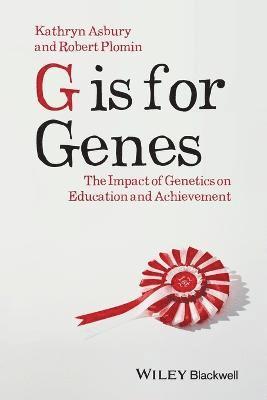
    G is for Genes

    The Impact of Genetics on Education and Achievement

    AvKathryn Asbury,Robert Plomin

    Häftad, Engelska, 2013

    Del 12 i serien Understanding Children's Worlds

    203 kr

    Beställningsvara. Skickas inom 5-8 vardagar. Fri frakt över 249 kr.

    Fler format och utgåvor

    Inbunden

    698 kr

    Beskrivning

    G is for Genes shows how a dialogue between geneticists and educationalists can have beneficial results for the education of all children—and can also benefit schools, teachers, and society at large.   Draws on behavioral genetic research from around the world, including the UK-based Twins’ Early Development Study (TEDS), one of the largest twin studies in the worldOffers a unique viewpoint by bringing together genetics and education, disciplines with a historically difficult relationshipShows that genetic influence is not the same as genetic determinism and that the environment matters at least as much as genesDesigned to spark a public debate about what naturally-occurring individual differences mean for education and equality

    Produktinformation

    • Utgivningsdatum:2013-11-08
    • Mått:155 x 231 x 12 mm
    • Vikt:286 g
    • Format:Häftad
    • Språk:Engelska
    • Serie:Understanding Children's Worlds
    • Antal sidor:224
    • Förlag:John Wiley and Sons Ltd
    • ISBN:9781118482810

    Utforska kategorier

    • Pedagogisk psykologi inom Psykologi och pedagogik
    • Barnpsykologi och utvecklingspsykologi inom Psykologi och pedagogik
    • Etiska frågor och debatter inom Samhälle och politik

    Mer om författaren

    Kathryn Asbury is a Lecturer in the Centre for Psychology in Education at the University of York, UK.  She has published widely on the influence of home and school environments on children’s achievement, behavior, and wellbeing.Robert Plomin is the Professor of Behavioural Genetics at the MRC Social, Genetic and Developmental Psychiatry Centre, King’s College London, UK.  He is the founder and principal investigator of the Twins’ Early Development Study (TEDS), and has published more than 500 papers and a dozen books on behavior genetics.

    Recensioner i media

    "G is for Genes is a controversial book and this is exactly why it certainly makes an interesting reading." (Birth Defects Research Part A: Clinical And Molecular Teratology, 15 December 2014)"This is a most important book for educationists, teachers, psychologists, parents and learners." (South West Review, 1 June 2014"G is for Genes is an easy-to read book for a general audience, providing an extensive overview of findings from behavioral genetic studies related to education and achievement." (Twin Research and Human Genetics, 1 May 2014)"In sum, G Is for Genesis an admirable effort by two authors who are excellent translational scholars. It alights on a number of important educational issues and does so in a reasoned and constructive manner." (PsycCRITIQUES, 7 April 2014)"This book breaks down complex science in an engaging and accessible way so that the wider audience can enjoy reading about genetic research, molecular biology, genome screening and most relevantly the implications for education." (Early Years Educator, 1 February 2014)"This book breaks down complex science in an engaging and accessible way so that the wider audience can enjoy reading about genetic research, moelecular biology, genome screening and, most relevantly, the implications for education." (Early Years Educator, February 2014)

    Innehållsförteckning

    • Acknowledgements xiPart One In Theory 1Chapter 1 Genetics, Schools, and Learning 3The Aims and Assumptions of Education 4Diverse Opportunities to Draw Out Individual Potential 8DNA in the Classroom 10In Summary . . . 11Chapter 2 How We Know What We Know 14Twins: A Natural Experiment 15DNA Sequencing 18Chapter 3 The 3Rs: Reading, wRiting . . . 22From DNA to ABC 24Environmental Influences on Reading Ability 31Struggling Readers 34The Genetics of Writing Ability 38Chapter 4 . . . and ’Rithmetic 42So, Why are Some People Better at Math than Others? 43How does Nurture Affect Mathematical Ability? 52Chapter 5 Physical Education: Who, What, Why, Where, and How? 57Genes, Sports, and Smoking 62Obesity, Genes, and Environment 64The Heritability of Fitness 67Gym Class Heroes 69In Summary . . . 74Chapter 6 Science: A Different Way of Thinking? 78Differences Between the Sexes 85In Summary . . . 87Chapter 7 How do IQ and Motivation Fit In? 89IQ + Genetics = Controversy (and Name-calling) 95Self-Confidence and Motivation 98Improving Confidence and Cognition in the Classroom 100Chapter 8 Special Educational Needs: Ideas and Inspiration 105The Expansion of Special Educational Needs 110Personalized Learning in Action 113In Summary . . . 114Chapter 9 ‘‘Clones’’ in the Classroom 115Positivity and Achievement 122Clones in the Classroom 122Chapter 10 Mind the Gap: Social Status and School Quality 126Low SES: What Does It Look Like? 129What Does the Heritability of SES Mean? 133School Quality 136Chapter 11 Genetics and Learning: The Big Ideas 141Big Idea #1: Achievement and Ability Vary, Partly for Genetic Reasons 141Big Idea #2: The Abnormal is Normal 142Big Idea #3: Continuity is Genetic and Change is Environmental 143Big Idea #4: Genes are Generalists and Environments are Specialists 144Big Idea #5: Environments are Influenced by Genes 144Big Idea #6: The Environments that Matter Most are Unique to Individuals 145Big Idea #7: Equality of Opportunity Requires Diversity of Opportunity 146Part Two In Practice 147Chapter 12 Personalization in Practice 149So, What Can Be Done to Make Teaching and Learning More Personalized? 150A Good ‘‘Mindset’’ for Learning 153Other Ways to Personalize Learning 158In Summary . . . 159Chapter 13 Eleven Policy Ideas 1611. Minimize the Core Curriculum and Test Basic Skills 1612. Increase Choice 1633. Forget About Labels 1654. Teach the Child, As Well As the Class 1665. Teach Children How To Succeed 1686. Promote Equal Opportunities from an Early Age as a Foundation for Social Mobility in the Future 1707. Equalize Extracurricular Opportunities at School 1728. Create a Two Stage PE Program 1729. Change the Destination 17310. Train New Teachers in Genetics and Give Them the Tools to Put it Into Practice 17511. Big is Beautiful 177Chapter 14 Education Secretary for a Day 178Index 189