• Fri frakt över 249 kr
  • •
  • Snabba leveranser
  • •
  • Billiga böcker
Kundservice

Du är på sajten för privatpersoner.

Företag, bibliotek eller offentlig verksamhet?

Du handlar på classic.bokus.com, där alla dina funktioner finns intakta.
Till classic.bokus.com
Bokus logotyp. Gå till startsidan.
  • Erbjudanden
  • Nyheter
  • Student
  • Topplistor
  • Barn & ungdom
  • Bokus Play
  • E-böcker
  • Pocketböcker
  • Spel & pussel

10% rabatt på allt med kod NYSTART10 →

Sidfot

Mina sidor

    Hjälp

    • Kundservice
    • Vanliga frågor och svar
    • Frakt och leverans
    • Retur vid ångerrätt
    • Reklamera vara
    • Betalning
    • Köpvillkor
    • Allmänna villkor
    • Information om webbplatsens tillgänglighet

    Om Bokus

    • Om oss
    • Pressrum
    • För studenter
    • För företag
    • För bibliotek och offentlig verksamhet
    • För leverantörer
    • Hållbarhet

    Populärt

    • Aktuella erbjudanden
    • Presentkort
    • Studentlitteratur
    • Nya böcker
    • Topplistor
    • Signerade böcker
    • Engelska böcker

    Inspiration

    • Boktips
    • BookTok
    • Populära bokserier
    • Barnbokskaraktärer
    • Populära författare
    Logotyp för Bokus
    Följ oss på Facebook (extern länk)Följ oss på Instagram (extern länk)Följ oss på YouTube (extern länk)Följ oss på TikTok (extern länk)
    bokus @ CookiesAnpassa cookiesIntegritetspolicyKöpvillkor
    Till Citymail hemsida (extern länk)Till Budbee hemsida (extern länk)Till Postnord hemsida (extern länk)Till Schenker hemsida (extern länk)Till Early Bird hemsida (extern länk)Till Walleys hemsida (extern länk)
    1. Ekonomi och Ledarskap
    2. Ledarskapsböcker

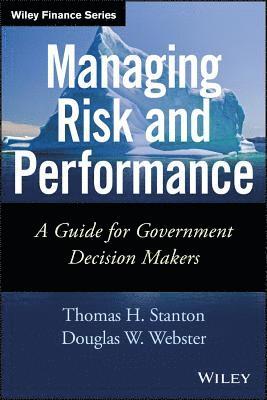
    Managing Risk and Performance

    A Guide for Government Decision Makers

    AvThomas Stanton,Douglas W. Webster

    Inbunden, Engelska, 2014

    Del i serien Wiley Finance

    546 kr

    Beställningsvara. Skickas inom 5-8 vardagar. Fri frakt över 249 kr.

    Beskrivning

    Discover analytical tools and practices to help improve the quality of risk management in government organizations Federal agencies increasingly recognize the importance of active risk management to help ensure that they can carry out their missions. High impact events, once thought to occur only rarely, now occur with surprising frequency. Managing Risk in Government Agencies and Programs provides insight into the increasingly critical role of effective risk management, while offering analytical tools and promising practices that can help improve the quality of risk management in government organizations. Includes chapters that contribute to the knowledge of government executives and managers who want to establish or implement risk management, and especially Enterprise Risk Management (ERM), in their agenciesFeatures chapters written by federal risk managers, public administration practitioners, and scholarsShowing government officials how to improve their organization's risk management capabilities, Managing Risk in Government Agencies and Programs meets a growing demand from federal departments and agencies that find themselves increasingly embarrassed by risky events that raise questions about their ability to carry out their missions.

    Produktinformation

    • Utgivningsdatum:2014-03-25
    • Mått:160 x 236 x 28 mm
    • Vikt:535 g
    • Format:Inbunden
    • Språk:Engelska
    • Serie:Wiley Finance
    • Antal sidor:336
    • Förlag:John Wiley & Sons Inc
    • ISBN:9781118658147

    Utforska kategorier

    • Ledarskapsböcker inom Ekonomi och Ledarskap
    • Organisation och ägarskap inom Ekonomi och Ledarskap
    • Offentliga sektorn inom Ekonomi och Ledarskap

    Mer om författaren

    THOMAS H. STANTON teaches at Johns Hopkins University. He is President-Elect of the Association of Federal Enterprise Risk Management (AFERM) and a Fellow of the National Academy of Public Administration. Mr. Stanton is a former member of the Federal Senior Executive Service. He holds a Bachelor of Arts degree from the University of California–Davis, a Master of Arts from Yale University, and a Juris Doctor from Harvard Law School and has written extensively on governance and risk management in the financial crisis. DOUGLAS W. WEBSTER is the Founder and President of the Cambio Consulting Group, LLC, and co-founder and past President of the Association of Federal Enterprise Risk Management (AFERM). He served as Chief Financial Officer of the U.S. Department of Labor in 2008–2009 and has 20 years of experience consulting to over two dozen federal and state agencies. Dr. Webster received a Bachelor of Science in Engineering from the University of California–Los Angeles, a Master of Science in Systems Management from the University of Southern California, and a Doctorate in Business Administration from United States International University.

    Innehållsförteckning

    • Foreword xvPreface xviiPART OneIntroduction and OverviewCHAPTER 1Managing Risk of Federal Agencies and Their Programs through Enterprise Risk Management 3Thomas H. StantonRisk Management as an Essential Part of Federal Management 3Risk Management as an Integral Part of Good Decision Making 5The Unique Challenges of Managing a Government Agency 6Establishing Effective Risk Management 8Managing Risk in Government Agencies: Overview of the Book 11References 16CHAPTER 2The Need for Effective Risk Management 17Douglas W. WebsterDefining Risk 18The Source of Uncertainty: Change 20Risk and Reward 22The Risk Management Process 23The Essence of Organizational Success: Stakeholder Value 29The Role of Information Technology in Risk Management 31The Importance of Organizational Change Management 31Putting It All Together 32Conclusion 33References 34CHAPTER 3Introduction to Risk Management for Government Managers 35Thomas H. StantonFitting Risk Management into an Organization 36Promising Practices in Risk Management 45Observations about Risk Management in Government: What Works and What Doesn’t 54Conclusion 60References 60CHAPTER 4Risk Management and Challenges of Managing in the Public Sector 63Paul L. Posner,Thomas H. StantonUnique Risk Management Challenges of Public Programs 65Third-Party Governance: The Challenge of Managing Risk across Organizational Boundaries 68Goal Setting, Accountability, and Prioritization of Risks 77Concluding Observations 81References 83CHAPTER 5Creating and Keeping Your Options Open—It’s Fundamental 87Brian BarnierThe Real World Is Rarely Simple and Stable 87Systems Set the Stage 88Managing More Easily—Options in Time 89Examples of Options in Time in Practice 95Conclusion 110Key Points 111References 111PART TwoMoving toward Enterprise Risk ManagementCHAPTER 6Introduction to Enterprise Risk Management for Government Managers 115Douglas W. WebsterShortcomings of Traditional Risk Management 116The Impact of Managing Risk within Silos—a Case Study 119The Maturation of Traditional Risk Management into Enterprise Risk Management 121Key Principles of Enterprise Risk Management 126What Enterprise Risk Management Is Not 129The Payoff 133Summary 134References 136CHAPTER 7Implementation of Enterprise Risk Management at the Office of Federal Student Aid of the U.S. Department of Education 137Fred Anderson, Cynthia Jaspers VittersOverview of FSA 138Initial Implementation of ERM at FSA 140Initial Activities and Challenges in Implementing Enterprise Risk Management at FSA 142Expanding the ERM Program—a Change in FSA’s Business Model 144Key Considerations and Challenges When Implementing the Expanded ERM Program at FSA 148Conclusion 158References 159Acknowledgments 160CHAPTER 8Integrating Enterprise Risk Management with Strategic Planning and Resource Management 161Jeffrey StagnittiContext 161Enterprise Risk Management and Strategy 167Enterprise Risk Management and Resource Management 170Conclusion 172CHAPTER 9 Building Enterprise Risk Management into Agency Processes and Culture 175John FraserBuilding a Shared Understanding of Risks through Conversations 177The Key Enterprise Risk Management Techniques 184Improved Decision Making and Prioritization 188Conclusion 191References 192For Further Reading 192Appendix: Hydro One Inc. Enterprise Risk Management Policy 193PART ThreeSpecial Topics in Risk Management and ResponseCHAPTER 10Risk Management and the Dynamics of Budget Cuts 199Thomas H. StantonThe Dynamics of Protracted Budget Controversy and the Risk and Uncertainty They Create 200Long-Term Budget Cuts and the Risks They Create 203The Role of Risk Management in Reducing Chances of a Major Mishap 207Strengthening Agencies’ Ability to Deal Effectively with Budget Pressures 215Conclusion 217References 217CHAPTER 11Managing Reputational Risk 219Gary L. GlickmanWhat Is Reputational Risk and What Does It Mean to Government? 221What Determines Reputation and How Can Government Address These Factors? 223External Influences on Reputation 229Consequences of Reputational Loss for Government Organizations 231Reputational Risk Mitigation 235Conclusion 239References 240CHAPTER 12Risk Management and Decision Making: Lessons from the Financial Crisis for Federal Managers 243Thomas H. StantonThe Financial Crisis: How It Emerged, What Happened, and the Costs 245Decision Making at Firms That Failed: Common Shortcomings 248Decision Making at Firms That Succeeded: The Importance of Culture 252Lessons in Governance, Risk Management, and Decision Making 258Conclusion 264References 265PART FourConclusionCHAPTER 13Effective Enterprise Risk Management: Mapping the Path Forward 269Douglas WebsterRecommendations 270Conclusion 290References 291For Further Information 292For Further Reading 292About the Editors 293About the Contributors 295Index 299