• Fri frakt över 249 kr
  • •
  • Snabba leveranser
  • •
  • Billiga böcker
Kundservice

Du är på sajten för privatpersoner.

Företag, bibliotek eller offentlig verksamhet?

Du handlar på classic.bokus.com, där alla dina funktioner finns intakta.
Till classic.bokus.com
Bokus logotyp. Gå till startsidan.
  • Erbjudanden
  • Nyheter
  • Student
  • Topplistor
  • Barn & ungdom
  • Bokus Play
  • E-böcker
  • Pocketböcker
  • Spel & pussel

10% rabatt på allt med kod NYSTART10 →

Sidfot

Mina sidor

    Hjälp

    • Kundservice
    • Vanliga frågor och svar
    • Frakt och leverans
    • Retur vid ångerrätt
    • Reklamera vara
    • Betalning
    • Köpvillkor
    • Allmänna villkor
    • Information om webbplatsens tillgänglighet

    Om Bokus

    • Om oss
    • Pressrum
    • För studenter
    • För företag
    • För bibliotek och offentlig verksamhet
    • För leverantörer
    • Hållbarhet

    Populärt

    • Aktuella erbjudanden
    • Presentkort
    • Studentlitteratur
    • Nya böcker
    • Topplistor
    • Signerade böcker
    • Engelska böcker

    Inspiration

    • Boktips
    • BookTok
    • Populära bokserier
    • Barnbokskaraktärer
    • Populära författare
    Logotyp för Bokus
    Följ oss på Facebook (extern länk)Följ oss på Instagram (extern länk)Följ oss på YouTube (extern länk)Följ oss på TikTok (extern länk)
    bokus @ CookiesAnpassa cookiesIntegritetspolicyKöpvillkor
    Till Citymail hemsida (extern länk)Till Budbee hemsida (extern länk)Till Postnord hemsida (extern länk)Till Schenker hemsida (extern länk)Till Early Bird hemsida (extern länk)Till Walleys hemsida (extern länk)
    1. Naturvetenskap och teknik
    2. Matematik och naturvetenskap
    3. Matematik
    4. Matematisk statistik

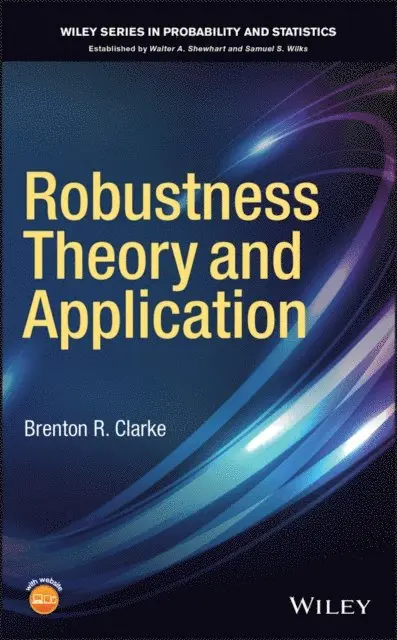
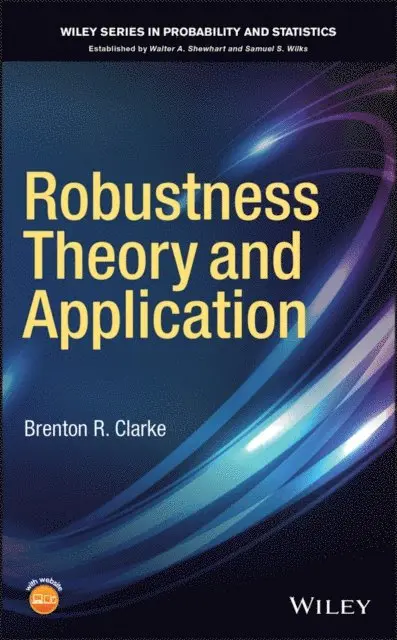
    Robustness Theory and Application

    AvBrenton R. Clarke

    Inbunden, Engelska, 2018

    Del i serien Wiley Series in Probability and Statistics

    1 115 kr

    Beställningsvara. Skickas inom 5-8 vardagar. Fri frakt över 249 kr.

    Fler format och utgåvor

    E-bok

    1 297 kr

    E-bok

    1 309 kr

    Beskrivning

    A preeminent expert in the field explores new and exciting methodologies in the ever-growing field of robust statisticsUsed to develop data analytical methods, which are resistant to outlying observations in the data, while capable of detecting outliers, robust statistics is extremely useful for solving an array of common problems, such as estimating location, scale, and regression parameters. Written by an internationally recognized expert in the field of robust statistics, this book addresses a range of well-established techniques while exploring, in depth, new and exciting methodologies. Local robustness and global robustness are discussed, and problems of non-identifiability and adaptive estimation are considered. Rather than attempt an exhaustive investigation of robustness, the author provides readers with a timely review of many of the most important problems in statistical inference involving robust estimation, along with a brief look at confidence intervals for location. Throughout, the author meticulously links research in maximum likelihood estimation with the more general M-estimation methodology. Specific applications and R and some MATLAB subroutines with accompanying data sets—available both in the text and online—are employed wherever appropriate.Providing invaluable insights and guidance, Robustness Theory and Application:  Offers a balanced presentation of theory and applications within each topic-specific discussionFeatures solved examples throughout which help clarify complex and/or difficult conceptsMeticulously links research in maximum likelihood type estimation with the more general M-estimation methodologyDelves into new methodologies which have been developed over the past decade without stinting on coverage of “tried-and-true” methodologiesIncludes R and some MATLAB subroutines with accompanying data sets, which help illustrate the power of the methods describedRobustness Theory and Application is an important resource for all statisticians interested in the topic of robust statistics. This book encompasses both past and present research, making it a valuable supplemental text for graduate-level courses in robustness.

    Produktinformation

    • Utgivningsdatum:2018-10-05
    • Mått:155 x 231 x 18 mm
    • Vikt:522 g
    • Format:Inbunden
    • Språk:Engelska
    • Serie:Wiley Series in Probability and Statistics
    • Antal sidor:240
    • Förlag:John Wiley & Sons Inc
    • ISBN:9781118669303

    Utforska kategorier

    • Matematisk statistik inom Naturvetenskap och teknik

    Mer om författaren

    Brenton R. Clarke, PhD is an experienced academic in Mathematics and Statistics at Murdoch University, Perth, WA, Australia. A former president of the Western Australian Branch of the Statistical Society of Australia, Dr. Clarke has published numerous journal articles in his areas of research interest, which include linear models, robust statistics, and time series analysis.

    Innehållsförteckning

    • Foreword xiPreface xvAcknowledgments xviiNotation xixAcronyms xxiAbout the Companion Website xxiii1 Introduction to Asymptotic Convergence 11.1 Introduction, 11.2 Probability Spaces and Distribution Functions, 21.3 Laws of Large Numbers, 31.3.1 Convergence in Probability and Almost Sure, 31.3.2 Expectation and Variance, 41.3.3 Statements of the Law of Large Numbers, 41.3.4 Some History and an Example, 51.3.5 Some More Asymptotic Theory and Application, 61.4 The Modus Operandi Related by Location Estimation, 81.5 Efficiency of Location Estimators, 171.6 Estimation of Location and Scale, 202 The Functional Approach 272.1 Estimation and Conditions A, 272.2 Consistency, 372.3 Weak Continuity and Weak Convergence, 412.4 Fréchet Differentiability, 442.5 The Influence Function, 482.6 Efficiency for Multivariate Parameters, 512.7 Other Approaches, 523 More Results on Differentiability 593.1 Further Results on Fréchet Differentiability, 593.2 M-Estimators: Their Introduction, 593.2.1 Non-Smooth Analysis and Conditions A′, 613.2.2 Existence and Uniqueness for Solutions of Equations, 653.2.3 Results for M-estimators with Non-Smooth Ψ, 673.3 Regression M-Estimators, 703.4 Stochastic Fréchet Expansions and Further Considerations, 733.5 Locally Uniform Fréchet Expansion, 743.6 Concluding Remarks, 764 Multiple Roots 794.1 Introduction to Multiple Roots, 794.2 Asymptotics for Multiple Roots, 804.3 Consistency in the Face of Multiple Roots, 824.3.1 Preliminaries, 834.3.2 Asymptotic Properties of Roots and Tests, 924.3.3 Application of Asymptotic Theory, 944.3.4 Normal Mixtures and Conclusion, 975 Differentiability and Bias Reduction 995.1 Differentiability, Bias Reduction, and Variance Estimation, 995.1.1 The Jackknife Bias and Variance Estimation, 995.1.2 Simple Location and Scale Bias Adjustments, 1025.1.3 The Bootstrap, 1055.1.4 The Choice to Jackknife or Bootstrap, 1075.2 Further Results on the Newton Algorithm, 1086 Minimum Distance Estimation and Mixture Estimation 1136.1 Minimum Distance Estimation and Revisiting Mixture Modeling, 1136.2 The L2-Minimum Distance Estimator for Mixtures, 1256.2.1 The L2-Estimator for Mixing Proportions, 1266.2.2 The L2-Estimator for Switching Regressions, 1306.2.3 An Example Application of Switching Regressions, 1336.3 Other Minimum Distance Estimation Applications, 1356.3.1 Mixtures of Exponential Distributions, 1366.3.2 Gamma Distributions and Quality Assurance, 1397 L-Estimates and Trimmed Likelihood Estimates 1477.1 A Preview of Estimation Using Order Statistics, 1477.1.1 The Functional Form of L-Estimators of Location, 1507.2 The Trimmed Likelihood Estimator, 1527.2.1 LTS and Breakdown Point, 1547.2.2 TLE Asymptotics for the Normal Distribution, 1567.3 Adaptive Trimmed Likelihood and Identification of Outliers, 1607.4 Adaptive Trimmed Likelihood in Regression, 1637.5 What to do if n is Large?, 1697.5.1 TLE Asymptotics for Location and Regression, 1708 Trimmed Likelihood for Multivariate Data 1758.1 Identification of Multivariate Outliers, 1759 Further Directions and Conclusion 1819.1 A Way Forward, 181Appendix A Specific Proof of Theorem 2.1 187Appendix B Specific Calculations in Examples 4.1 and 4.2 189Appendix C Calculation of Moments in Example 4.2 193Bibliography 195Index 211