• Fri frakt över 249 kr
  • •
  • Snabba leveranser
  • •
  • Billiga böcker
Kundservice

Du är på sajten för privatpersoner.

Företag, bibliotek eller offentlig verksamhet?

Du handlar på classic.bokus.com, där alla dina funktioner finns intakta.
Till classic.bokus.com
Bokus logotyp. Gå till startsidan.
  • Erbjudanden
  • Nyheter
  • Student
  • Topplistor
  • Barn & ungdom
  • Bokus Play
  • E-böcker
  • Pocketböcker
  • Spel & pussel

10% rabatt på allt med kod NYSTART10 →

Sidfot

Mina sidor

    Hjälp

    • Kundservice
    • Vanliga frågor och svar
    • Frakt och leverans
    • Retur vid ångerrätt
    • Reklamera vara
    • Betalning
    • Köpvillkor
    • Allmänna villkor
    • Information om webbplatsens tillgänglighet

    Om Bokus

    • Om oss
    • Pressrum
    • För studenter
    • För företag
    • För bibliotek och offentlig verksamhet
    • För leverantörer
    • Hållbarhet

    Populärt

    • Aktuella erbjudanden
    • Presentkort
    • Studentlitteratur
    • Nya böcker
    • Topplistor
    • Signerade böcker
    • Engelska böcker

    Inspiration

    • Boktips
    • BookTok
    • Populära bokserier
    • Barnbokskaraktärer
    • Populära författare
    Logotyp för Bokus
    Följ oss på Facebook (extern länk)Följ oss på Instagram (extern länk)Följ oss på YouTube (extern länk)Följ oss på TikTok (extern länk)
    bokus @ CookiesAnpassa cookiesIntegritetspolicyKöpvillkor
    Till Citymail hemsida (extern länk)Till Budbee hemsida (extern länk)Till Postnord hemsida (extern länk)Till Schenker hemsida (extern länk)Till Early Bird hemsida (extern länk)Till Walleys hemsida (extern länk)
    1. Historia och arkeologi
    2. Historia
    3. Historia: särskilda händelser och ämnen
    4. Folkmord och etnisk rensning

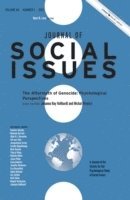
    Aftermath of Genocide

    Psychological Perspectives

    AvJohanna Ray Vollhardt,Michal Bilewicz

    Häftad, Engelska, 2013

    Del i serien Journal of Social Issues (JOSI)

    508 kr

    Beställningsvara. Skickas inom 3-6 vardagar. Fri frakt över 249 kr.

    Beskrivning

    The issue explores psychological consequences of past genocide. It uses a multiplicity of theoretical approaches to understand how historical genocide affects current intergroup relations and psychological well-being.

    Produktinformation

    • Utgivningsdatum:2013-05-10
    • Mått:152 x 226 x 13 mm
    • Vikt:272 g
    • Format:Häftad
    • Språk:Engelska
    • Serie:Journal of Social Issues (JOSI)
    • Antal sidor:500
    • Förlag:John Wiley and Sons Ltd
    • ISBN:9781118691564

    Utforska kategorier

    • Folkmord och etnisk rensning inom Historia och arkeologi
    • Sociala och etiska frågor inom Samhälle och politik
    • Psykologi inom Psykologi och pedagogik

    Mer om författaren

    Johanna Ray Vollhardt is an Assistant Professor of Psychology at Clark University and affiliated with the Strassler Center for Holocaust and Genocide Studies. She received her Ph.D. in Social Psychology from the University of Massachusetts Amherst, with a concentration in the Psychology of Peace and Violence. Her research focuses on inclusive victim consciousness, prosocial behavior, and intergroup relations in the aftermath of collective violence.Michal Bilewicz is an Assistant Professor at the Faculty of Psychology, University of Warsaw. He serves as the Director of the Center for Research on Prejudice at the University of Warsaw. He was Fulbright Junior Visiting Researcher at the New School for Social Research and DAAD Post- Doctoral Researcher at University of Jena in Germany. His research focuses on reconciliation processes, linguistic forms of prejudice, anti-Semitism, moral emotions, and dehumanization.

    Innehållsförteckning

    • INTRODUCTIONAfter the Genocide: Psychological Perspectives on Victim, Bystander, and Perpetrator GroupsJohanna Ray Vollhardt and Michal BilewiczSECTION I: SOCIAL PSYCHOLOGICAL PERSPECTIVES ON PROCESSES AMONG PERPETRATOR GROUPSNational Narrative and Social Psychological Influences in Turks’ Denial of the Mass Killings of Armenians as GenocideRezarta BilaliMoral Immemorial: The Rarity of Self-Criticism for Previous Generations’ Genocide or Mass ViolenceColin Wayne Leach, Fouad Bou Zeineddine, and Sabina Cehajic-ClancyThou Shall Not Kill . . . Your Brother: Victim–Perpetrator Cultural Closeness and Moral Disapproval of Polish Atrocities against Jews after the HolocaustMiroslaw Kofta and Patrycja SlawutaWhen the Past is Far from Dead: How Ongoing Consequences of Genocides Committed by the Ingroup Impact Collective GuiltRoland Imhoff, Michael J. A. Wohl, and Hans-Peter ErbSECTION II: CLINICAL PERSPECTIVES ON HEALING AMONG VICTIM GROUPSChild Survivors of the 1994 Rwandan Genocide and Trauma-Related AffectSuzanne KaplanRestoring Self in Community: Collective Approaches to Psychological Trauma after GenocideLaurie Anne PearlmanSECTION III: SOCIAL PSYCHOLOGICAL PERSPECTIVES ON PROCESSES AMONG VICTIM GROUPSThe “Never Again” State of Israel: The Emergence of the Holocaust as a Core Feature of Israeli Identity and Its Four Incongruent VoicesYechiel Klar, Noa Shori-Eyal, and Yonat Klar“Crime against Humanity” or “Crime against Jews”? Acknowledgment in Construals of the Holocaust and Its Importance for Intergroup RelationsJohanna Ray VollhardtSECTION IV: PRACTICAL IMPLICATIONS FOR INTERVENTION AND PREVENTIONReconciliation through the Righteous: The Narratives of Heroic Helpers as a Fulfillment of Emotional Needs in Polish–Jewish Intergroup ContactMichal Bilewicz and Manana JaworskaA World without Genocide: Prevention, Reconciliation, and the Creation of Peaceful SocietiesErvin StaubCOMMENTARY ON THE ISSUEThe Aftermath of Genocide: History as a Proximal CausePeter Glick and Elizabeth Levy Paluck