• Fri frakt över 249 kr
  • •
  • Snabba leveranser
  • •
  • Billiga böcker
Kundservice

Du är på sajten för privatpersoner.

Företag, bibliotek eller offentlig verksamhet?

Du handlar på classic.bokus.com, där alla dina funktioner finns intakta.
Till classic.bokus.com
Bokus logotyp. Gå till startsidan.
  • Erbjudanden
  • Nyheter
  • Student
  • Topplistor
  • Barn & ungdom
  • Bokus Play
  • E-böcker
  • Pocketböcker
  • Spel & pussel

10% rabatt på allt med kod: NYSTART10 →

Sidfot

Mina sidor

    Hjälp

    • Kundservice
    • Vanliga frågor och svar
    • Frakt och leverans
    • Retur vid ångerrätt
    • Reklamera vara
    • Betalning
    • Köpvillkor
    • Allmänna villkor
    • Information om webbplatsens tillgänglighet

    Om Bokus

    • Om oss
    • Pressrum
    • För studenter
    • För företag
    • För bibliotek och offentlig verksamhet
    • För leverantörer
    • Hållbarhet

    Populärt

    • Aktuella erbjudanden
    • Presentkort
    • Studentlitteratur
    • Nya böcker
    • Topplistor
    • Signerade böcker
    • Engelska böcker

    Inspiration

    • Boktips
    • BookTok
    • Populära bokserier
    • Barnbokskaraktärer
    • Populära författare
    Logotyp för Bokus
    Följ oss på Facebook (extern länk)Följ oss på Instagram (extern länk)Följ oss på YouTube (extern länk)Följ oss på TikTok (extern länk)
    bokus @ CookiesAnpassa cookiesIntegritetspolicyKöpvillkor
    Till Citymail hemsida (extern länk)Till Budbee hemsida (extern länk)Till Postnord hemsida (extern länk)Till Schenker hemsida (extern länk)Till Early Bird hemsida (extern länk)Till Walleys hemsida (extern länk)
    1. Naturvetenskap och teknik
    2. Matematik och naturvetenskap
    3. Matematik
    4. Tillämpad matematik

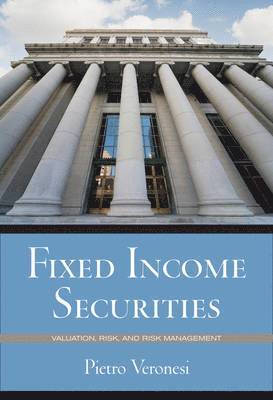
    Handbook of Fixed-Income Securities

    AvPietro Veronesi

    Inbunden, Engelska, 2016

    Del i serien Wiley Handbooks in Financial Engineering and Econometrics

    2 042 kr

    Beställningsvara. Skickas inom 3-6 vardagar. Fri frakt över 249 kr.

    Beskrivning

    A comprehensive guide to the current theories and methodologies intrinsic to fixed-income securitiesWritten by well-known experts from a cross section of academia and finance, Handbook of Fixed-Income Securities features a compilation of the most up-to-date fixed-income securities techniques and methods. The book presents crucial topics of fixed income in an accessible and logical format. Emphasizing empirical research and real-life applications, the book explores a wide range of topics from the risk and return of fixed-income investments, to the impact of monetary policy on interest rates, to the post-crisis new regulatory landscape. Well organized to cover critical topics in fixed income, Handbook of Fixed-Income Securities is divided into eight main sections that feature: • An introduction to fixed-income markets such as Treasury bonds, inflation-protected securities, money markets, mortgage-backed securities, and the basic analytics that characterize them • Monetary policy and fixed-income markets, which highlight the recent empirical evidence on the central banks’ influence on interest rates, including the recent quantitative easing experiments• Interest rate risk measurement and management with a special focus on the most recent techniques and methodologies for asset-liability management under regulatory constraints• The predictability of bond returns with a critical discussion of the empirical evidence on time-varying bond risk premia, both in the United States and abroad, and their sources, such as liquidity and volatility • Advanced topics, with a focus on the most recent research on term structure models and econometrics, the dynamics of bond illiquidity, and the puzzling dynamics of stocks and bonds • Derivatives markets, including a detailed discussion of the new regulatory landscape after the financial crisis and an introduction to no-arbitrage derivatives pricing • Further topics on derivatives pricing that cover modern valuation techniques, such as Monte Carlo simulations, volatility surfaces, and no-arbitrage pricing with regulatory constraints • Corporate and sovereign bonds with a detailed discussion of the tools required to analyze default risk, the relevant empirical evidence, and a special focus on the recent sovereign crises A complete reference for practitioners in the fields of finance, business, applied statistics, econometrics, and engineering, Handbook of Fixed-Income Securities is also a useful supplementary textbook for graduate and MBA-level courses on fixed-income securities, risk management, volatility, bonds, derivatives, and financial markets.Pietro Veronesi, PhD, is Roman Family Professor of Finance at the University of Chicago Booth School of Business, where he teaches Masters and PhD-level courses in fixed income, risk management, and asset pricing. Published in leading academic journals and honored by numerous awards, his research focuses on stock and bond valuation, return predictability, bubbles and crashes, and the relation between asset prices and government policies.


    Produktinformation

    • Utgivningsdatum:2016-04-19
    • Mått:224 x 287 x 38 mm
    • Vikt:1 606 g
    • Format:Inbunden
    • Språk:Engelska
    • Serie:Wiley Handbooks in Financial Engineering and Econometrics
    • Antal sidor:640
    • Förlag:John Wiley & Sons Inc
    • ISBN:9781118709191

    Utforska kategorier

    • Tillämpad matematik inom Naturvetenskap och teknik
    • Finansiering inom Ekonomi och Ledarskap

    Mer om författaren

    Pietro Veronesi, PhD, is Roman Family Professor of Finance at the University of Chicago Booth School of Business, where he teaches Masters and PhD-level courses in fixed income, risk management, and asset pricing. Published in leading academic journals and honored by numerous awards, his research focuses on stock and bond valuation, return predictability, bubbles and crashes, and the relation between asset prices and government policies.

    Innehållsförteckning

    • Notes on Contributors xixPreface xxvPart I Fixed Income Markets 11 Fixed Income Markets: An Introduction 31.1 Introduction 31.2 U.S. Treasury Bills, Notes, and Bonds 71.3 Interest Rates, Yields, and Discounting 81.4 The Term Structure of Interest Rates 91.4.1 The Economics of the Nominal Yield Curve 91.4.2 The Expectations Hypothesis 131.4.3 Forward Rates as Expectation of Future Interest Rates? 161.4.4 Interpreting a Steepening of the Yield Curve 171.5 Pricing Coupon Notes and Bonds 171.5.1 Estimating the Zero-Coupon Discount Function 181.5.2 Data and Bond Illiquidity 191.6 Inflation-Protected Securities 191.7 Floating Rate Notes 221.8 Conclusion 24References 242 Money Market Instruments 252.1 Overview of the Money Market 252.2 U.S. Treasury Bills 262.3 Commercial Paper 272.3.1 General Facts about Commercial Paper 272.3.2 Nonasset-Backed Commercial Paper 272.3.3 Asset-Backed Commercial Paper 282.4 Discount Window 292.5 Eurodollars 292.5.1 Eurodollar Futures 312.6 Repurchase Agreements 322.6.1 Types of Repos and Haircuts 322.6.2 Basic Forms of Repo Collateral 332.6.3 Repo Rates and Collateral Value Risks 342.6.4 The Run on Repo During the Financial Crisis 342.7 Interbank Loans 352.7.1 Federal Funds 352.7.2 Libor 372.7.3 Overnight Index Swaps and LIBOR–OIS Spreads 382.7.4 A Model of LIBOR–OIS Spreads 382.8 Conclusion 40References 403 Inflation-Adjusted Bonds and the Inflation Risk Premium 413.1 Inflation-Indexed Bonds 413.1.1 Mechanics of TIPS 423.1.2 Valuing an Inflation-Indexed Bond 423.2 Inflation Derivatives 423.2.1 Constructing a Synthetic Nominal Treasury Bond with Inflation Swaps 423.3 No-Arbitrage Pricing 433.3.1 Zero-Coupon Bonds 433.4 Inflation Risk Premium 433.4.1 Determinants of the Inflation Risk Premium 443.5 A Look at the Data 453.5.1 Break-Even Rates 453.5.2 Inflation Swap Rates 463.5.3 Inflation Risk Premium 493.6 Conclusion 503.7 Appendix 503.7.1 Breeden–Lucas–Rubinstein Example 503.7.2 Disaster Risk 513.8 Data Appendix 51References 524 Mortgage-Related Securities (MRSs) 534.1 Purpose of the Chapter 534.2 Introduction to MRSs 544.2.1 Mortgage and Securitization 544.2.2 The Cash Flows of Mortgage Pools 554.3 Valuation Overview 574.3.1 OAS, OAD, and Negative Convexity 584.3.2 Modeling Prepayment and Default 604.4 Analyzing an MRS 624.4.1 Modeling Prepayment and Default 624.4.2 Freddie Mac’s STACR 674.4.3 Analyzing the STACR Series 2013-DN1 714.5 Summary 72References 73Part II Monetary Policy and Fixed Income Markets 755 Bond Markets and Monetary Policy 775.1 Introduction 775.2 High-Frequency Identification of Monetary Policy Shocks 785.2.1 Learning About Monetary Policy Surprises 795.2.2 The Impact on Treasury Bond Yields 815.2.3 The Timing of Expected Fed Interventions 825.3 Target Versus Path Shocks 845.3.1 The Economics of FOMC Meetings and Bond Yields 865.4 Conclusions 90References 916 Bond Markets and Unconventional Monetary Policy 936.1 Introduction 936.2 Unconventional Policies: The Fed, ECB, and BOE 946.2.1 Federal Reserve Operations 946.2.2 Bank of England Operations 966.2.3 European Central Bank Operations 976.3 Unconventional Policies: A Theoretical Framework 1016.3.1 Portfolio Balance (Duration) Channel 1026.3.2 Signaling Channel 1036.3.3 Credit and Capital Constraint Channel 1036.3.4 Preferred Habitat and Asset Scarcity Channel 1046.4 Unconventional Policies: The Empirical Evidence 1046.4.1 The Treasury Bond Market 1046.4.2 The MBS Market 1136.4.3 How Persistent is the Effect? 1156.5 Conclusions 115References 116Part III Interest Rate Risk Management 1177 Interest Rate Risk Management and Asset Liability Management 1197.1 Introduction 1197.2 Literature Review 1207.3 Interest Rate Risk Measures 1207.3.1 Duration 1217.3.2 Convexity 1227.3.3 Key Rate Duration 1237.3.4 Principal Component Analysis and Factor Duration 1237.4 Application to Asset Liability Management 1277.4.1 Nature of Liabilities 1277.4.2 Cash Flow Matching 1287.4.3 Classic Immunization and Duration Matching 1307.4.4 Key Rate Duration Matching 1337.4.5 Factor Duration Matching 1377.5 Backtesting ALM Strategies 1417.6 Liability Hedging and Portfolio Construction 1427.7 Conclusions 1447.8 Appendix: The Implementation of Principal Component Analysis 145References 1468 Optimal Asset Allocation in Asset Liability Management 1478.1 Introduction 1478.2 Yield Smoothing 1508.3 ALM Problem 1518.3.1 Return and Yield Dynamics 1528.3.2 Preferences 1538.3.3 Constraints 1548.3.4 Data Description and Estimation 1558.4 Method 1558.5 Single-Period Portfolio Choice 1568.5.1 ALM with a VaR Constraint 1568.5.2 ALM with AFCs 1588.6 Dynamic Portfolio Choice 1608.6.1 Welfare and Portfolio Implications of Yield Smoothing 1608.6.2 Hedging Demands and Regulatory Constraints 1618.7 Conclusion 1648.8 Appendix: Return Model Parameter Estimates 1658.9 Appendix: Benchmark Without Liabilities 165References 166Part IV the Predictability of Bond Returns 1699 International Bond Risk Premia 1719.1 Introduction 1719.2 Literature Review 1729.3 Notation and International Bond Market Data 1749.3.1 Notation 1749.3.2 International Bond Market Data 1749.4 Unconditional Risk Premia 1749.4.1 A Long-Term Perspective 1749.4.2 More Recent Evidence 1769.5 Conditional Risk Premia 1779.5.1 Local Predictors of Returns 1789.5.2 Global Predictors of Returns 1829.6 Understanding Bond Risk Premia 1859.6.1 Links to Economic Growth 1859.6.2 State Dependency 1879.7 Conclusion and Outlook 187References 18910 Return Predictability in the Treasury Market: Real Rates, Inflation, and Liquidity 19110.1 Introduction 19110.2 Brief Literature Review 19210.3 Bond Data and Definitions 19310.3.1 Bond Notation and Definitions 19310.3.2 Yield Data 19410.4 Estimating the Liquidity Differential Between Inflation-Indexed and Nominal Bond Yields 19410.4.1 Estimation Strategy 19610.4.2 Data on Liquidity and Inflation Expectation Proxies 19710.4.3 Estimating Differential Liquidity 19710.5 Bond Excess Return Predictability 20110.5.1 Economic Significance of Bond Risk Premia 20510.6 Conclusion 206References 20811 U.S. Treasury Market: The High-Frequency Evidence 21011.1 Introduction 21011.2 The U.S. Treasury Markets During the Financial Crisis 21111.2.1 Yields 21111.2.2 Volatility 21211.2.3 Off-the-Run/On-the-Run Yield Spread 21311.2.4 Trading Volume and Price Impact 21411.2.5 Fails 21511.2.6 Intraday Evidence on March 18, 2009 21511.2.7 Summary 21611.3 The Reaction of Bond Prices and Interest Rates to Macroeconomic News 21711.3.1 Level Effects 21711.3.2 The Impact of Monetary Policy 21811.3.3 Realized-Volatility Patterns 21911.3.4 Macro News and Option-Implied Volatilities 22011.3.5 ARCH and GARCH Effects 22211.3.6 Jumps 22411.3.7 Summary 22711.4 Market-Microstructure Effects 22811.4.1 Microstructure Effects in the Cash Market 22811.4.2 Joint Microstructure Effects in the Cash Market and Futures Markets 23111.4.3 Summary 23211.5 Bond Risk Premia 23211.5.1 Daily Evidence 23211.5.2 Intraday Evidence 23311.5.3 Summary 23411.6 The Impact of High-Frequency Trading 23411.6.1 The Effects of HFT on Liquidity, Volatility, and Risk Premia 23411.6.2 Summary 23611.7 Conclusions 236References 236Part V Advanced Topics on Term Structure Models and Their Estimation 23912 Structural Affine Models for Yield Curve Modeling 24112.1 Purpose and Structure of This Chapter 24112.2 Structural Models 24212.3 A Simple Taxonomy 24212.4 Why do we Need No-Arbitrage Models After All? 24312.5 Affine Models and the Drivers of The Yield Curve 24412.5.1 Expectations 24412.5.2 Term (Risk) Premia 24412.5.3 Convexity 24612.6 Introducing No-Arbitrage 24712.7 Which Variables Should One use? 24712.8 Risk Premia Implied by Affine Models with Constant Market Price of Risk 24912.9 Testable Predictions: Constant Market Price of Risk 25112.10 What Do We Know About Excess Returns? 25112.11 Understanding the Empirical Results on term Premia 25212.12 Enriching the First-Generation Affine Models 25412.13 Latent Variables: The D’Amico, Kim, and Wei Model 25412.14 From Linear Regressors to Affine Models: the ACM Approach 25512.15 Affine Models using Principal Components as Factors 25612.16 The Predictions from the “Modern” Models 25812.17 Conclusions 26112.17.1 Models as Enforcers of Parsimony and Builders of Confidence 26112.17.2 Models as Enforcers of Cross-Sectional Restrictions 26212.17.3 Models as Revealers of Forward-Looking Informations 26212.17.4 Models as Enhancers of Understanding 262References 26313 The Econometrics of Fixed-Income Markets 26513.1 Introduction 26513.2 Different Types of Term Structure Models 26613.2.1 Factor Models 26613.2.2 Observable Factors 26713.2.3 Latent Factors: Filtering versus Indirect Observation 26713.2.4 Macroeconomic Models 26713.2.5 Affine Models 26813.2.6 Yield-Based Models 26813.2.7 Forward-Based Models 26913.3 Parametric Estimation Methods 26913.3.1 GMM 27013.3.2 Maximum Likelihood 27013.3.3 QML 27113.3.4 Efficient Method of Moments 27113.3.5 Estimation Bias in Mean-Reversion Parameters 27213.4 Maximum Likelihood Estimation 27213.4.1 Observed State Variables 27213.4.2 Latent State Variables 27313.5 Constructing the Likelihood Function: Expansion of the Transition Density 27513.5.1 Reducibility 27613.5.2 The Irreducible Case 27713.6 Concluding Remarks 278References 27914 Recent Advances in Old Fixed-Income Topics: Liquidity, Learning, and the Lower Bound 28214.1 Introduction 28214.2 Liquidity 28314.2.1 Bills, Notes, and Bonds 28314.2.2 Market Liquidity and Short-Selling Costs 28414.2.3 Hedging Demand 28614.2.4 Risky Arbitrage 28714.2.5 Segmented Markets and Preferred Habitats 28714.2.6 Funding Risk 28814.2.7 Implication for Term Structure Models 29014.3 Learning 29114.3.1 Yield Survey Forecasts 29214.3.2 Affine Term Structure Models 29314.3.3 Spanning Survey Forecasts 29714.3.4 Adaptive Learning and Survey Forecasts 29914.3.5 Equilibrium Models of the Term Structure 30014.4 Lower Bound 30114.4.1 Square-Root and Autoregressive Gamma Models 30114.4.2 Black (1995) – Tobin (1958) 30314.4.3 No-Dominance Term Structure Models 30514.4.4 Recent Empirical Results 30614.5 Conclusion 30914.6 Appendix: Moments of Truncated Bivariate Distribution 310References 31115 The Economics of the Comovement of Stocks and Bonds 31315.1 Introduction 31315.2 A Brief Literature Survey 31315.3 The Stock–Bond Covariance and Learning about Fundamentals 31515.3.1 Investors’ Beliefs About Composite Regimes 31615.3.2 Valuations and the “Fed Model” 31615.3.3 Explaining the Time Variation in the Stock–Bond Covariance 31815.4 Beliefs from Surveys and from the Model 31915.5 Survey and Model Beliefs and the Stock–Bond Covariance 31915.6 Some International Evidence 32215.7 Summary 325References 325Part VI Derivatives: Markets and Pricing 32716 Interest Rate Derivatives Products and Recent Market Activity in the New Regulatory Framework 32916.1 Introduction 32916.2 Background on the New Derivatives Regulatory Framework 33116.2.1 Clearing 33216.2.2 Execution 33316.2.3 Reporting 33316.3 Exchange-Traded Derivatives 33516.3.1 Major Products 33516.3.2 Execution 33616.3.3 Clearing 33616.3.4 Market Activity 33916.4 Noncleared Swaps 34116.4.1 Major Products 34116.4.2 Execution 34216.4.3 Credit Risk Mitigation 34516.4.4 Market Activity 35116.5 Cleared Swaps 35416.5.1 Major Products 35416.5.2 Market Activity 35516.6 Comparative Market Activity Across Execution Venues 36016.6.1 OTC versus Exchange-Traded Interest Rate Derivatives 36016.6.2 Bilateral versus SEF Execution of OTC Interest Rate Derivatives 36316.7 Liquidity Fragmentation in Nondollar Swaps 36616.8 Prospects for the Future 36816.8.1 Cleared Swaps and Exchange-Traded Interest Rate Derivatives 36916.8.2 Swap Futures 37016.8.3 Noncleared Swaps and End Users 37016.9 Appendix: The New Regulatory Framework for Interest Rate Derivatives in the United States and European Union 37116.9.1 Classifications of Market Participants 37116.9.2 Clearing 37316.9.3 Execution 37516.9.4 Reporting 37616.9.5 Margin Requirements for Noncleared Swaps 37716.9.6 Capital Requirements for Noncleared Swaps 37916.9.7 Cross-Border and Extraterritoriality Issues 381References 38517 Risk-Neutral Pricing: Trees 38917.1 Introduction 38917.2 Binomial Trees 38917.2.1 One-Step Binomial Trees 38917.2.2 The Market Price of Risk 39317.3 Risk-Neutral Pricing on Multistep Trees 39417.3.1 Calibration of Risk-Neutral Trees to the Yield Curve 39517.3.2 The Pricing of European Options 39717.3.3 The Pricing of American Options 40017.4 From Diffusion Models to Binomial Trees 40317.4.1 The Hull and White Model 40517.5 Trinomial Trees 40617.5.1 Calibration to the Yield Curve 40717.5.2 Pricing Bermudan Contracts Using the Trinomial Tree 41017.5.3 Calibration to the Volatility Curve 412References 41318 Discounting and Derivative Pricing Before and After the Financial Crisis: An Introduction 41418.1 Introduction 41418.2 Forward Rate Agreements (FRAs) 41518.2.1 Forward Rates 41718.2.2 Forward Rates after the Crisis 41818.2.3 A Simple Explanation for the “Arbitrage” 42018.3 Overnight Index Swaps (OISs) 42218.3.1 OIS Discount Curve 42418.4 LIBOR-Based Swaps 42418.4.1 LIBOR Discount Curve with Single-Curve Pricing 42618.5 The Crisis and the Double-Curve Pricing of LIBOR-Based Swaps 42618.5.1 Extracting FRA Rates from Swap Quotes 42818.5.2 Extracting the Discount Curve from FRA Rates 42818.5.3 Summing Up 42918.6 The Pricing of LIBOR-Based Interest Rate Options 43018.6.1 Black’s Option Pricing Formula 43018.6.2 Caps and Floors before and after the Crisis 43118.6.3 Swaptions before and after the Crisis 43218.7 Conclusions 433References 433Part VII Advanced Topics in Derivatives Pricing 43519 Risk-Neutral Pricing: Monte Carlo Simulations 43719.1 Introduction 43719.2 Risk-Neutral Pricing 43719.2.1 Interest Rate Models 44019.2.2 The Market Price of Risk 44119.2.3 Valuation under P and under Q 44119.2.4 Multifactor Models 44219.3 Risk-Neutral Pricing: Monte Carlo Simulations 44619.3.1 Discretization of the Vasicek Model 44719.3.2 Discretization of the Cox–Ingersoll–Ross Model 44819.3.3 Interest Rate Modeling at the Zero Lower Bound 45119.4 Valuation by Monte Carlo Simulation 45119.4.1 Valuation of Securities with Payoff at Fixed Date 45219.4.2 mc Valuation of Callable Bonds 45519.4.3 mc Valuation of Securities with American or Bermudan Exercise Style 45619.5 Monte Carlo Simulations in Multifactor Models 46119.5.1 Discretization Procedure of the Affine Factor Models 46219.5.2 mc Simulations for Callable Securities in Multifactor Models 46219.6 Conclusion 467References 46720 Interest Rate Derivatives and Volatility 46920.1 Introduction 46920.2 Markets and the Institutional Context 46920.2.1 Market Size 46920.2.2 OTC IRD Trading and Volatility 47120.2.3 Exchange-Listed IRD Trading and Volatility 47220.2.4 Recent Developments in the IRD Market 47320.3 Dissecting the Instruments 47320.3.1 Government Bonds 47420.3.2 Time Deposits 47620.3.3 Forwards Rate Agreements and Interest Rate Swaps 47620.3.4 Caps, Floors, and Swaptions 47820.4 Evaluation Paradigms 47920.4.1 Models of the Short-term Rate 47920.4.2 No-Arbitrage Models 48120.4.3 Volatility 48520.5 Pricing and Trading Volatility 48720.5.1 Standard Volatility Trading Practice 48820.5.2 An Introduction to Interest Rate Variance Swaps 48920.5.3 Pricing Volatility in Three Markets 49720.5.4 Current Forward-Looking Indexes of IRV 50220.5.5 Products on IRV Indexes 50520.6 Conclusions 50720.7 Appendix 508References 51221 Nonlinear Valuation under Margining and Funding Costs with Residual Credit Risk: A Unified Approach 51421.1 Introduction 51421.2 Collateralized Credit and Funding Valuation Adjustments 51621.2.1 Trading under Collateralization and Closeout Netting 51721.2.2 Trading under Funding Risk 52021.3 General Pricing Equation Under Credit, Collateral, and Funding 52221.3.1 Discrete-Time Solution 52321.3.2 Continuous-Time Solution 52421.4 Numerical Results: Extending the Black–Scholes Analysis 52721.4.1 Monte Carlo Algorithm 52721.4.2 Market, Credit, and Funding Risk Specification 52921.4.3 Preliminary Analysis without Credit Risk and with Symmetric Funding Rates 52921.4.4 Full Analysis with Credit Risk, Collateral, and Funding Costs 53121.4.5 Nonlinearity Valuation Adjustment 53321.5 Extensions 53521.6 Conclusions: Bilateral Prices or Nonlinear Values? 536References 537Part VIII Corporate and Sovereign Bonds 53922 Corporate Bonds 54122.1 Introduction 54122.2 Market and Data 54222.2.1 Data on Bond Characteristics 54222.2.2 Data on Market Prices 54222.2.3 Understanding Market Data from TRACE 54322.3 A Very Simple Model 54422.3.1 The Credit Spread Arising from Expected Loss 54522.3.2 Adding a Risk Premium 54522.4 Structural Models 54622.4.1 Merton’s Model with Beta 54622.4.2 Bankruptcy Costs 54922.4.3 Early Default 55022.5 Reduced-form Models 55022.5.1 A Useful Approximation 55222.5.2 Closed-Form Solutions 55322.6 Risk Premia in Intensity Models 55422.7 Dealing with Portfolios 55622.8 Illiquidity as a Source of Spreads 55722.9 Some Additional Readings 55822.10 Conclusion 559References 55923 Sovereign Credit Risk 56123.1 Introduction 56123.2 Literature Review 56323.3 Modeling Sovereign Default 56423.3.1 Risk-Neutral Pricing 56423.3.2 Pricing Sovereign Credit Default Swaps 56723.3.3 Pricing in a Lognormal Model 56823.4 Credit Risk Premia 56823.5 Estimating Intensity Models 56923.6 Application to Emerging Markets 57023.6.1 Credit Markets of Emerging Economies 57123.6.2 Credit Risk Premia in Emerging Credit Markets 57223.7 Application to the European Debt Crisis 57523.7.1 Credit Risk Premia in the Eurozone 57823.8 Conclusion 58023.9 Appendix: No Arbitrage Pricing 58023.9.1 The Risk-Neutral Default Intensity 583References 584Index 587